

Talk about a sore loser.
For one player, a game of beer pong went terribly awry.
The 19-year-old man was brought to the hospital with acute throat pain, difficulty swallowing and abnormal breathing following a round of the popular drinking game.
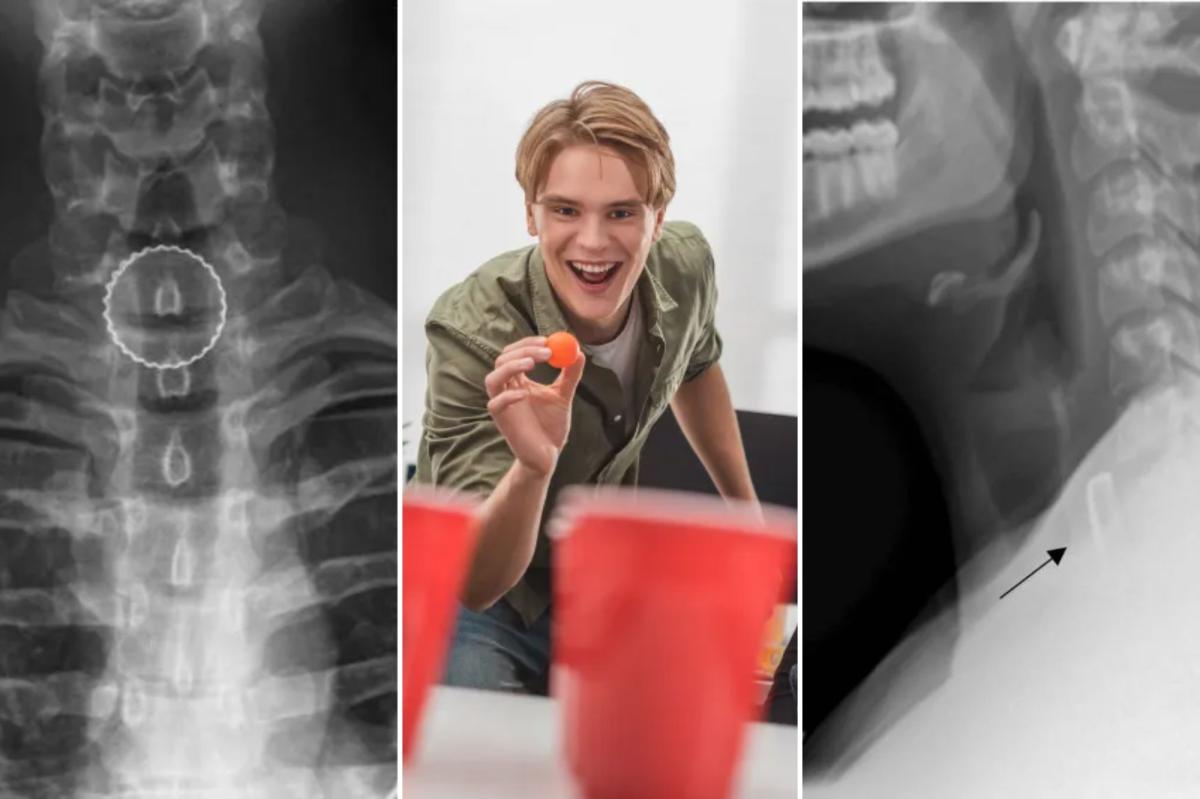
An initial exam showed the back of the patient’s throat was inflamed, while a subsequent X-ray revealed what appeared be a bottle cap lodged in the man’s upper esophagus.
The cap had fallen into the patient’s red Solo cup during the imbibing match, and he had unknowingly swallowed it an hour before arriving at the ER.
Even though he had a stable airway, doctors had to use surgical intervention to remove the bottle cap due to the potential for damage or perforation.
The unfortunate young man underwent an emergency rigid esophagoscopy — in which a thin tube sigh a camera attached was inserted through his nose or mouth — without complication.
The patient was lucky, as in most cases of accidental aspiration, foreign objects lodge themselves in the trachea or other parts of the throat, jeopardizing the patient’s breathing.
ENT doctors routinely treat ingestion of foreign bodies (FB), the effects of which can range from discomfort to death.
FB ingestion is most common in patients under 15, with the highest incidence occurring in children between one and three.
Last year, a 13-year-old New Zealand boy had part of his intestines removed after swallowing more than 100 high-powered magnets, and this past Christmas, a Colorado toddler underwent emergency surgery after a swallowed battery burned a hole in her esophagus.
Approximately 11% of emergency ENT cases are FBs, and FB aspiration accounts for roughly 3,000 deaths per year in the US.
According to Harvard Health, coins are the most common inedible objects swallowed by children, accounting for more than 60% of cases in which children sought medical care after aspirating a foreign object.
In 2024, a California teen had to be hospitalized after swallowing a quarter, which became stuck sideways inside his airway, and in 2023, a Dallas bus driver was hailed a “hero” after saving the life of a 7-year-old boy who swallowed a coin.
While many ingested FBs are harmless and pass without incident, sharp, serrated, or disc-shaped objects, such as the aforementioned bottle cap and quarter, pose a serious risk and can cause perforation, necrosis, or obstruction.
Further, young, intoxicated men who participate in high-risk drinking are particularly susceptible to accidental ingestion as alcohol increases impulsivity and reduces protective reflexes.
In fact, one college town in Germany had 14 different cases of people swallowing bottle caps over 10 years.
Experts note that the case of the swallowed bottle cap underscores the importance of speedy diagnosis, imaging, and airway evaluation in the treatment and removal of hazardous foreign bodies.
Read the full article here
