

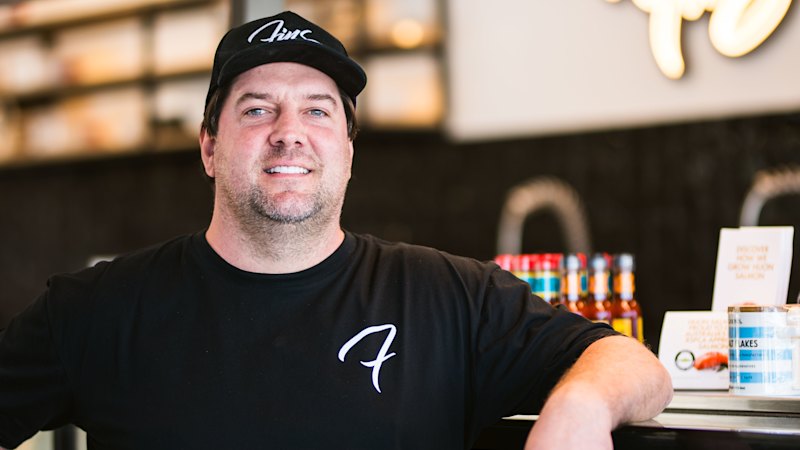
“At the moment, we don’t trust the data that’s been put into the models,” he said.
Phil Clark of Fins Seafood.
Commercial fisherman Phil De Grauw, who has worked out of Kalbarri for 40 years, said he was “blindsided” by the government’s decision.
“Our whole goal is to have sustainable fishing, [if] we haven’t got a sustainable fishery, our livelihood and everything we do is in question,” he said.
“But unfortunately, this decision made … was more a blanket approach.
“At this stage, I lose all of my entitlement in the Mid West, and [the government is] proposing a two-year ban in the Kalbarri zone.
“But there’s no detail of what happens after the two-year ban, and there’s no detail in the conversation that I’ll get in the Mid West.”
De Grauw said pink snapper stock, judged by catch-per-unit, was at a record high, and claimed the government had ignored suggestions over the past decade to move restrictions to a quota system.
Joel Rees, the co-owner of South Fremantle seafood restaurant Madalena’s, said international diners would often visit for dhufish and scallops.
He said it was a “hard problem to solve” as a hospitality business.
“If we lose that tourism factor, where we are in Fremantle, it’s a very touristy spot, the whole of Freo is going to be changed,” he said.
The ban would affect the price, Rees said, but there were still a lot of unknown impacts.
Loading
“Seafood already is a challenge. It’s a lot more expensive than other proteins, but we have been managed to be successful based on the quality that we get, and the quality is just above any other,” he said.
“That’s what WA is known for, supreme quality.”
Trawling ban heads to court
Meanwhile, two companies that trawl for demersal species in the state’s Pilbara will take their challenge against that practice being banned – which was among the restrictions announced earlier this month – to the WA Supreme Court on Monday.
The local arm of South African-headquartered Sea Harvest Group and Westmore Seafoods have lodged legal action against the government reforms.
In a statement, reported by the ABC, the companies argued the court action was about “ensuring fisheries management decisions are evidence-based, consultative and proportionate, and do not casually devastate regional jobs, local food supply and long-standing commercial investment”.
Sea Harvest Australia chief executive Danie du Toit said in the statement that the decision effectively meant “a legitimate and approved foreign direct investment has been expropriated without consultation or compensation”, raising concerns about sovereign risk, protection of property rights, and Australia as an investment destination.
“Banning a fishing method that’s globally recognised and certified as most efficient and sustainable in the context of food security considerations simply makes no sense,” du Toit said.
Be the first to know when major news happens. Sign up for breaking news alerts on email or turn on notifications in the app.
Read the full article here
