

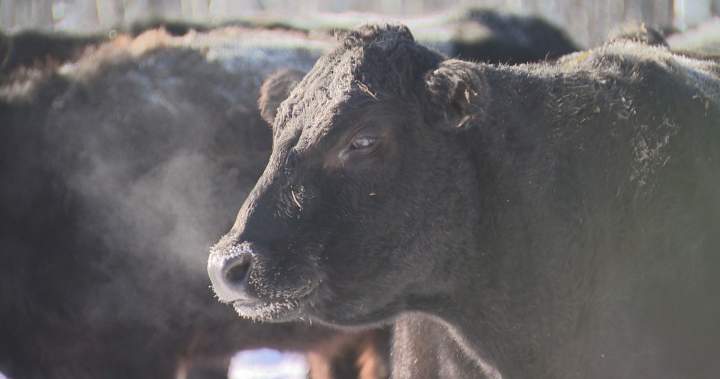
Amid a bitter cold snap in Manitoba, ranchers are taking extra precautions with their herds.
“If you see frost on the backs of the cows, that’s actually a good sign. It doesn’t mean they’re cold, it means the heat isn’t getting out through their hair,” said Trevor Sund, who ranches cattle near Woodlands, Man.
“If that was to melt, they would get wet and they could get sick because they’d be chilled.”
Sund says cattle are built tough and can withstand the extreme cold, but extra precautions are still taken.
“They require more feed,” Sund said, noting that this can sometimes prove challenging after a drought-stricken year.

Get breaking National news
For news impacting Canada and around the world, sign up for breaking news alerts delivered directly to you when they happen.
“With this year, it being a drought, my first cut of hay was abysmal,” he said.
“Luckily, we had almost half of our (hay) leftover from the year before. So we’re good this year.”
Joe King, a veterinarian at the Virden Animal Hospital and the president of the Manitoba Veterinary Medical Association, says extra feed, dry bedding, access to water and shelter from the wind are key in caring for livestock during the winter.
“Wind can cause them to lose heat really fast. So any type of shelter that will cut that wind down will help them conserve their heat,” King told Global News.
“And then another very important thing is adequate nutrition. They produce a lot of heat through their digestive process when they eat, and they need to be fed properly during these conditions.”
“If cattle aren’t having the appropriate protection from the wind, bedding, water in extreme conditions, they could become hypothermic and die. That’s the worst-case scenario,” he added.
For Sund, caring for the cattle in the cold is a tough job.
“It’s one of those things you hate doing it, but once you get out here, it’s fine,” he said.
“If you’re used to the cold, you’re used to the cold.”
Read the full article here
