

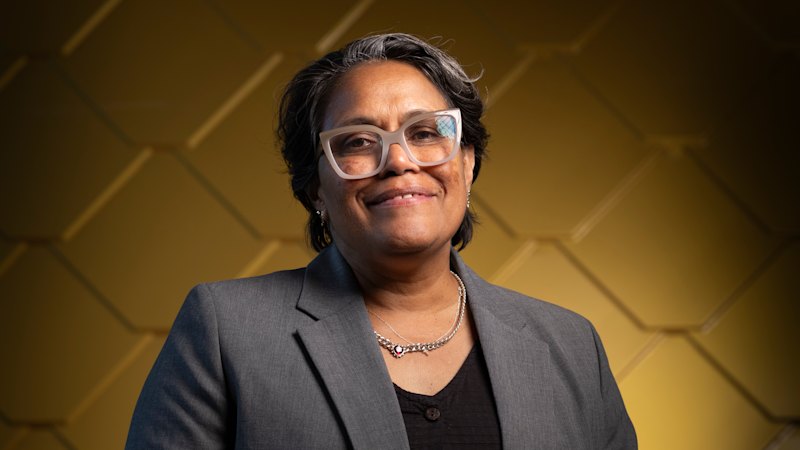
Cathy Freeman keenly felt the significance of accepting the highest Australia Day honour. The sporting champion, a self-confessed “shy kid”, famously steers clear of political debate and sought advice from her mum, Cecilia Barber, on how to deal with being made a Companion of the Order of Australia (AC).
“She’s all about unity,” Freeman told this masthead. “Mum said this is a gift from the Australian people and I wouldn’t have looked at it that way, but my mum has incredible wisdom. So I sort of just stopped overthinking it and took it in the spirit it’s supposed to be received in.
“I just want to be who I am, be authentic. My achievement and my story is always going to touch on things like Aboriginal/Torres Strait Islander perspectives, Olympism, track and field, elite sport, women in sport. The themes are diverse and varied.”
Freeman says she intends to use the honour as a platform to unite Australia on a day that’s plagued by controversy and political disharmony.
She is one of five women to receive the nation’s highest civilian honour on the Australia Day 2026 Honours List, released by Governor-General Sam Mostyn.
It recognises 949 Australians, including awards in the Order of Australia (general and military divisions), meritorious awards and recognition for distinguished and conspicuous service.
She joins world leading quantum physicist Professor Michelle Simmons; Professor Anne Kelso, an immunologist who has made a substantial and sustained contribution to health and medical science through research on T lymphocyte-mediated immunity and influenza; philanthropist Paula Fox for her service to the arts, medical research and to children and youth; and former Queensland premier Annastacia Palaszczuk, who led her state through the COVID-19 pandemic.
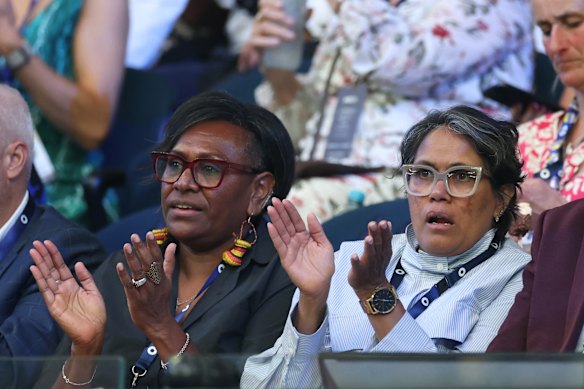
Mathias Cormann, a long-serving federal finance minister now in his second five-year term as secretary-general of the OECD in Paris; Professor Peter Cook, an earth scientist and a renowned expert on carbon dioxide capture and storage; one of Australia’s leading cancer epidemiologists, Professor Bruce Armstrong; Chief Justice of NSW Supreme Court Andrew Bell, and South Australian Chief Justice Chris Kourakis have also been made an AC.
Among the others awarded are former Midnight Oil drummer Rob Hirst, appointed a member of the Order of Australia (AM) posthumously after he died from pancreatic cancer last week, and Kristina Keneally, the first woman to become premier of NSW.
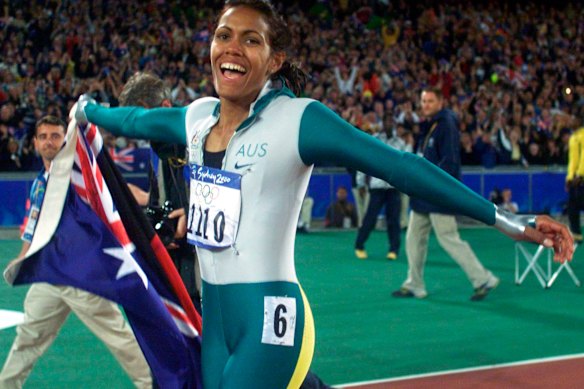
Freeman, a four-time Commonwealth Games gold medallist and a two-time world champion, etched herself into sporting history when she claimed gold at the 2000 Sydney Olympics in the 400 metres.
“For me, this is quite mind-bending,” she said. “I set out to be the best athlete that I could be for myself and then all of a sudden, this whole world unfolded right before my very eyes, and it just continues to expand, and it continues to be a wild ride, let me tell ya!
“I’ve been retired for 25 years and life continues to evolve. I know it’s been 25 years every time I look in the mirror! Life tends to always restart for me and that’s what this feels like; a reset. It’s a new chapter.”
Freeman said the honour would be likely to give her more encouragement to “get a bit more serious with the things I’m going to pursue now”.
“It’s so grown up, it’s so formal, it’s so serious. The responsibility that comes with it in terms of, this is a serious honour. So, geez, I’ve got to be serious. I’m 53, so I think I should be conducting myself with a little bit more seriousness, anyway.”
The list of those honoured represents an increase of over 200 more awards than on Australia Day last year. Of the 680 awarded under the Order of Australia general division, 73 per cent are men and just 27 per cent are women. In 2023, women received just over 50 per cent of the general division Order of Australia honours.
Mostyn said the qualities and accomplishments of this year’s recipients reflected Australia’s values for service, community, kindness, curiosity, tenacity and care.
“So many Australians continue to give the best of themselves across many endeavours, in the interest of others,” she said.
Kelso, a world-regarded medical researcher in immunology and vaccines based in Melbourne, is a former chief executive officer of the National Health and Medical Research Council who drove improvement in gender equality in the sector by setting targets for awarding grants to outstanding women.
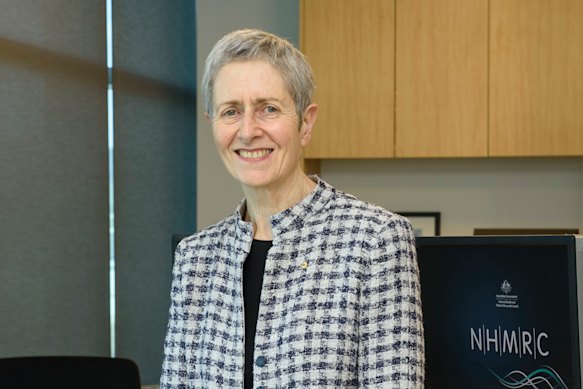
“It feels a little bit over the top, I guess because I’ve always just done what I’ve enjoyed doing,” Kelso said of her AC.
“I’ve been very lucky to have the jobs that I’ve had where I’ve been able to do some interesting things, but I think the other thing is, it’s not as if I did any of this on my own. So it ends up being an individual honour for a lot of work that many people were involved in.”
Cormann, a Liberal senator from 2007 to 2020, migrated to Australia from Belgium as a young law graduate 30 years ago.
“I would never have anticipated then what lay ahead,” he said. “I’m immensely grateful for all the many opportunities Australia has given me over the years to contribute.”
Professor Bruce Armstrong, a giant of Australian public health, spent a lifetime at the forefront of the country’s battle against cancer. The retired academic and physician is now recognised as a global authority in cancer epidemiology.
“I think it substantiates that I was doing something useful and good for the community,” the 81-year-old said. “That was mainly the objective of my work, that I do good work that will be useful to other people, and particularly make them more healthy or have better health services.”
With Rob Harris
Start the day with a summary of the day’s most important and interesting stories, analysis and insights. Sign up for our Morning Edition newsletter.
Read the full article here
