

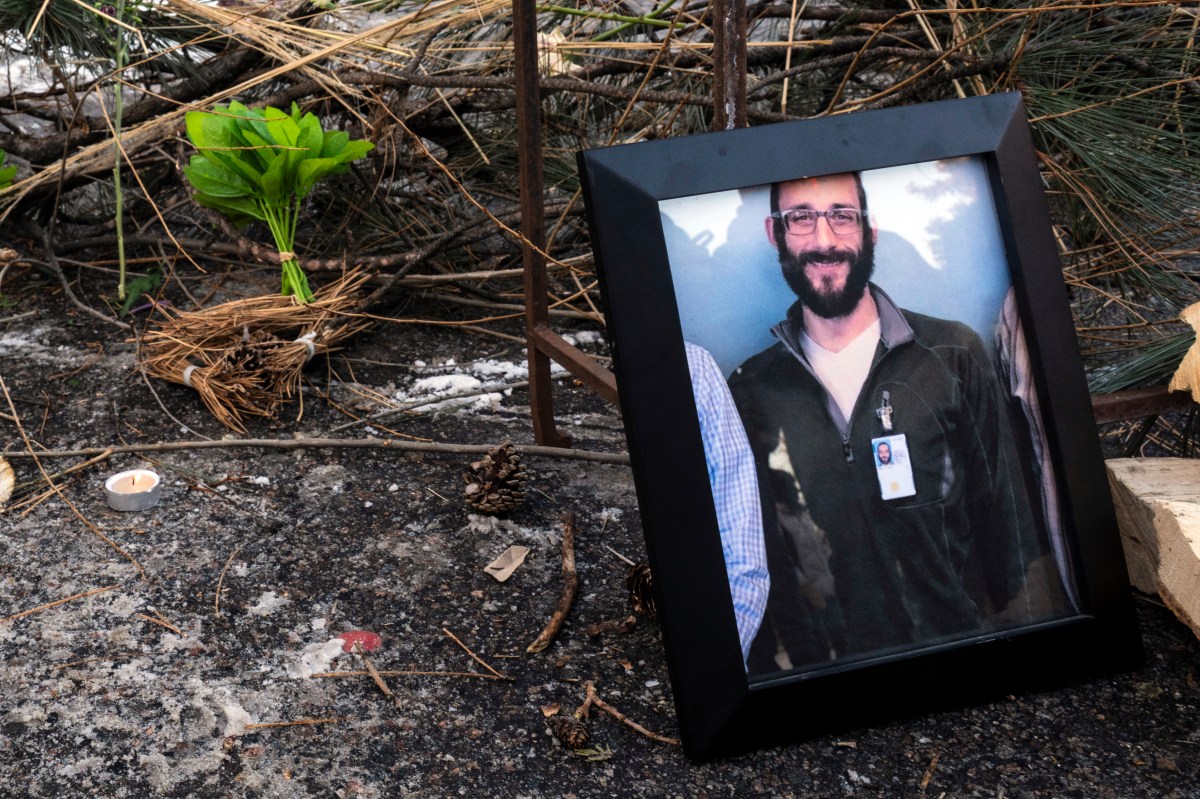
A colleague of Alex Pretti told Newsweek that the 37-year-old ICU nurse “wasn’t looking for trouble” when he was fatally shot by federal immigration officers in Minneapolis on Saturday.
Dr. Aasma Shaukat, a physician and clinical researcher who first hired Pretti as a research assistant in 2014, described him as “the kindest, sweetest human” and said she was devastated by his death.
“He wasn’t looking for trouble. He wasn’t instigating anything. It’s disturbing how he’s being portrayed,” Shaukat told Newsweek in a phone interview on Sunday.
Pretti, a U.S. citizen, was killed by a U.S. Border Patrol agent on January 24 during an enforcement operation in Minneapolis. The Trump administration said officers fired after an encounter in which they claimed Pretti approached them while armed and resisted efforts to disarm him, describing the shooting as self-defense.
The Department of Homeland Security (DHS) told Newsweek on Saturday that at approximately 9:05 a.m. CT, U.S. Border Patrol officers encountered a suspect carrying a 9 mm semi-automatic handgun. The agency said the officers attempted to disarm the individual, who “violently resisted,” prompting an agent to fire what DHS described as “defensive shots.”
“This looks like a situation where an individual wanted to do maximum damage and massacre law enforcement,” Tricia McLaughlin, a spokesperson for the agency, told Newsweek on Saturday.
Video footage and eyewitness accounts appear to contradict what the Trump administration is saying, showing Pretti holding a phone while filming agents and stepping in to help a woman who had been pushed to the ground. Footage shows one agent removing a weapon before another shot Pretti multiple times. Witnesses say he was tackled before the shooting. Pretti was pronounced dead at the scene, and his family and friends say he was acting as a bystander trying to document the operation and assist others.
According to Minneapolis Police Chief Brian O’Hara at a press conference Saturday, Pretti was a lawful gun owner and permitted carrier.
Shaukat said she first met Pretti when he applied for a position on her research team at the Minneapolis VA Medical Center. Though he had no prior experience, he stood out for his eagerness to learn and his sincerity, she said.
“He didn’t have any experience, but he was very eager to learn, very keen on learning the position, and very enthusiastic. He looked sincere,” Shaukat said. “He really felt like he was making a difference, was really helping and contributing.”
In a statement, Pretti’s family said he “was a kindhearted soul who cared deeply for his family and friends and also the American veterans whom he cared for as an ICU nurse at the Minneapolis VA hospital.”
Pretti was remembered by loved ones and colleagues as a compassionate healthcare worker. His early experience on Shaukat’s research team inspired him to pursue nursing, and she supported him through coursework and letters of recommendation. After completing his training, he returned to the VA Medical Center as an ICU nurse.
“The last time I spoke to him, this past summer, he was in a good place and happy with his life and career,” Shaukat said. “He was excited about saving money, doing home repairs, and buying a car. He was looking forward to his career in healthcare and contributing in more meaningful ways than just continuing his career. I feel like his whole life was ahead of him and he was kind of just getting started.”
Pretti’s death has reignited protests in Minneapolis and criticism of federal immigration enforcement tactics. State officials, including Democratic Minnesota Governor Tim Walz, called for an independent investigation. This was the second fatal shooting involving federal immigration officers in Minneapolis in recent weeks.
On January 7, Renee Nicole Good, a U.S. citizen and mother of three, was fatally shot by an ICE agent during enforcement operations in the city, sparking nationwide outrage and protests. As Minnesota reels from the back-to-back killings, tensions in the city have boiled over into large protests and public outcry over the conduct of federal agents.
Shaukat praised what she described as Pretti’s sense of civic responsibility.
“He cared about his community,” she said. “He would pick up trash if he saw someone littering. He always treated patients and people around him with respect. I don’t think I appreciated him enough. I wanted to thank him for everything he had done, his dedication to health care, taking care of vulnerable individuals, supporting people in his community.”
Read the full article here
