

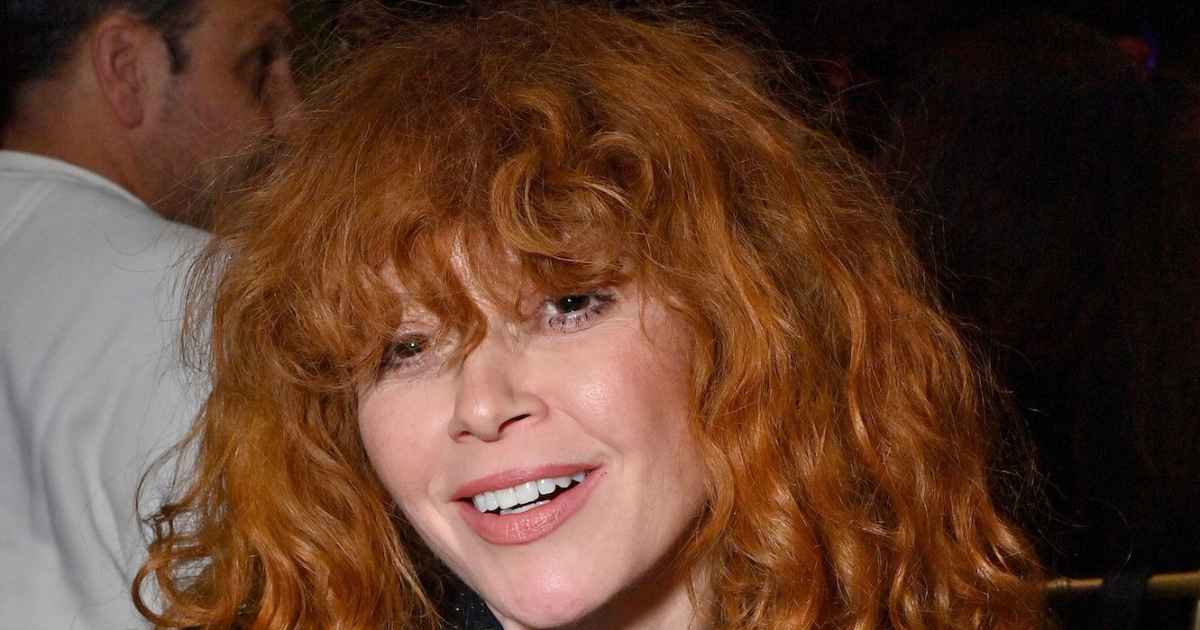
Natasha Lyonne made an appearance at the 2026 Sundance Film Festival hours after revealing she relapsed.
Lyonne, 46, was all smiles at the Saturday, January 24, event held in Park City, Utah. She rocked a sheer black long-sleeve body suit with a black corset, pairing the look with black sunglasses and styling her hair in curls.
Hours before, Lyonne shared that she had relapsed after more than a decade of sobriety.
“Took my relapse public, more to come,” Lyonne wrote via X on Friday, January 23.
While replying to a fan sending her support in the comments section, Lyonne added, “Thanks, boss … for the grace, etc. Sending love back your way. May become a pothead or a nun. TBD.”
In a separate post on X shared on Saturday, January 24, Lyonne noted that recovery is a “lifelong process.”
“Anyone out there struggling, remember you’re not alone. Grateful for love & smart feet. Gonna do it for baby Bambo,” she wrote, alongside a series of emojis. “Stay honest, folks. Sick as our secrets. If no one told ya today, I love you. No matter how far down the scales we have gone, we will see how our experience may help another. Keep going, kiddos. Don’t quit before the miracle. Wallpaper your mind with love. Rest is all noise & baloney.”
Lyonne has previously been open about her struggles with addiction, sharing that she began drinking alcohol and using drugs in the early 2000s as a young actor. She ultimately entered an in-patient treatment facility in 2006, where she got sober. She later recalled to Entertainment Weekly in 2012 that “spiraling into addiction is really, really scary.”
“Some things have a very A-to-B scientific effect,” she told the outlet at the time. “Like, alcohol is a depressant. Cocaine is a stimulant. And then, Cocaine plus heroin is bad! That’s the point of my story, that’s the moral. Coke plus heroin equals speedball. And speedball equals bad, you know?
She continued at the time, “It’s weird to talk about. I was definitely as good as dead, you know? A lot of people don’t come back. That makes me feel wary, and self-conscious. I wouldn’t want to feel prideful about it. People really rallied around me and pulled me up by my f***ing bootstraps.”
Five years later, Lyonne shared that she has “no problem” talking about her addiction publicly.
“I’m such an open book that I have no problem talking about it and speaking freely, but I’ve sort of said my piece on the subject,” Lyonne told The Guardian in a 2017 interview. “The truth is, at the back of that addiction are feelings that so many of us have, that don’t go away. Isn’t everyone entitled to a moment of existential breakdown in a lifetime? Adulthood is making peace with being kind to oneself when a response to life that’s so much more organic and immediate would be to self-destruct.”
If you or someone you know is struggling with substance abuse, contact the Substance Abuse and Mental Health Services Administration (SAMHSA) National Helpline at 1-800-662-HELP (4357).
Read the full article here
