

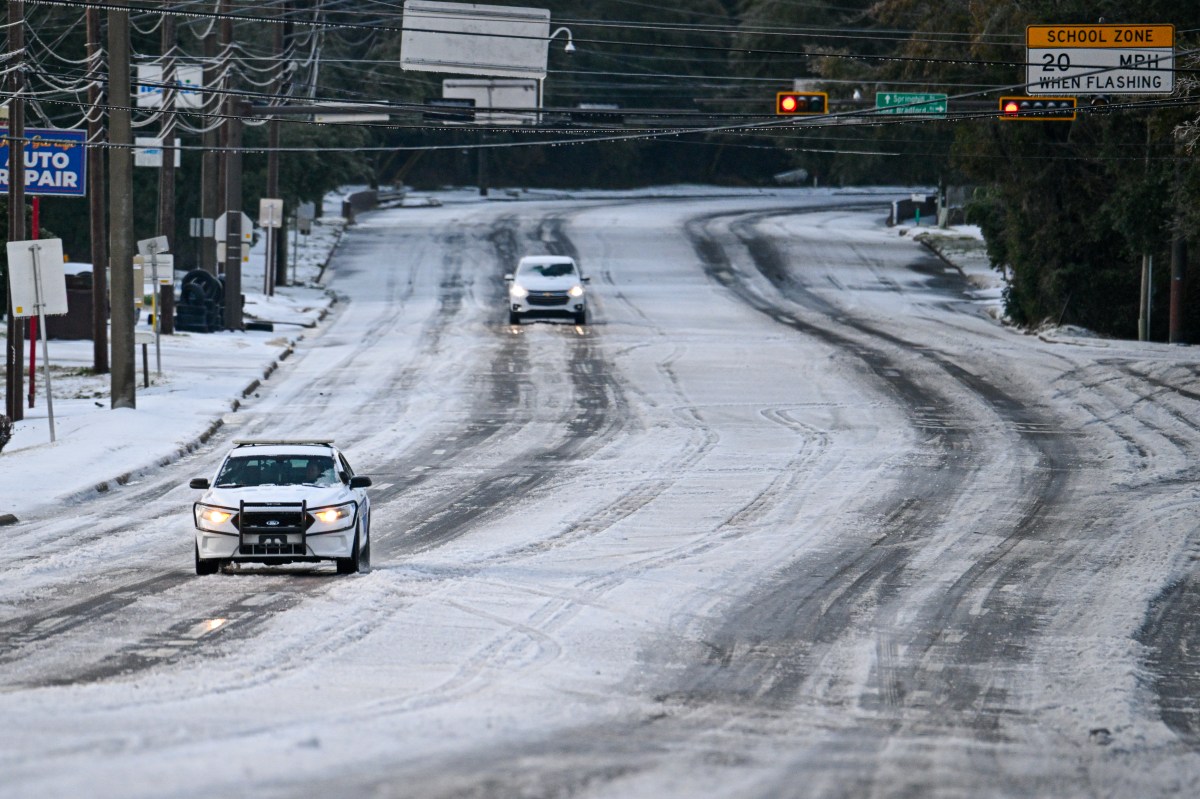
There is a 20 percent chance that a winter storm bringing impacts across the U.S. Southeast this weekend will bring flurries to a Florida city that hasn’t seen snow in 16 years.
The forecast comes as the National Weather Service (NWS) issues forecasts with increasing certainty about the impacts of an incoming winter storm, set to hit the U.S. only days after Winter Storm Fern ravaged the nation last weekend. Whereas most of the higher snowfall totals are expected along the Eastern Seaboard, particularly in the Carolinas, this weekend, one coastal Florida city could witness a rare snowfall.
“Holy cow This has to be a first!! I was checking on the impacts of the SE Coast Blizzard, and noticed that #Tampa Bay has been highlighted in NOAA’s Winter Storm Severity Index for a “small” chance of #snow impacts. So, yes, I’m saying there’s a chance,” WFLA-TV chief meteorologist Jeff Berardelli posted on X on Wednesday.
The last time snow flurries occurred in Tampa, Florida, was on January 9, 2010, NWS meteorologist Tony Hurt told Newsweek.
Hurt said that there is a 10 to 20 percent chance of snow flurries returning to Tampa overnight Saturday into the early morning hours on Sunday. If they occur, flurries will be confined to areas near the coast as moisture moves inland from the Gulf. He also warned of “very breezy” conditions this weekend.
Other parts of Florida also could see some snow this weekend. The highest chance of snow for the Sunshine State will be in Jacksonville.
Extremely cold temperatures are expected in Florida this weekend, with wind chill making it feel as low as the single digits in Northern Florida, while areas as far south as Miami see temperatures near freezing.
A cold weather advisory will likely be issued for South Florida this weekend, and there’s a chance an extreme cold warning could be issued further north. As of Wednesday afternoon, freeze warnings and cold weather advisories were in place across much of the state.
“Use caution while traveling outside. Wear appropriate clothing, a hat, and gloves,” the NWS office in Tampa Bay said in the freeze warning. “Keep pets indoors as much as possible. Take steps now to protect tender plants from the cold.”
“Very cold temperatures can lead to hypothermia with prolonged exposure,” the NWS office in Melbourne said in a similar message. “Frost and freeze conditions could kill crops, other sensitive vegetation and possibly damage unprotected outdoor plumbing.”
Looking further out, the NWS Climate Prediction Center anticipates temperatures will remain below average across the eastern third of the U.S. through February 7. The states with the greatest chance of below-average temperatures are along the Eastern Seaboard, including Florida.
In a polarized era, the center is dismissed as bland. At Newsweek, ours is different: The Courageous Center—it’s not “both sides,” it’s sharp, challenging and alive with ideas. We follow facts, not factions. If that sounds like the kind of journalism you want to see thrive, we need you.
When you become a Newsweek Member, you support a mission to keep the center strong and vibrant. Members enjoy: Ad-free browsing, exclusive content and editor conversations. Help keep the center courageous. Join today.
Read the full article here
