

A battle is unfolding over the last major undeveloped site in Point Cook, as residents and two councils join forces to stop a developer turning creek-front land into an industrial park.
The vacant land drains into Skeleton Creek, one of the most environmentally significant waterways in Melbourne’s west. Most of the privately owned site is covered by a planning overlay prohibiting development due to flood risk.
The proposed industrial park would also back onto dozens of suburban backyards.
Wyndham Council planning officers had recommended approval of the subdivision, however, in an unusual move, councillors snubbed the recommendation, with all seven members of the council’s planning committee voting to oppose the plan in September.
Schiavello, one of Australia’s largest privately owned commercial property developers, has sought to sidestep the council and community objections and applied directly to VCAT, the state’s planning tribunal, for approval.
Wyndham Council and several residents appeared at the tribunal hearing last week and urged that Schiavello’s proposal be rejected, arguing it would industrialise a residential area, introduce noise and air pollution to the neighbourhood, and potentially degrade the environmental qualities of the Skeleton Creek corridor.
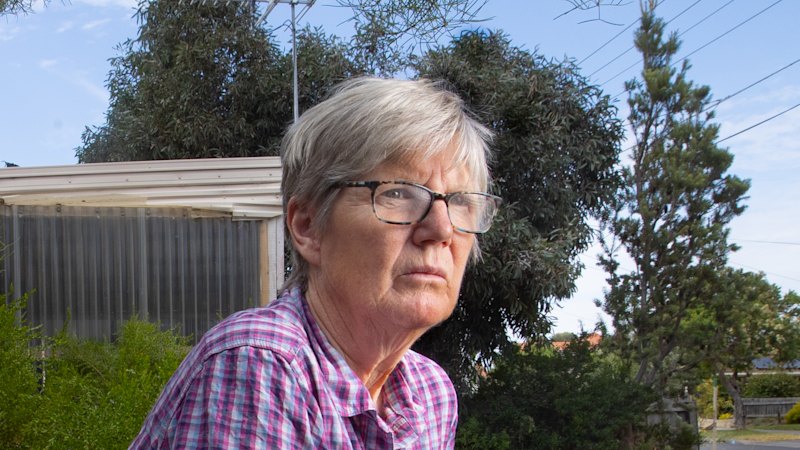
Schiavello’s proposal attracted 104 objections from residents, among them Angela Whiffin, the president of volunteer group Friends of Skeleton Creek, who lives in a street that borders the would-be industrial estate.
Whiffin has lived in Altona Meadows for more than 40 years. Her front garden resembles a wild native grassland, and many of its plants were taken from seeds harvested from the Point Cook land.
She says she has seen eagles, hawks, owls and kites, who use the paddock as a hunting ground. Her garden is also a refuge for blue-tongue lizards and skinks.
“A lot of them come from that paddock,” she says of the creatures that she finds in her yard.
Whiffin has seen the site in flood and says it becomes a breeding ground for frogs when it is in its ephemeral wetland state.
Not all of her objections are environmental. She says she worries the industrial estate could erase her sense of safety in her own home, and become a magnet for hooning and rubbish dumping.
Hobsons Bay City Council submitted a statement against the proposal, arguing it has the potential to negatively impact the amenity of homes that abut the eastern part of the land.
The council also raised concerns for the loss of rare native vegetation.
“It is understood that all native vegetation patches within this area are proposed to be cleared to accommodate future industrial development,” the council said. “Plains grasslands are critically endangered, and it is understood that less than 1 per cent of their original extent is remaining.”
An environmental assessment of the site commissioned by Schiavello identified patches of intact native grassland that would have to be cleared but found the site was mostly covered in weeds.
Because most of the 27-hectare site is flood prone, Schiavello has limited its proposal to the northernmost part of the land, which was zoned for industrial usage more than 20 years ago. A commercial precinct exists to the west of the site, which abuts the Princes Freeway.
Jasmine Hill, a Wyndham councillor who moved the motion to oppose the development at September’s meeting, argued the decision on the land’s future should not be bound by a zoning decision made so long ago.
“When I first moved to Point Cook, much of the area was still farmland with cows and sheep in paddocks. In 20 years, Point Cook has grown from 10,000 to 70,000 people,” Hill said in moving her alternate motion.
Hill said the suburb’s explosive growth had reshaped the community’s needs, and an industrial estate would clash with the area’s residential character.
Point Cook resident Aneez Ahemed Kalilur Rehman appeared before VCAT and urged the tribunal to reject the proposal, arguing it threatens to degrade the public’s experience of the Skeleton Creek trail.
“From a resident perspective, I support council’s refusal,” Rehman submitted to the tribunal.
“Skeleton Creek is not just a line on a planning map for residents. It is a place where people walk, cycle, and connect with nature in an increasingly urban landscape. Approving this subdivision would replace that shared public experience with an industrial edge, permanently changing the character of the creek corridor.”
Schiavello said it would be inappropriate to comment while the matter was before VCAT.
Its statement of grounds to the tribunal argues the subdivision will “provide future economic benefit”.
It notes Melbourne Water and the Department of Transport and Planning have assessed the proposal and raised no objections.
“The subdivision is compatible with nearby land uses, and it is noted that any future building and works will require additional permission to be assessed on its own merits,” the statement argues.
Melbourne Water’s Dr Brett Anderson said the authority had consented to the proposed subdivision under strict conditions that protected Skeleton Creek and managed flood risk.
“The subdivision is located outside the urban floodway zone and our conditions ensure the creek corridor is safeguarded during and after construction,” Anderson said.
Melbourne Water is updating its flood modelling across greater Melbourne, including Wyndham.
Get to the heart of what’s happening with climate change and the environment. Sign up for our fortnightly Environment newsletter.
 Adam Carey is senior city reporter (suburban). He has held previous roles including education editor, state political correspondent and transport reporter. He joined The Age in 2007.Connect via X or email.
From our partners
Read the full article here
