

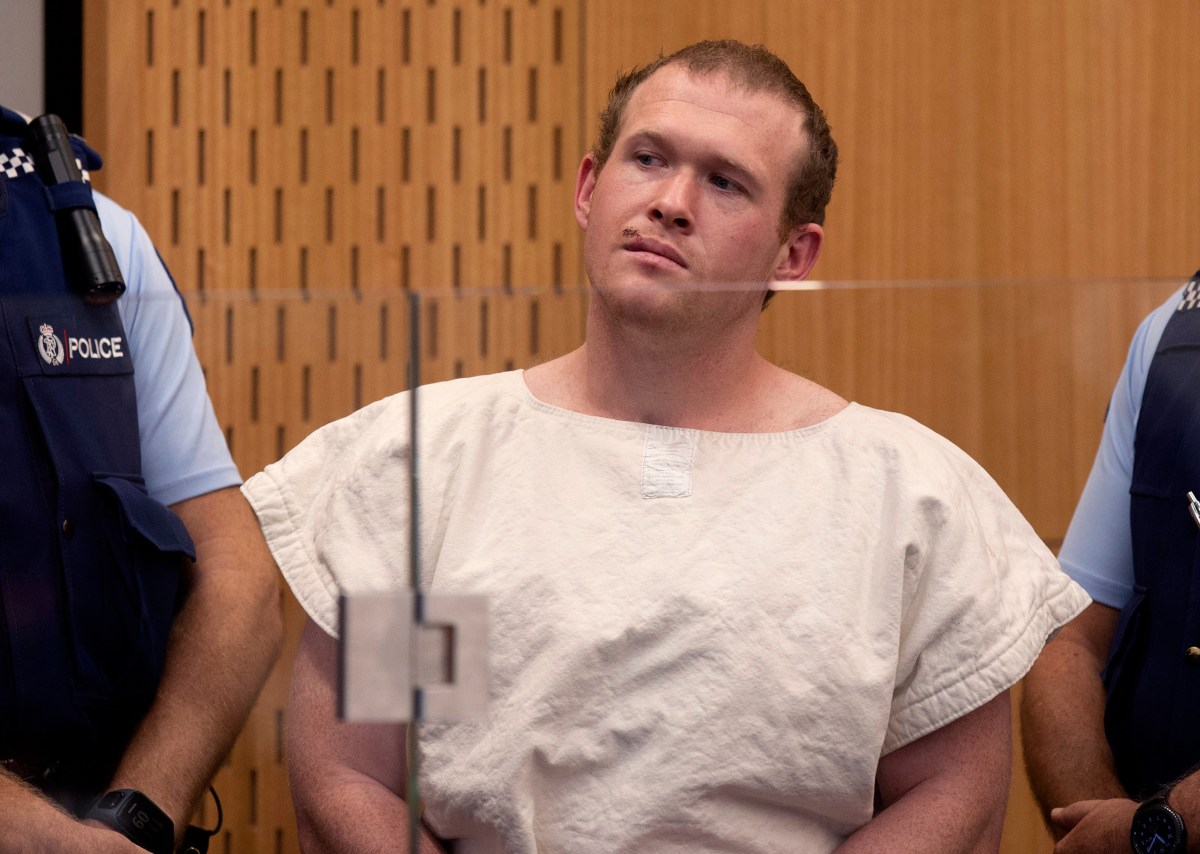
The man who killed 51 Muslim worshipers at two mosques in New Zealand’s deadliest mass shooting told an appeals court Monday that he felt forced to admit to the crimes because of “irrationality” due to harsh prison conditions.
Brenton Tarrant, 35, is seeking to have his guilty pleas discarded and to appeal his unprecedented life sentence without the chance of parole.
A panel of three judges at the Court of Appeal in Wellington will hear five days of evidence about Tarrant’s claim that he was not fit to plead to the terrorism, murder and attempted murder charges he faced after the March 2019 attack in Christchurch.
The Context
This marks the first time Tarrant has spoken substantively in a public setting since he livestreamed the 2019 massacre on Facebook. The appeal could potentially reopen one of New Zealand’s darkest chapters, forcing survivors and families of victims to relive the trauma of an attack that killed 51 people, including a 3-year-old boy, and severely wounded dozens of others.
The case also tests New Zealand’s unprecedented life sentence without parole, which had never been imposed in the country before Tarrant’s conviction.
His legal challenge arrives more than two years late, as appeals must typically be filed within 20 working days of sentencing.
What To Know
Tarrant, a self-declared white supremacist from Australia, migrated to New Zealand specifically to commit the massacre, which he planned in detail. He amassed semiautomatic weapons, took steps to avoid detection, and wrote a lengthy manifesto before driving from Dunedin to Christchurch to open fire at two mosques.
During Monday’s hearing, conducted under tight security with limited access for reporters and victims, Tarrant appeared via video from prison wearing a white button-down shirt and black-rimmed glasses with a shaved head. He claimed his mental health had deteriorated due to solitary confinement with limited reading material or contact with other prisoners.
Tarrant told the court he was suffering from “nervous exhaustion” and uncertainty about his identity and beliefs when he pleaded guilty, saying there was “little else I could do” a few months before his trial was scheduled to begin. He filed his appeal documents in September 2022, claiming he hadn’t had access to required information earlier.
New Zealand institutions have sought to curb the spread of Tarrant’s message through legal orders and a ban on possession of his manifesto or video of the attack.
If successful, his case would return to court for a trial, which was averted when he admitted to the hate-fueled shooting in March 2020.
What People Are Saying
Crown lawyer Barnaby Hawes suggested Tarrant had other options available, including requesting a trial delay on mental health grounds or proceeding to trial to defend himself. Hawes also noted there was: “Little evidence in the documentation of his behavior by mental health experts and prison staff that he was in any kind of serious mental crisis.”
Brenton Tarrant responded: “I was definitely doing everything possible to come across as confident, assured, mentally well. I always wanted to put on the best front possible.”
He added that his behavior “reflected the political movement I’m a part of.”
What Happens Next
The hearing is scheduled to run for the rest of the week, but the judges are expected to release their decision at a later date.
If they reject Tarrant’s attempt to have his guilty pleas discarded, a subsequent hearing will focus on his bid to appeal his sentence of life without the chance of parole.
Reporting from the Associated Press contributed to this article.
Read the full article here
