

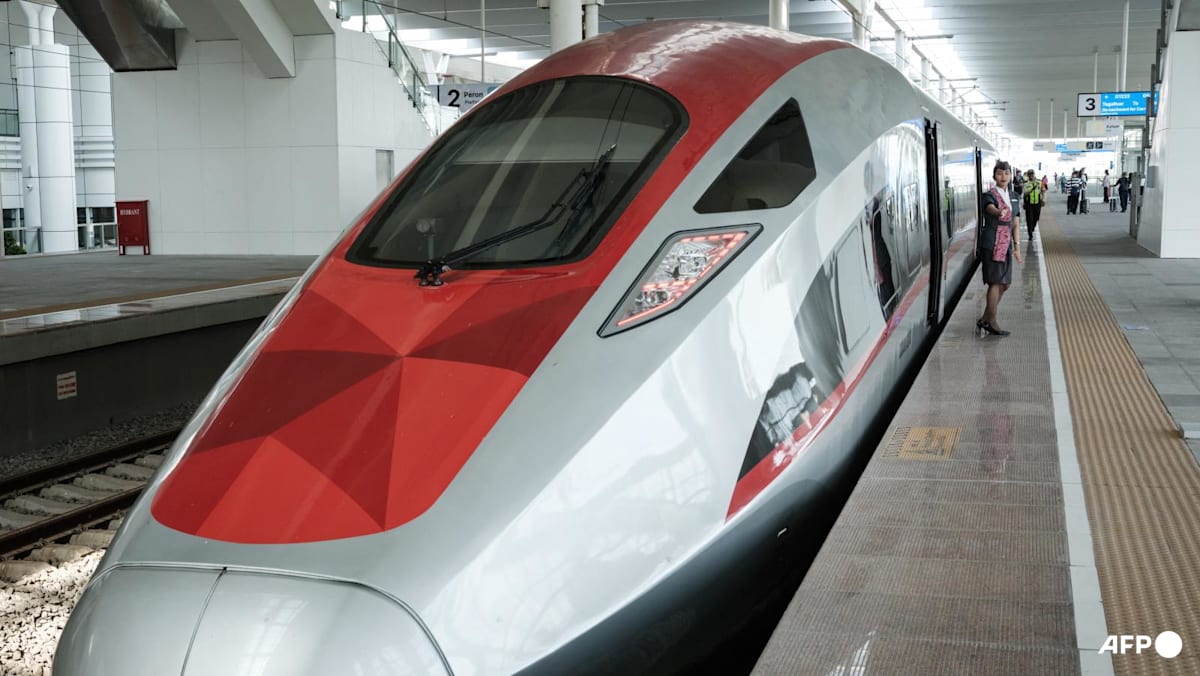
JAKARTA: Indonesia will draw from state coffers to repay China for the archipelago’s Whoosh high-speed rail (HSR) project, its government said.
“Yes, the payment of Whoosh debt will be using the state budget,” Indonesia State Secretary Minister Prasetyo Hadi, who is also President Prabowo Subianto’s spokesperson, told reporters at Jakarta’s Gambir Station on Tuesday (Feb 10), as quoted by local news outlet Tempo.
Prasetyo did not specify the exact amount of debt owed to China, according to CNBC.
The 142km line from Jakarta to Bandung, Southeast Asia’s first HSR, began operating commercially in 2023 and ferries 20,000 to 30,000 passengers daily. It cost about US$7.3 billion, three quarters of which was financed by Indonesia through loans from the China Development Bank.
Prasetyo added that technical discussions on the repayment mechanism are still underway, with negotiations led by Rosan Perkasa Roeslani, the CEO of Indonesia’s sovereign wealth fund Danantara.
Tempo reported that on Jan 20, the Coordinating Minister for Infrastructure and Regional Development Agus Harimurti Yudhoyono previously discussed the debt restructuring of the high-speed rail with Finance Minister Purbaya Yudhi Sadewa.
According to Agus, the debt restructuring remains at the forefront of discussions between Jakarta and Beijing as the matter “relates to the Chinese party and the fiscal security of companies involved in the project”.
At the time, however, he did not elaborate on payment options and said that the decision to use the state budget was not set in stone.
“Please be patient because we are also striving to look for the best solution. It is aligned with President Prabowo’s mandate that the state will also take responsibility regarding the financial structure,” Agus said on Jan 20, as quoted by Tempo.
Prabowo has previously said that the Whoosh project should not be judged by its financial losses given its social benefits.
“I have said that, as president of the Republic of Indonesia, I will take responsibility for this issue. Hence, there’s no need for commotion because we are strong enough to handle it,” he said last November, as reported by state news agency Antara.
“I don’t see any issue with us paying 1.2 trillion rupiah (around US$72 million) annually in (interest expense), because this transport system helps reduce traffic congestion, air pollution, and travel time – benefits that must be taken into account.”
Read the full article here
