

Published on
Just days ago, NATO chief Mark Rutte told Europe to “keep dreaming” if they think they can defend themselves without the US.
But European Commission President Ursula von der Leyen fired back during the Munich Security Conference.
“An independent Europe just means let’s develop our strengths without constantly leaning on someone else,” she said.
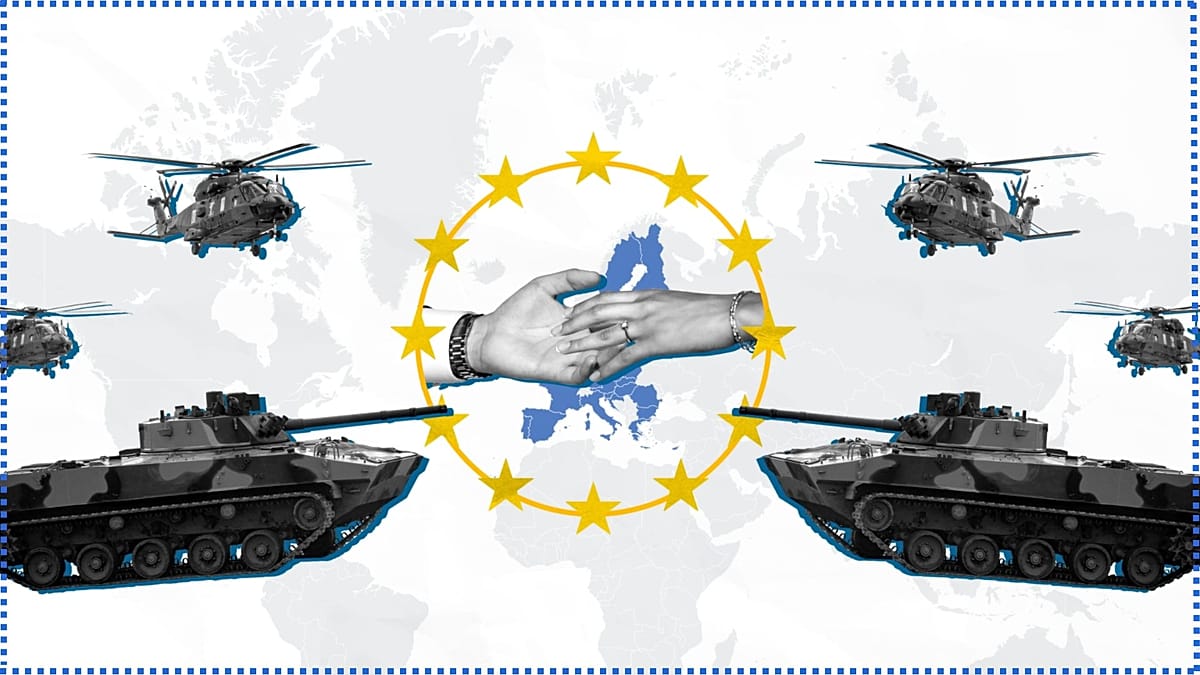
And part of her plan involves a little-known rule: Article 42.7.
It says that if an EU country is attacked, other members have an obligation to help. On paper, the wording seems to be stronger than NATO’s famous Article 5. It does not even require a unanimous vote to activate.
But there is a catch. The EU is not a military alliance. It lacks a unified command structure.
It leaves it up to each country to decide how to help, which does not automatically mean sending troops. In fact, it has only been triggered once, after the 2015 Paris attacks.
Plus, there is a trust gap. When Eastern European nations seek a true security shield, they look to NATO, not to Brussels.
But with Washington demanding Europe take over its own conventional defence and with growing doubts around the future of NATO, the clock is ticking.
The EU is also wondering what happens if the US closes its nuclear umbrella over Europe. Building a fully independent European nuclear shield would cost billions of euros and take time.
So, Europe has the treaty and the article. Now it must build the military strength to back it up.
Watch the Euronews video in the player above for the full story.
Read the full article here
