

Home prices across the country continued their relentless climb in January, even as sales fell as a result of homebuyers’ ongoing struggles with higher costs and growing economic uncertainty.
The median sale price of a home inched up by 0.3 percent month-over-month, according to data by Redfin which uses the repeat-sales pricing method to calculate seasonally adjusted changes in single-family home prices. Compared to a year earlier, prices rose by an even higher 2.1 percent, though the pace of growth had slowed down from a month earlier, when it was 2.4 percent.
But in some parts of the country, home prices are falling—even plunging, as in the case of Austin, Texas, where they were down 4.2 percent year-over-year and essentially flat month-over-month (-0.03 percent).
Where Are Home Prices Falling?
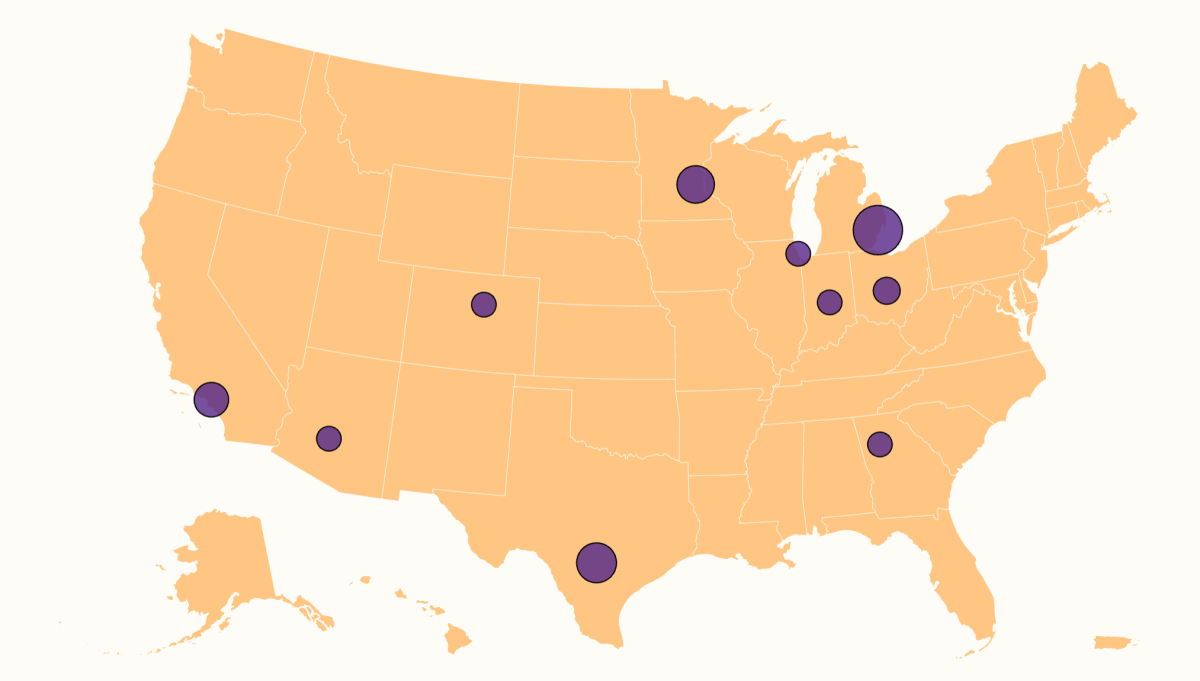
Home prices fell month-over-month in 14 of the 50 major U.S. metropolitan areas in January. The biggest decline was reported in Warren, Michigan, where prices were down 1.5 percent from a month earlier.
It was followed by San Antonio, Texas (-1 percent), Minneapolis (-0.8 percent), Los Angeles (-0.72 percent), and Columbus, Ohio (-0.44 percent).
Compared to January of last year, prices had fallen in 16 metros, with the biggest declines being reported in Austin, Texas (-4.2 percent), San Antonio, Texas (-3.8 percent), and Jacksonville, Florida (-3 percent).
Where Are Home Prices Rising?
The biggest month-over-month increases, on the other hand, were reported in Philadelphia (+2.6 percent), Providence, Rhode Island (+2.5 percent), and San Francisco (+2.1 percent).
On a year-over-year basis, the biggest price increases were reported once again in San Francisco (+14.3 percent), New York City (+11.1 percent), and Milwaukee (+9.2 percent).
What Is Behind These Differences?
Different levels of inventory across the country have created a sharp regional divide in the U.S. housing market over the past couple of years, with buyers in metros with more supply being able to significantly push down prices to allow frustrated sellers to close a deal.
In an interview with Newsweek in December, Anthony Smith, a senior economist at Realtor.com, spoke of regional differences underscoring “a widening split between resilient Northeastern and Midwestern metros and weakening markets across the Sun Belt and West.”
These markets “continue to benefit from tighter resale supply and more stable underlying demand,” he said. “Lower rates of price reductions and limited inventory turnover are helping support firmer appreciation in these parts of the country.”
Former hotspots during the pandemic in particular, like Austin, have been experiencing a brutal price correction since the end of the home-buying boom, while traditionally stable metros in the Northeast and Midwest continue seeing solid gains, partially because they continue to have low levels of inventory and steady demand.
But there is good news for all homebuyers across the U.S.: the number of markets shifting in their favor has grown in recent months, according to a recent Realtor.com report.
As of November, the latest data available, in 18 out of the 50 largest U.S. metropolitan areas buyers had the upper hand over sellers thanks to growing inventory levels.
Slightly lower borrowing costs are also helping buyers getting off the sidelines of the market, according to experts, even if many remain unsure about whether this is the right time to buy or mortgage rates will fall even lower in the coming months.
“Mortgage rates have dipped in recent weeks, which has boosted purchasing power for house hunters, but a lot of folks are still waiting to buy until rates drop further,” said Chen Zhao, Redfin’s head of economics research, said in a statement included in the recent report.
“The good news is that in the meantime, price growth is limited and buyers have room to negotiate concessions from sellers.”
Read the full article here
