

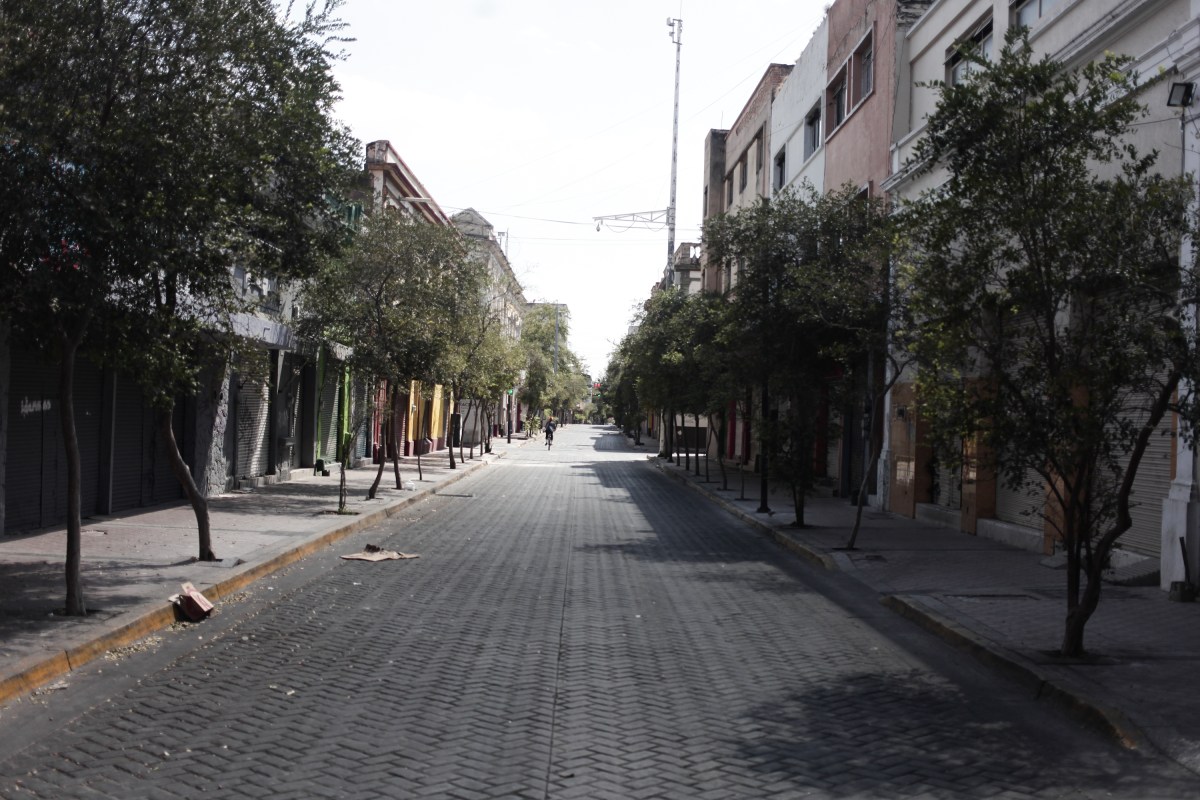
For three days after the Mexican army killed the most powerful drug lord in the country, Mexico’s second-largest city was paralyzed. Shops closed. Buses stopped running. Flights were canceled. People who needed food waited four hours in line for tacos at midnight.
On February 22, special forces cornered Nemesio Oseguera Cervantes, known as “El Mencho,” the 59-year-old boss of the Jalisco New Generation Cartel, in Tapalpa, a mountain town roughly two hours southwest of Guadalajara. He died in custody while being airlifted to Mexico City. Within hours, his cartel responded the only way it knew how.
Cars set ablaze blocked roads in nearly a dozen states. In Jalisco alone, authorities registered nearly 80 separate acts of violence: roadblocks, armed confrontations, and attacks on gas stations, banks and stores. The governor ordered residents to stay home. Public transport was suspended. Ride-share apps went dark.
David Mora, a Mexico analyst with the International Crisis Group, happened to be in Guadalajara for fieldwork that weekend. He spent Sunday tracking a flood of information and misinformation before finally venturing out on foot at night in search of food.
“The images were very reminiscent of the pandemic,” Mora told Newsweek. “Even the Oxxos don’t close on December 31 at midnight. Everything was shut.”
On Avenida Chapultepec, one of the city’s main commercial strips, he found a line stretching for blocks outside one of the few taquerías still open. People were ordering 20 or 30 tacos at a time. In line alongside him were stranded marathon runners, more than 10,000 of whom had come from outside the state for the city’s half marathon that morning, and exhausted National Guard members who had been on duty for more than 24 hours, also hungry and also waiting.
“The line was huge. Four hours to buy an order of tacos, which in Mexico you can usually find in minutes,” Mora said. “Everyone was stocking up.”
More than 1,000 people spent Sunday night trapped inside Guadalajara’s zoo, sleeping on buses and unable to return to nearby states. “We decided to let people stay inside for their safety,” said zoo director Luis Soto Rendón to local media.
By Monday morning, the city woke to schools closed and roads still blocked by the charred remains of dozens of vehicles. Families lined up outside pharmacies serving customers through chained doors, buying food, medicine, water, diapers and baby formula. José Luis Ramírez, a therapist, was among the first to venture out. It was his first time leaving home since the violence erupted.
“We have to not think scared,” he told the Associated Press (AP). “Take things as they come.”
A Return to Normal, and Lingering Fears
By Wednesday, Guadalajara was back on its feet. Traffic moved. Businesses reopened. Workers resumed renovations at Akron Stadium, the 49,000-seat venue set to host FIFA World Cup matches in June.
Taxi driver Juan Carlos Pila, who had spent two days waiting with his family for things to calm down, rolled his eyes at what he called overblown coverage. “People should come, man,” he told the AP.
But the return to normal masked deeper anxieties. Thousands of missing-person flyers still lined lampposts and bus stops, bearing the faces of roughly 12,500 people who have disappeared in Jalisco, many allegedly at the hands of the very cartel whose leader was just killed. Local lawmakers are now quietly pushing legislation that would make it easier to remove the flyers before the world arrives for the tournament.
“They don’t want people coming to the World Cup to see them,” Carmen López, who is searching for her missing brother and nephew, told the AP. “It makes the government look bad in front of the entire world.”
FIFA said there was no risk. Mexican President Claudia Sheinbaum said the same. In Guadalajara, people went back to work and tried not to think about what comes next.
“Everyone is welcome,” Pila, the taxi driver, said.
The death toll from the operation and its aftermath reached at least 70, including 25 members of the Mexican National Guard killed in six separate attacks. Warning signs of what may follow were already visible elsewhere in the country.
Research by the International Crisis Group shows that leadership removals over the past 1 1/2 decades have frequently coincided with criminal fragmentation. From 2009 to 2020, at least 543 armed groups operated across Mexico. Municipalities affected by a kingpin’s capture tend, on average, to see at least one additional armed group emerge in the aftermath, according to the group’s data.
Mora, whose work focuses on organized crime and state security in Mexico, sees the same risk looming over Jalisco. “History shows that this strategy does not solve drug trafficking or organized crime,” he said. “On the contrary, it increases violence.”
Read the full article here
