

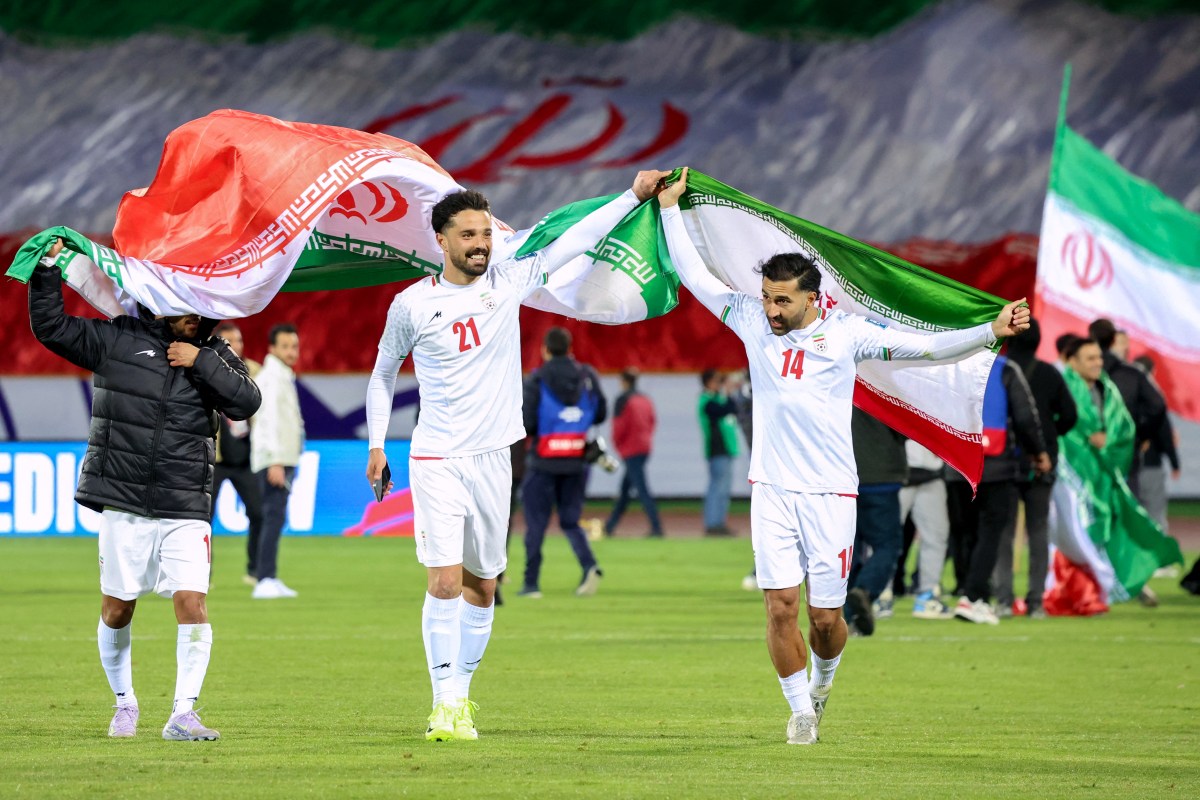
President Donald Trump’s public offer to shelter Iranian soccer players fleeing persecution is both a geopolitical gambit and a potential test of his human rights commitments ahead of the 2026 World Cup.
On Monday, just days after U.S. and Israeli airstrikes killed Iran’s Supreme Leader, Trump publicly demanded that Australia grant asylum to five members of Iran’s women’s soccer team. “Mr. Prime Minister, give ASYLUM,” Trump posted. “The U.S. will take them if you won’t.”
The team’s players had stood silent during Iran’s national anthem at the Women’s Asian Cup in Australia, an act that Iranian state media condemned as treason. With airstrikes ongoing and their country’s leadership decimated, the athletes faced an impossible choice between returning home to potential persecution or seeking refuge abroad. Australia subsequently granted asylum to five players, and Trump took credit for pressuring the country to do so.
“I just spoke to Prime Minister Anthony Albanese of Australia concerning the Iranian National Women’s Soccer Team. He’s on it! Five have already been taken care of, and the rest are on their way,” Trump posted on Truth Social.
As the 2026 World Cup approaches in the United States, Iran’s men’s national team could face a similar situation. If those players make comparable gestures of dissent and request asylum, it remains unclear whether the U.S. would extend the same offer.
History and Precedent
Both the men’s and women’s teams have faced severe consequences for perceived disloyalty over the years. Iranian state media has labeled players “wartime traitors” for refusing to sing the anthem, while the Revolutionary Guard closely monitors athletes and has a documented history of retaliating against families of those who dissent.
In November 2022, Iran’s men’s national team stood silent during the national anthem at the World Cup in Qatar before their opening match against England, protesting the government’s crackdown on domestic demonstrations. Days later, members of Iran’s Revolutionary Guard Corps summoned the players and threatened violence and torture against their families if they continued protesting or refused to sing the anthem in future matches. The players sang the anthem at their remaining games.
As news of the women’s team’s anthem silence spread, the stakes for returning home were made brutally clear by Iranian state media. On television, presenter Mohammad Reza Shahbazi warned: “Anyone who takes a step against the country under war conditions must be dealt with more severely. This is the pinnacle of dishonour and lack of patriotism.”
In the current conflict, with U.S. and Israeli airstrikes ongoing and Iran’s supreme leader dead, the risks for players may be higher than ever. Returning home could mean imprisonment, torture, or worse—even for national heroes.
Four years later, Iran’s participation in the 2026 World Cup is itself uncertain. The country’s soccer federation has expressed doubts about competing as the military conflict continues. Iran’s soccer federation president Mehdi Taj stated last week: “What is certain is that after this attack, we cannot be expected to look forward to the World Cup with hope.”
U.S. officials have not confirmed which members of Iran’s security detail and coaching staff would receive visas to enter the country. Current U.S. policy places a full restriction on Iranian nationals, with exceptions granted only through case-by-case waivers. That uncertainty makes it difficult for Iran’s federation to confirm whether the team can participate.
Urgent talks between FIFA, the Asian Football Confederation, and the Australian government took place over whether Iran’s women’s team could extend its stay in Australia for safety reasons. Speaking to FIFPRO’s general assembly on Monday, Beau Busch, president of FIFPRO Asia/Oceania, described the situation inside the squad as fluid: “There may be players who want to return. There may be some players within the group who would like to seek asylum, or would like to stay in Australia for longer. There may be some who are incredibly concerned about the potential journey home.”
Double Standard
Trump’s pledge to take in the Iranian women’s players could shape expectations ahead of June. Yet at the same time, the president also expressed indifference about Iran’s participation in the tournament. When asked about the country’s potential withdrawal from the World Cup, he told Politico: “I really don’t care if Iran plays in the World Cup or not. I think Iran is a very badly defeated country. They’re running on fumes.”
This contradiction extends further. His administration has simultaneously deported approximately 100 Iranians to their home country and reduced annual refugee admissions to 7,500, the lowest level in years.
Also, beyond public statements, Trump’s asylum policies create significant practical barriers for Iranian athletes seeking protection. The Trump administration has placed an indefinite hold on all asylum applications filed with U.S. Citizenship and Immigration Services by Iranian citizens.
If Iranian players do request asylum during the World Cup, the moment would test whether Trump’s offer to the women’s team reflects a broader commitment to protecting persecuted athletes or a one-time geopolitical statement.
Newsweek reached out to FIFA and the White House for comment on asylum protocols and visa procedures for the Iranian team. Neither had responded at the time of publication.
Read the full article here
