

In the ever-expanding universe of Gen Z “maxxing” trends—where self‑optimization has taken on forms from looksmaxxing to Chinamaxxing and, more recently, bedtime stacking—a quieter, softer counter‑movement is beginning to surface.
Dubbed “Nonna Maxxing,” the niche lifestyle trend swaps goal-oriented productivity hacks for long lunches, fresh air and the imagined wisdom of an Italian grandmother, a “nonna,” who seems blissfully untouched by the modern chaos those born between 1997 and 2012 are facing.
The concept entered wider online consciousness after organic skincare label @tallowtwins shared a carousel post about the trend to Instagram on February 24. The post, which has since garnered more than 54,800 likes and hundreds of comments, introduced followers to Nonna Maxxing through a series of illustrations and screenshots that framed the sun-soaked lifestyle as an antidote to contemporary American life.
Overlaid text read simply, “You need to be Nonna‑Maxxing,” while the imagery did the rest of the work.
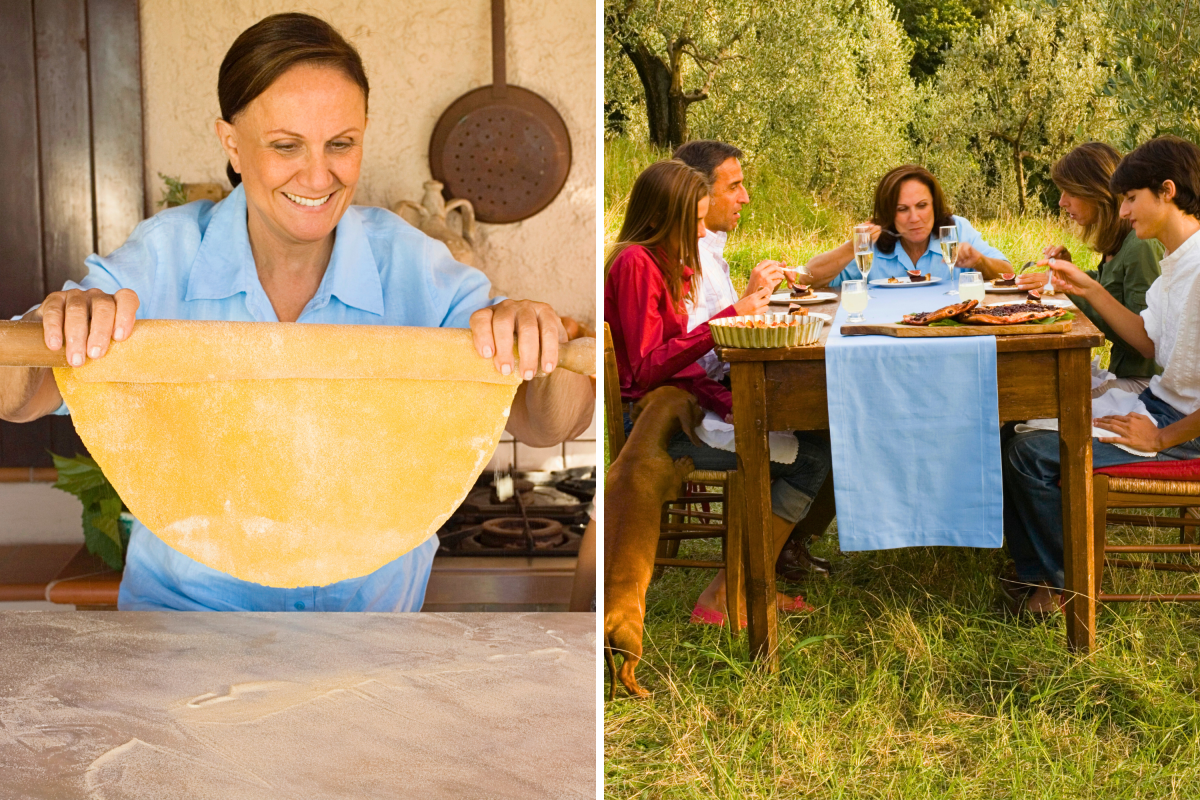
According to the trend, the core features of a Nonna-inspired lifestyle include mineral water in fancy glass bottles, owning fewer things, “dolce far niente”—itself already a viral concept, no social media. smiling at strangers, walking everywhere, cooking with fats and fresh produce, feeding loved ones, homemade everything, cotton nightgowns, sun exposure, airing out bedding, generational recipes, lengthy lunches with friends and natural skincare.
The aesthetic aligns closely with a familiar, romanticized vision of an old Italian grandmother—often imagined as living peacefully on a farm in Tuscany or by the seaside in Campagna—whose daily rituals promise health, longevity and contentment without optimization dashboards.
A Rejection of Modern Speed
At its core, Nonna Maxxing follows the same structural logic as earlier “maxxing” trends, but flips their intent.
Where looksmaxxing or Chinamaxxing focused on physical enhancement, and bedtime stacking on perfecting after-work routines, Nonna Maxxing is about opting out. Like Chinamaxxing before it, the trend frames itself as a quiet rebellion against processed food, polyester clothing, constant rushing and the demands of hyper‑connected American life, replacing them with something slower and seemingly more natural.
The @tallowtwins post also included screenshots from X, where users championed the trend before it became a trend.
One widely shared post from @embracingtara read: “While everyone is doing all this absolutely crazy **** to live longer, there’s a 102-year-old nonna in a coastal village in Italy somewhere who eats homemade pasta and drinks a glass of wine at dinner every night completely unbothered.”
Italy does, after all, have one of the highest life expectancies in Europe, and many aspects of the Italian lifestyle—alongside the broader Mediterranean diet—have been scientifically linked to physical and mental health benefits. Yet Nonna Maxxing remains aspirational rather than representative. It glosses over economic realities, regional disparities and the fact that daily life in Italy is not an endless sequence of sun‑drenched lunches. Experts say what it offers Gen Z instead is a fantasy of ease.
Why It’s Landing Now
From Hollywood productions to platforms such as TikTok and Substack, the wisdom of the stereotypical Italian grandmother has been upheld for years, now shared under banners like “Mediterranean grandma era.”
For some, it feels like a rare internet trend that is wholesome and good for one’s well-being. Its emergence comes after years of public fascination with Blue Zones, biohacking, wellness culture and longevity—movements that promised control over aging but often demanded relentless self‑monitoring.
Doriel Jacov, a psychotherapist who specializes in anxiety and burnout, told Newsweek that the appeal is deeply psychological.
“Many Gen Z and younger adults have been deeply impacted by years of constant digital stimulation and a culture that emphasizes productivity,” Jacov said. “When combined with the economic uncertainty Gen Z currently faces, a trend like Nonna Maxxing makes sense as a psychological response.”
Jacov added: “This trend reflects a deep desire for simplicity and emotional connection in a world that often feels overwhelming and unstable.”
Consumer research strategist Shampaigne Graves told Newsweek she takes a sharper view, framing Nonna Maxxing as a cultural signal rather than a quirky aesthetic.
“Nonna Maxxing is not a quirky internet trend. It is a cultural diagnosis,” she said.
Citing a 2025 MetLife report that found 46 percent of Gen Z workers feel regular stress, Graves said that those romanticizing the nonna lifestyle are responding to exhaustion.
Graves added that the trend also exists alongside a widening gender divide that shows the younger generation increasingly favoring more conservative social norms.
A 2026 survey across 29 countries found that 31 percent of Gen Z men believe a wife should always obey her husband, while 24 percent think women should not appear too independent. The figures are over double those of baby boomer men.
Yet, Graves said, Nonna Maxxing should not be read as submission. Instead, it reflects Gen Z women questioning what progress and feminism look like after years of hustle culture they feel previous generations helped normalize.
As Jacov said: “It’s interesting that Nonna Maxxing is considered a trend because these habits and ways of living were once considered ordinary and this highlights how disconnected modern society has become from that lifestyle.”
Read the full article here
