

A flurry of new model and partnership news came out of Lucid Group, Inc. investor day in New York City last week. While the company put on a brave face, the question of whether they’ll be able to deliver on those plans remains.
The electric vehicle company is now almost two decades old. It was founded in 2007 with a focus on building battery packs for electric buses and supplying powertrain components. Fast forward to 2016 and following a rebrand the now-Lucid Motors announced plans to become an automaker.
In the pre-COVID pandemic era, Saudi Arabia’s Public Investment Fund invested over $1 billion into the company, becoming its majority shareholder, which provided the funding needed to develop, build and deliver the first Lucid Air sedans to customers in 2021.
In late 2025, Lucid delivered its first Gravity SUV.
With just over 4,300 new vehicle deliveries in 2022; 6,000 in 2023; 10,200 in 2024 and 15,800 in 2025 the company has shown that growing demand for its products exists. Lucid’s own guidance suggests that it is expecting over 50-percent year-over-year delivery growth in 2026.
However, the company continues to struggle to find profitability. It lost $3.5 billion in 2025 but reports that it has $4.6 billion in liquidity, which it says will fund operations into 2027.
Interim CEO Marc Winterhoff has been tasked with finding operational efficiencies and additional funding. The company he runs used its investor day to showcase its plans for the future.
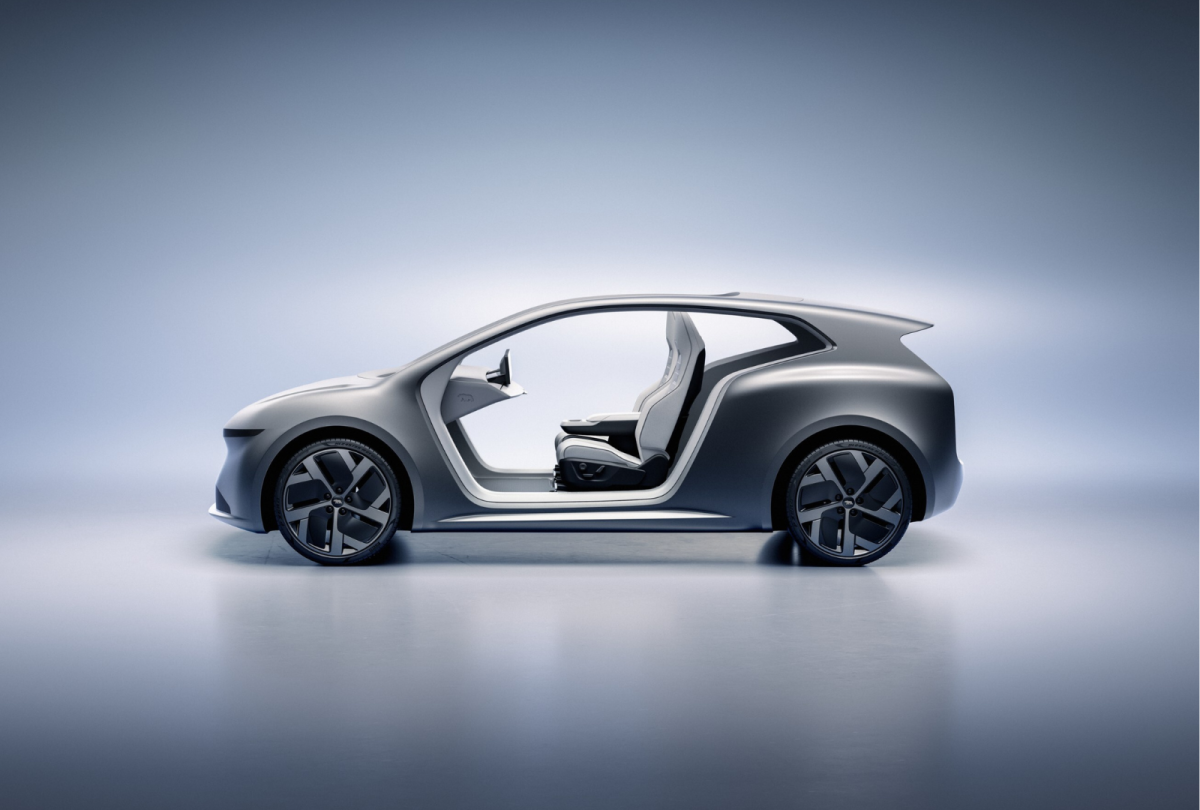
A new midsize vehicle platform was unveiled. It is designed to underpin models one size smaller than the one the Air and Gravity ride on.
“The midsize Lucid platform, at least as described so far, follows the natural evolution of Lucid’s development. It amplifies the reputation Lucid has built for EV efficiency and engineering prowess and, as described, is poised to be a software leader as well,” Stephanie Brinley, associate director of AutoIntelligence at S&P Global Mobility toldNewsweek.
She continued: “Moving into midsize will mean talking to a new type of consumer — although Lucid aims to remain in the premium segments, these are likely to be consumers from different household income demographics. The automaker is preparing for this as well and may be able to make the transition smoothly.”
Lucid plans to build its Cosmos and Earth models on the platform, in addition to a possible future robotaxi, shown in concept form as Lunar, a two-seater. Cosmos and Earth are promised to have a base price of under $50,000, which is still well above the planned cost of Rivian’s similarly-size base model R2 SUV, which goes on sale in June.
The company also previewed planned software and technology updates. It aims to bring an in-vehicle AI assistant to its cars and plans to monetize software and services in the future.
Lucid laid out its roadmap for vehicle autonomy, highlighting its partnership with Uber, which will expand to include the automaker’s midsize platform vehicles in a fashion similar to the current Gravity robotaxi program.
“Lucid’s strategy looks far more credible now that it finally extends beyond a premium halo-product story and starts to resemble a viable long-term business plan. Moving into lower-priced midsize vehicles, while also emphasizing cost reduction and future software revenue, is the right strategic direction for the brand. Lucid’s technology and efficiency were never the issue. The bigger question is whether the company can translate those strengths into a scalable and financially durable business,” Paul Waatti, director of analysis at AutoPacific, told Newsweek.
Brinley described the business plan as, “practical rather than pie in the sky,” but Waatti pointed out, “Lucid still has to prove it can execute in a market that has become much less forgiving.”
That market includes waning, if any, financial incentives for buyers to choose EVs over models powered by gas- or diesel-powered engines. “Incentives are fading, the political and regulatory backdrop is less supportive, and consumer demand has become more selective and price sensitive. Buyers still want EVs, but they are being more cautious on affordability, value and brand trust,” Waatti explained.
On its pathway to profitability, Lucid outlined key 2026 plans to focus on: scaling production of the Lucid Gravity, expanding its global commercial reach (models are now on sale in Europe, the Middle East, and North America), advancing software and services offerings and driving down material and manufacturing costs while maintaining capital allocation discipline.
“Lucid’s essential plan is not significantly different from other automakers – software-defined vehicle focus, lower costs, increasing autonomy. The Cosmos and its siblings will widen the market for Lucid, and Lucid needs to see those vehicles well received. Volume will take time to build, as the three vehicles go into production over a three-year period, but positive reception can further prove their credibility and support volume growth. Launch might not be perfect – few product launches are – as long as obstacles are addressed as quickly and efficiently as possible,” Brinley said.
Read the full article here
