

In January, Reuters reported that China granted preliminary approval to three of its largest tech companies – ByteDance, Tencent and Alibaba – along with AI startup DeepSeek to import the chips, although the regulatory conditions for China’s approvals were still being finalised.
The Chinese companies did not immediately respond to emailed requests for comment.
Huang’s bullish comment on AI agent OpenClaw, which has experienced rapid adoption in China, helped propel some Chinese AI stocks to record highs on Wednesday.
Shares in large-language model upstarts MiniMax and Zhipu AI surged more than 19 per cent each after Huang said OpenClaw was “definitely the next ChatGPT”.
NVIDIA READIES GROQ CHIP FOR CHINA
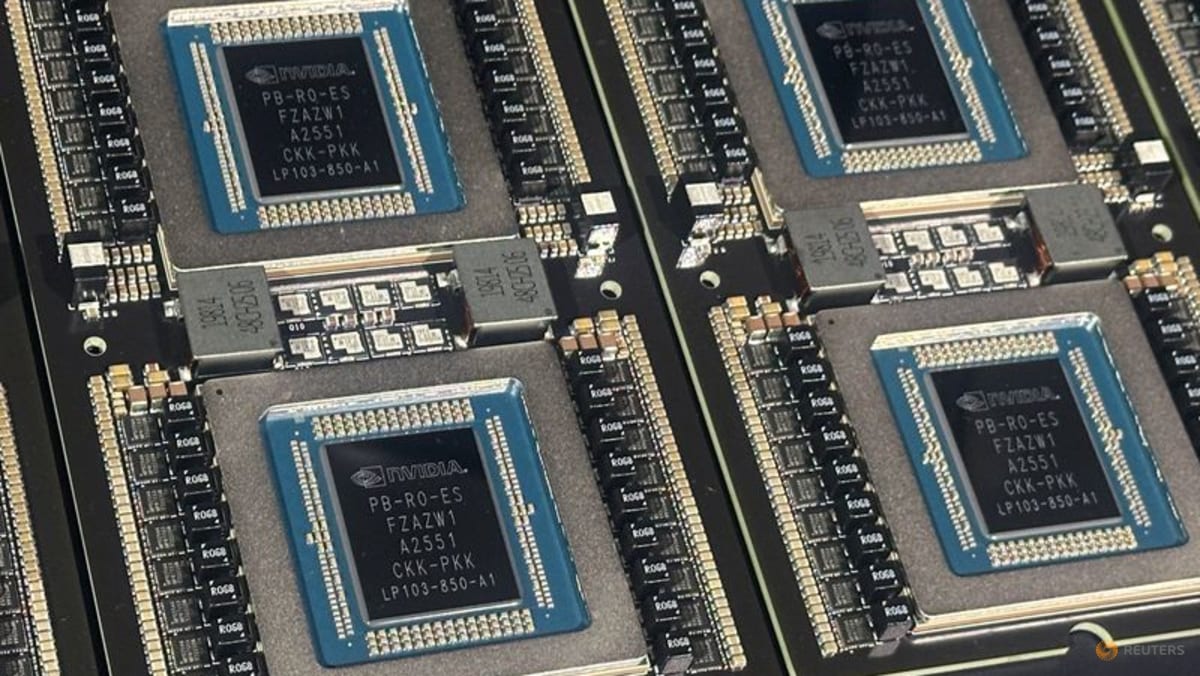
Nvidia is also preparing a version of the Groq AI chip that can be sold to the Chinese market, Reuters reported earlier on Tuesday, citing two sources familiar with the matter.
It plans to tap Groq chips for what is known as inference, where AI systems answer questions, write code or carry out tasks for users. In the products Nvidia showed this week, the company plans to use its forthcoming Vera Rubin chips, which cannot be sold in China, in combination with the Groq chips.
While Nvidia dominates the market for training AI systems, it faces much more competition in the inference market. Several major Chinese firms, including AI heavyweights such as Baidu, already produce their own inference chips.
The chips being readied for China are not downgraded versions or made specifically for the Chinese market, one of the sources told Reuters. But the new variant can be adapted to work with other systems, the source said, adding that the Groq chip is expected to be available in May.
Nvidia did not immediately respond to a request for comment.
Read the full article here
