

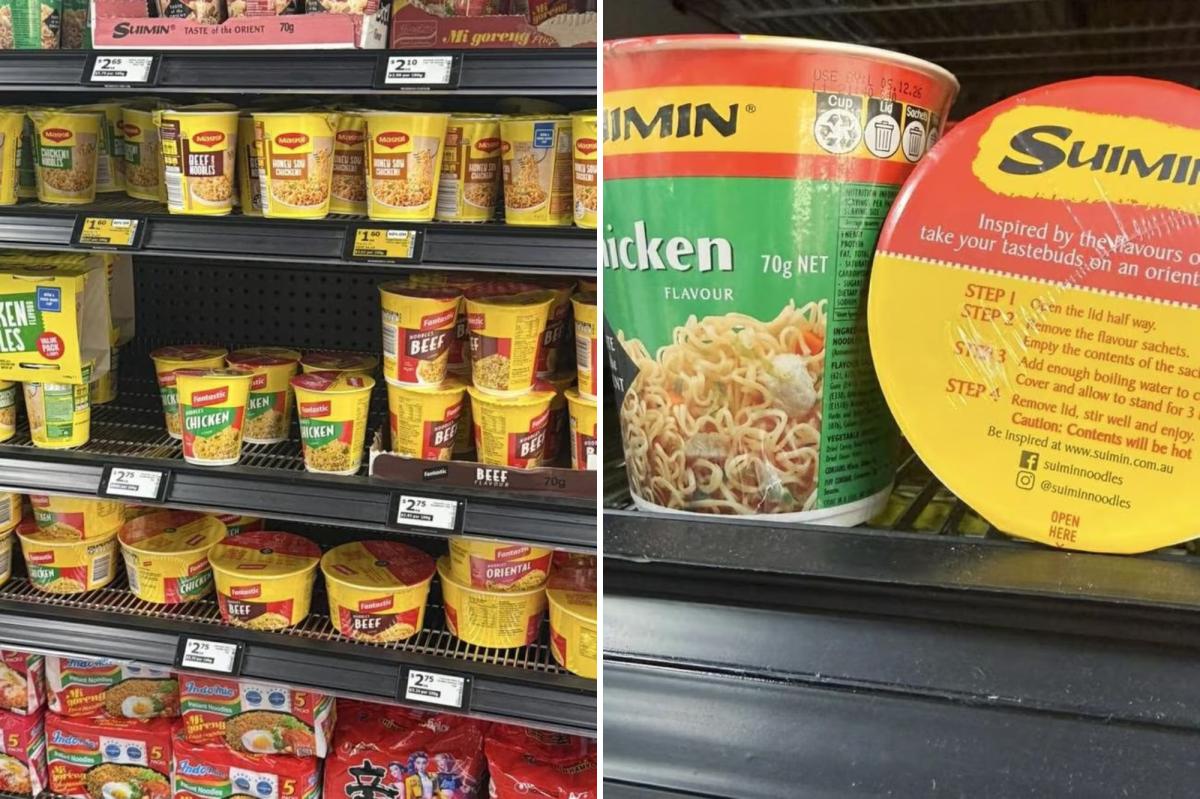
A cup of two-minute noodles has a reputation for its ease and low culinary skill requirement, but it turns out the little styrofoam cup of goodness has been dividing Aussies into one of two categories.
Right under our noses, the instant meal has decided if we follow the rules or if we break them.
It wasn’t until lunch with my work wife, Alice, that I realized not all two-minute noodles are brewed the same.
On this lunch occasion, I was eating my cup of noodles for lunch when Alice noted I put the flavoring in first before the hot water.
She then revealed her own preparation technique, which I judged immediately.
Alice pours water into the dry noodle bed first, before adding seasoning.
She then commits noodle sin by pouring out the delicious, soupy goodness once the broth has cooked the noodles through.
We debated back and forth before I decided it was worth my time and effort to prove her wrong.
I’m an Aquarius. We’re notoriously incapable of letting a factual error go uncorrected.
Alice is essentially disrupting the natural order of noodle thermodynamics, and she isn’t alone in doing so.
It’s like we’d stumbled into one of those great, nonsensical cultural divides.
I’m talking the modern-day equivalent of the tomato sauce in the pantry vs. fridge debate, pineapple on pizza, or for those with a long memory, the legendary Laurel vs. Yanny.
There’s a long list of Reddit forums where the noodle preference debate endlessly festers.
“I feel like when you put it on the already-done noodles, it’s gritty and has spots of blandness,” one user writes.
Another reveals: “I like to add it in before and let the noodles cook in the soup … so that the noodles have flavor. I find that when I do it the other way, the noodles lack flavor.”
“After, I don’t care what anybody says,” a third said.
The official instructions for major noodle products found on Woolworths and Coles’ shelving, including Fantastic and Suimin, both instruct that packets be poured into the cup before water.
For Maggi and Mi Goreng, water is added before the seasoning.
So I took myself to Woolworths, paid the $2.75 and used an hour of company time to restore intellectual balance.
I asked around our workplace, keen to see if our co-workers had a strong opinion. It turns out they did.
Eleanor says the protocol is “simple” and everyone needs to take note.
“Pour in the hot water and seasoning/veggies – let it sit – and enjoy. Soup and all! I love to slurp the soup at the end – it’s the best bit. If you do it any other way, you’re crazy,” she said.
While Naomi did admit she’s not really an instant noodle fan, when the occasion does strike, she has a method: “Noodles. Seasoning. Water. It helps distribute the seasoning evenly and infuse it in the hot water to make a nice soup flavor.”
Mary tends to opt for a vibe-based approach: “Whatever comes to me in the moment. I think I like to live my life by feel.”
“I like putting the spices first … and get the water to rise everything up,” Sahil said.
Leah insisted she could “solve this very quickly” with an ‘Instant Noodles for Dummies’ culinary class.
“You see these little green things?” she asks, pointing to the vegetables on the packaging.
“They’re peas. Peas will only hydrate if you’ve put water in there. So what you need to do is you need to put the peas in first, then put the water, and it needs to seep in there and stay there for a little bit so they can rehydrate, so therefore you put the seasoning first. I will argue with anybody who says the alternative.”
Meanwhile, Alice doubled down: “I will not accept any other answer. I say put the water in, let them cook, drain the water and then stir all of your seasoning through so you don’t drain any of the seasoning out. That is the superior way to prepare two minute noodles.”
Read the full article here
