

Under Section 5(2) of the Immigration Act, those convicted can be deported from Malaysia by order of the Director General unless they are a Malaysian citizen.
Yusoff said on Monday that families of the schoolchildren were already aware that illegal crossings were not allowed for school travel and that legal routes must be used instead.
“If I allow this group of students to cross illegally, irresponsible parties may take advantage of them to bring in prohibited items,” he warned.
Yusoff added that illegal crossing routes along the border have been closed for more than a year and everyone should already be aware of the law.
“I have previously made it clear that anyone wishing to cross the border must use legal routes, namely the Immigration, Customs, Quarantine and Security complexes, including students and schoolchildren,” Yusoff said.
Hundreds of students consisting of both Malaysia and Thai citizens were known to cross over from Thailand to attend school in Malaysia daily.
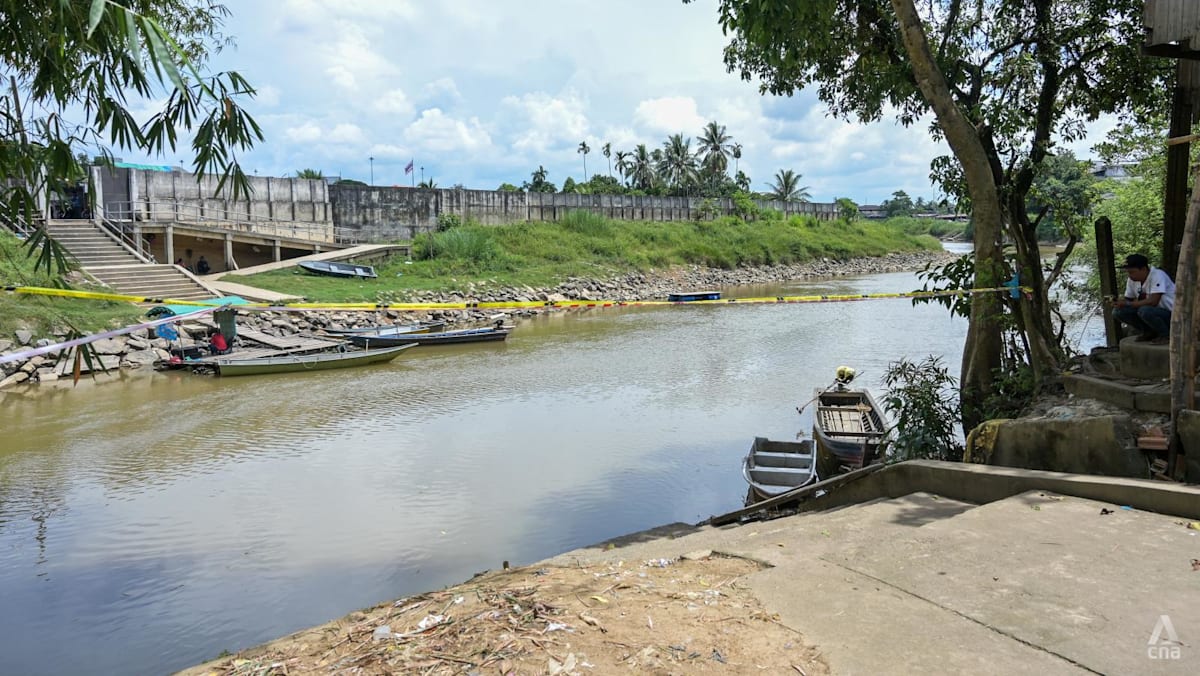
Authorities had previously warned that those who crossed the border illegally, especially via Sungai Golok, would be arrested. This comes amid a crackdown on cross-border smuggling of drugs and firearms, fuelled by illicit crossings.
Rantau Panjang, a duty-free zone in Kelantan, is a stone’s throw from Sungai Golok town in Thailand’s Narathiwat province. It is located next to a bridge roughly 100m long that connects Kelantan to Sungai Golok and once saw a steady stream of visitors from both sides of the border.
The Malaysian authorities’ clampdown on illegal border crossings have affected businesses in Rantau Panjang. When CNA visited the area in September last year, many shops were shuttered amid reports that the state government was finding a new location for the once-bustling zone now bereft of customers.
As little as 30m separates Thailand and Malaysia at the Sungai Golok-Kelantan border, reported news agency Bernama in 2020.
Read the full article here
