

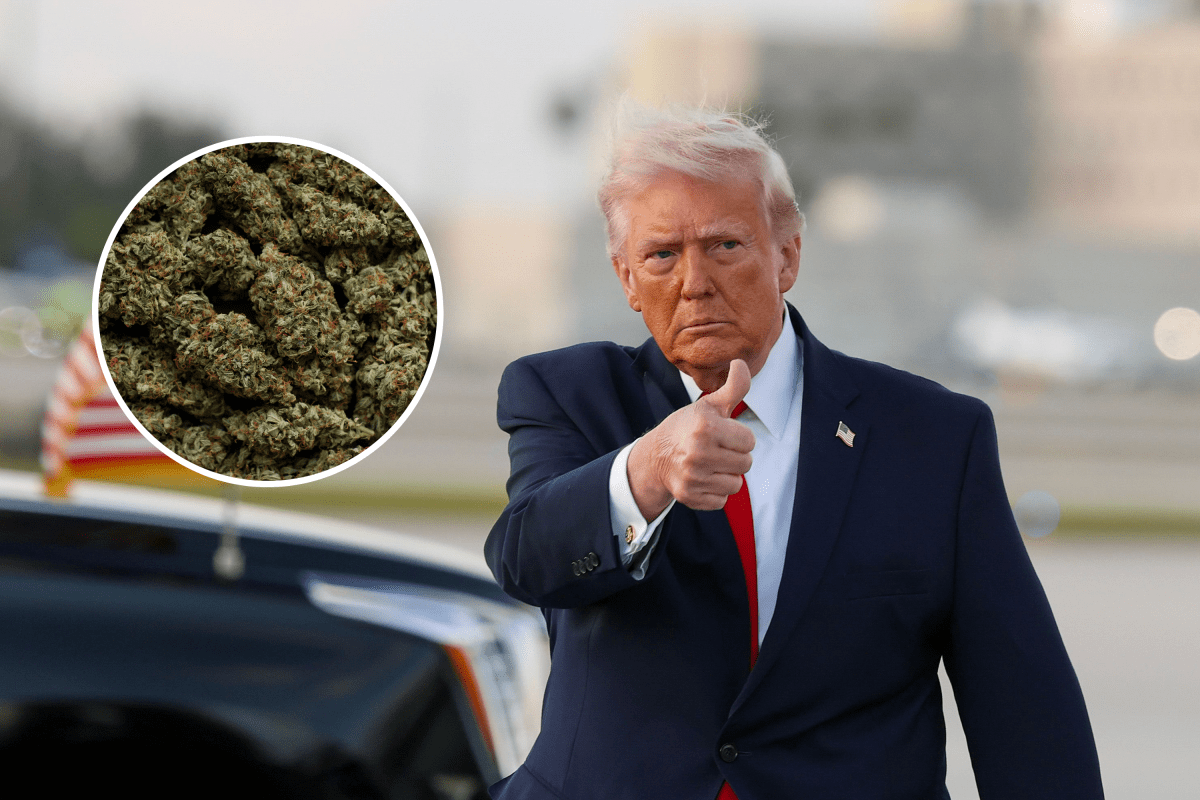
A map highlighting where marijuana arrests remain most common across the United States underscores the limits of President Donald Trump’s latest move to loosen federal cannabis restrictions, as enforcement continues to be driven largely by state law.
On Thursday, the Trump administration announced a major shift in federal marijuana policy when acting Attorney General Todd Blanche signed an order reclassifying state‑licensed medical marijuana from Schedule I—the same category as heroin—to the less restrictive Schedule III. The change marks one of the most significant federal moves on marijuana in decades, recognizing accepted medical use and easing barriers to research. But it does not legalize marijuana federally or override state bans, leaving arrest patterns largely unchanged in states where cannabis remains illegal.
Newsweek reached out to the White House by email for comment.
Data compiled from FBI crime statistics and analyzed by advocacy and policy groups show that marijuana arrests remain heavily concentrated in a relatively small group of states, many of which still prohibit recreational use or impose criminal penalties for simple possession.
Marijuana Arrests Concentrated in a Handful of States
According to a 2024 analysis published by NORML, police in eight states—Texas, Tennessee, Pennsylvania, Wisconsin, Georgia, Louisiana, South Carolina and North Carolina—accounted for more than 100,000 marijuana‑related arrests in a single year. The overwhelming majority involved low‑level possession, not trafficking or distribution.
Texas led the nation, with more than 26,000 marijuana possession arrests in 2024, followed by Tennessee and Pennsylvania, each reporting more than 11,000 arrests. Wisconsin and North Carolina were close behind, also posting arrest totals in the five figures despite having far smaller populations than Texas.
A separate U.S. News review of FBI data found similar patterns, noting that most arrests occurred in states where marijuana remains illegal, while states that have legalized recreational cannabis saw dramatically lower enforcement rates.
The Justice Department’s move places FDA‑approved marijuana products and cannabis regulated under state medical programs into Schedule III, a classification that includes drugs such as testosterone and Tylenol with codeine. Blanche said the order would expand medical research while maintaining strict controls against illegal trafficking.
However, the change does not decriminalize marijuana at the federal level and does not affect state criminal laws. States retain full authority to enforce their own marijuana statutes, the Associated Press reported, meaning police in prohibition or limited‑access states can continue making arrests as before.
While the reclassification acknowledges marijuana’s medical value, it does not order changes to sentencing, require states to alter their laws, or immediately reduce incarceration tied to state‑level marijuana offenses.
In many of the states where marijuana arrests are most common, offenders face jail time and hefty fines. In Tennessee, first-time possession offenders could face up to a year in jail, whereas in Texas, low-level possession can lead to 180 days in jail and a $2,000 fine.
NORML’s analysis shows that in some states, marijuana violations make up a large share of all drug arrests. In Louisiana and Wisconsin, for example, marijuana accounted for more than half of reported drug arrests in 2024. In several other states—including Alabama, Georgia, Indiana and South Carolina—marijuana arrests accounted for at least 40 percent of drug‑related enforcement activity.
By contrast, in states where marijuana has been legalized for adult use, marijuana‑related arrests typically make up less than 5 percent of all drug arrests.
Where is Marijuana Use Legal?
Recreational marijuana use is legal in 23 states and in Washington, D.C., and medical marijuana use is legal in 16, leaving 10 states where marijuana use remains illegal completely.
The Trump administration’s move may add political and legal pressure on states to reconsider marijuana penalties, particularly as federal law now formally recognizes medical use.
For now, enforcement remains sharply divided along state lines—leaving millions of Americans subject to vastly different legal consequences for the same conduct depending on where they live.
Read the full article here
