

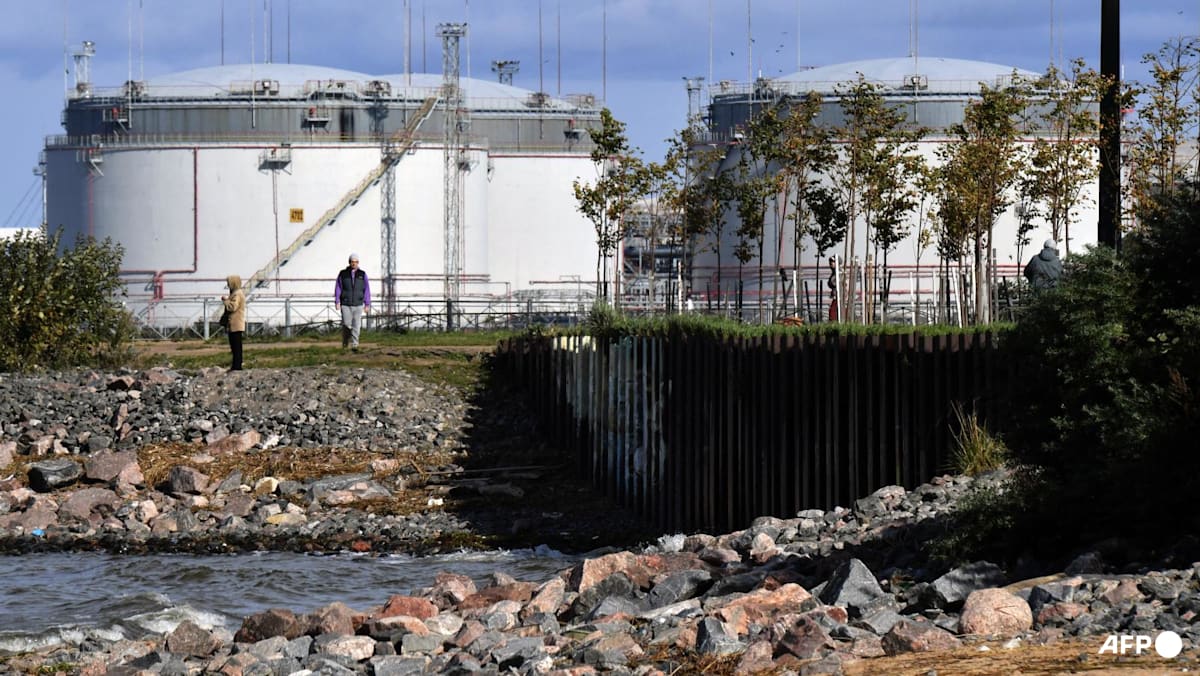
On Apr 18, Malaysia Prime Minister Anwar Ibrahim said that many European and American countries that previously sanctioned Russia were now competing to buy its oil, local media reported.
Citing Malaysia’s “good” relations with Russia, he said national oil company Petronas was set to negotiate with Russia to buy oil and ensure a sufficient supply for domestic use.
Asrul Sani, associate vice-president at strategic advisory firm The Asia Group, said Anwar has visited Russia twice since taking office, reflecting Malaysia’s longstanding posture of pragmatic, non-aligned engagement with major powers.
“Access to Russian oil will still depend on pricing and sanctions constraints. Larger buyers such as China and India dominate Russian export flows. That could limit availability for smaller markets like Malaysia,” he told CNA.
In December 2022, an international coalition of countries – including the United States, Group of Seven (G7) countries, the European Union, and Australia – imposed a price cap on Russian oil to limit Moscow’s oil revenue that could be used to fund its war against Ukraine without disrupting global oil flows.
This sanction restricts Western maritime services like insurance and shipping only to Russian oil sold below a specific price.
Thailand’s Deputy Prime Minister Phiphat Ratchakitprakarn said in March his country has also held discussions with Russia on potential crude purchases, with negotiations understood to be underway.
Nithin Prakash from Rystad Energy said Thailand’s access depends on residual volumes after primary buyers have secured cargoes, and whether pricing is attractive enough to justify the trade.
“Those larger buyers continue to take the bulk of volumes, so what’s left tends to move more opportunistically,” he told CNA.
“In practice, Thailand tends to pick up barrels when they’re available, rather than being a primary destination.”
But Prakash said the total cost of importing cheaper Russian oil might not be that lucrative either.
“After accounting for longer shipping distances, elevated freight and insurance costs, and potential blending or refining adjustments, the net economic benefit is reduced,” he added.
Read the full article here
