

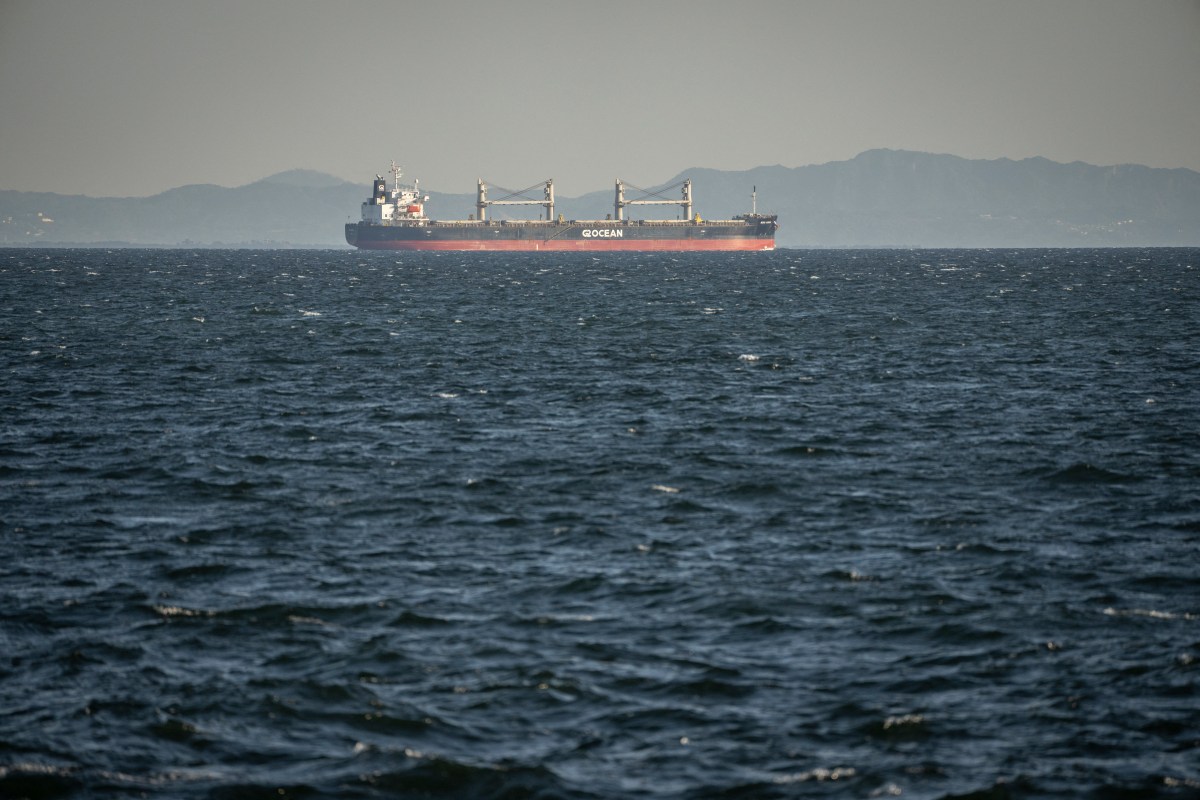
A Japanese-owned oil tanker has exited the Strait of Hormuz for the first time since the Iran war began, according to Tokyo and Tehran, potentially offering much-needed relief to a key U.S. ally hit hard by global energy disruptions.
The Panamanian-flagged very large crude carrier Idemitsu Maru, managed by a unit of the Japanese refiner Idemitsu Kosan, reached the Gulf of Oman in the early hours of Wednesday carrying 2 million barrels of Saudi crude, according to the tracking service MarineTraffic.
Before Iran shut the strait to commercial traffic in response to the U.S. and Israeli attacks that began on February 28, Japan imported over 90 percent of its crude from the Middle East, most of it through the strait.
The Japanese government released 30 days’ worth of strategic oil reserves in March and is on the verge of a 20-day drawdown planned for May 1. Oil-related industries have reported shortages in crude-derived products including paint thinner in recent days.
The transit of the Idemitsu Maru, which was stranded in the Persian Gulf for two months, was the subject of intensive negotiations between Tokyo and Tehran, according to the Japanese press.
The Tasmin state news agency, linked to Iran’s Revolutionary Guard (IRGC), said on Wednesday that the tanker was let through with Iranian approval.
Unnamed Japanese officials told Japan’s Nikkei newspaper and the public broadcaster NHK that no transit fees were paid, although the ship did appear to utilize an IRGC-designated outbound sea lane near Iran’s Larak Island, according to Newsweek’s review of publicly available automatic identification system (AIS) data.
The U.S. Treasury Department, in announcing another round of sanctions against Iran’s illicit oil trade on Tuesday, said that “toll” payments to Tehran were a sanctionable offense under the global U.S. financial control regime.
It was unclear whether the U.S. government was aware of the negotiations between Japan and Iran. The State Department did not immediately respond to a request for comment outside of office hours.
Shipowner Idemitsu Kosan couldn’t be reached for comment after hours but told the FNN Prime news website earlier on Wednesday that it couldn’t comment on individual vessels “for safety reasons.”
The Idemitsu Maru had passed the U.S. blockade line against Iran and was in the northern Arabian Sea as of 5 a.m. Eastern Time, according to AIS signals captured by MarineTraffic.
Tokyo said around 40 Japanese-linked ships were still stuck in the Gulf—a result of cautious shipping lines and costly war risk insurance amid the IRGC’s continued closure of the strait to most nations.
Japanese Prime Minister Sanae Takaichi said three Japanese crew members were on the Idemitsu Maru, which is expected to reach its reported destination of Nagoya by mid-May.
“Our country has, to date, made representations to Iran on every possible occasion, from the standpoint that it is important to ensure the early restoration of free and safe navigation through the Strait of Hormuz for vessels of all countries, including Japan,” Takaichi said.
The Foreign Ministry in Tokyo said in a statement: “The Government of Japan considers this passage of a Japan-related vessel as a positive development, including from the perspective of protection of Japanese Nationals.”
Read the full article here
