

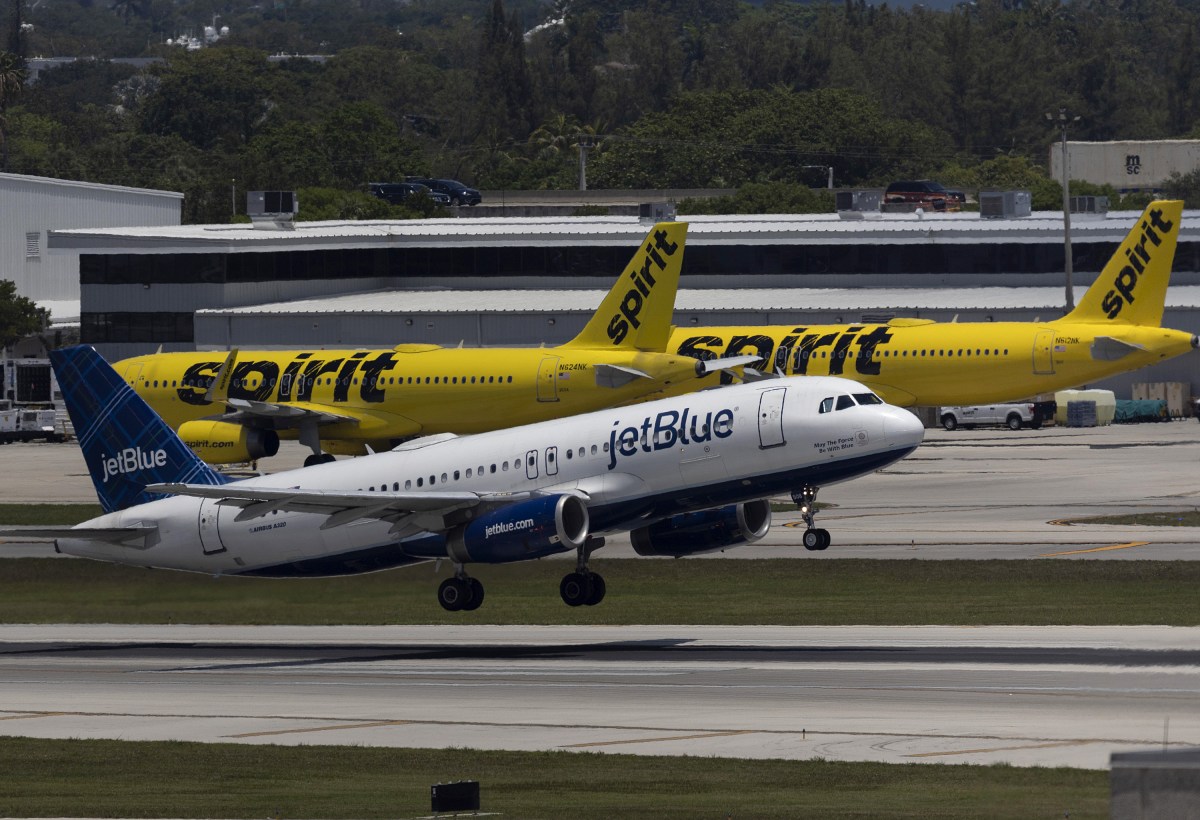
Philosopher Richard Weaver famously said that “ideas have consequences.” The recent bankruptcy of Spirit Airlines, which announced a cancellation of all flights over the weekend, is a reminder that bad ideas often have really bad consequences.
Efforts by the Biden White House to rewrite a decades-old consensus on antitrust policy, shifting the focus from consumer welfare to a more skeptical view of consolidation, did not occur in the abstract. Spirit’s collapse has reignited a broader debate over when, how, and even whether the government should intervene when companies seek to merge.
As a former chairman of the House Judiciary Committee, which oversees the Department of Justice and its Antitrust Division, I witnessed dozens of high-stakes antitrust battles during my decades in Washington. The Spirit Airlines case will be studied for years as a cautionary example of government overreach, contributing to the collapse of a major company and leaving 17,000 Americans unemployed.
Spirit Airlines was essential to competition in the airline industry. By offering some of its lowest prices, the company helped empower the average flier. On routes like Pittsburgh to South Florida, other airlines were charging $500. Spirit? $100.
When inflation hit, Spirit, with its tighter profit margins, was particularly affected. The lifeline came from JetBlue in 2022, which proposed acquiring Spirit in an all-cash deal at $33 per share. It was a straightforward proposition in a difficult market, but almost immediately it became a political battleground where textbook ideology eclipsed real-life economics.
Massachusetts Democratic Senator Elizabeth Warren led the charge against the merger, declaring that it would lead to “few flights and higher fares.” She promised that if the deal were consummated, consumers would see a “massive fare increase” and that it would lead to “higher costs and reduced service.”
The Department of Justice and state attorneys general sued to block JetBlue’s proposed acquisition of Spirit.
They argued that preserving Spirit as a standalone ultra-low-cost carrier was paramount, even though protecting Spirit’s low prices was directly dependent on whether it could merge with JetBlue.
Those assailing the merger claimed it was “anticompetitive” when the opposite was true. By saving Spirit and granting it the market scale to compete with larger carriers, the deal would have made the airline industry more robust, bringing prices down.
Yet regulators substituted textbook theories for market realities, including the clear signals that Spirit could not survive on its own. Ultimately, the Biden administration and the AGs convinced a judge to kill the merger. Warren cheered a “Biden win for flyers.” Secretary of Transportation Pete Buttigieg hailed a “victory for U.S. travelers who deserve lower prices and better choices.”
And Spirit, in a teachable moment, unceremoniously closed its doors just days ago.
Sure, higher fuel costs contributed, but if the company was able to merge, it would’ve never been operating in the red in the first place.
The question is whether critics learn anything from what happened. Or will they continue to celebrate a hollow victory that preserved a theory of competition while destroying a company, eliminating thousands of jobs, and reducing the very consumer choice they claimed to protect?
The lessons are clear—antitrust policy should not be a purely academic exercise divorced from the realities of life. Ignoring this results in shuttered companies, lost jobs, and diminished global competitiveness. The collapse of Spirit Airlines is a warning that reflexive opposition to mergers, big and small, far and wide, damages not just individual companies but America’s economic leadership.
Bob Goodlatte served as a member of Congress from Virginia. He chaired the House Judiciary Committee.
The views expressed in this article are the writer’s own.
Read the full article here
