

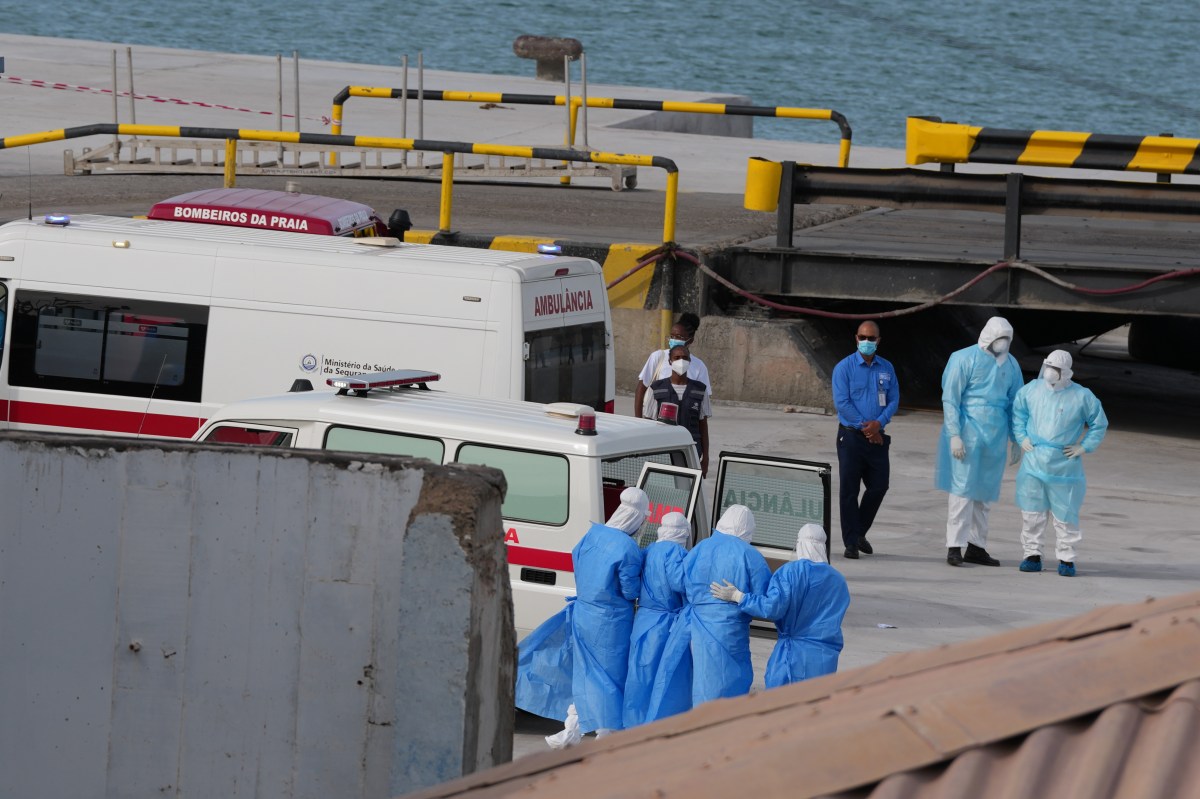
A virus outbreak on a cruise ship should not instantly make Americans wonder whether ordinary life is about to unravel again.
But after COVID, many Americans know that feeling too well.
Watching the public reaction to the recent hantavirus outbreak, I noticed something familiar. Health officials repeatedly emphasized that broader public risk remained low. Yet social media quickly filled with quarantine imagery, speculation and emotional rehearsal of another global disruption.
That is the real story. Not panic. Recognition.
As a physician, I have spent much of my adult life moving through moments of instability. Early in my medical career, I volunteered in lower Manhattan after September 11. Later, while attending medical school, I studied hospital mass-casualty response in Israel during the second intifada. Over the years that followed, I worked in Gulf Coast communities after Hurricane Katrina, served as a county public health director during the H1N1 outbreak and eventually practiced medicine through COVID.
One thing I learned repeatedly is that human beings are remarkably good at adapting to prolonged uncertainty. People continue working, raising children and rebuilding routines even when uncertainty becomes part of daily life.
But adaptation has consequences.
COVID did not simply disrupt American life temporarily. It changed many Americans psychologically in ways we still do not fully acknowledge. During the pandemic, people learned to anticipate disruption. Plans became provisional. Daily life felt conditional. Millions of Americans spent years quietly recalibrating risk around schools, travel, work, family gatherings and even ordinary interaction.
Much of that vigilance was necessary. Some of it saved lives.
But emotional reflexes developed during prolonged crisis do not automatically disappear once the emergency formally ends.
Many Americans still seem to move through ordinary life carrying a lingering expectation that stability itself may prove temporary. Flights get canceled. Supply chains break down. Schools close unexpectedly. New outbreaks emerge. Wars escalate overseas. Cyberattacks disrupt businesses. Extreme weather arrives with increasing frequency. Each event reinforces the same underlying lesson: normal life can change suddenly.
The modern information environment intensifies all of it. Americans no longer experience crises one at a time or even locally. We absorb instability continuously through our phones. A conflict overseas, a virus outbreak on another continent or a natural disaster hundreds of miles away can immediately become part of our emotional atmosphere.
The deeper danger is not that Americans are afraid. The danger is that crisis mode has started to feel normal.
You can see it in subtle ways. People hesitate before making plans. Families hold routines more loosely. Institutions increasingly overcorrect defensively. Public trust erodes more easily. Even moments of stability can feel provisional, as if many Americans are quietly waiting for the next disruption to arrive.
None of this means people are weak. In many ways, the opposite is true. Americans adapted to one of the most destabilizing periods in modern public life. We learned how to function under prolonged uncertainty.
But survival habits are not always healthy long-term foundations for ordinary life.
Preparedness still matters. Public health matters. Ignoring real risks would be foolish. But permanent emotional emergency is not resilience. A society cannot remain psychologically organized around continual anticipation of disruption forever without paying a social cost.
The goal during every crisis was always to protect ordinary life until it returned.
America does not need to forget what COVID taught us about risk. But we do need to remember what those lessons were supposed to protect: the ability to live ordinary life without experiencing every new threat as the beginning of collapse.
Dr. Holland Haynie is the Chief Medical Officer and family physician at Central Ozarks Medical Center in Osage Beach, Missouri.
The views expressed in this article are the writer’s own.
Read the full article here
