

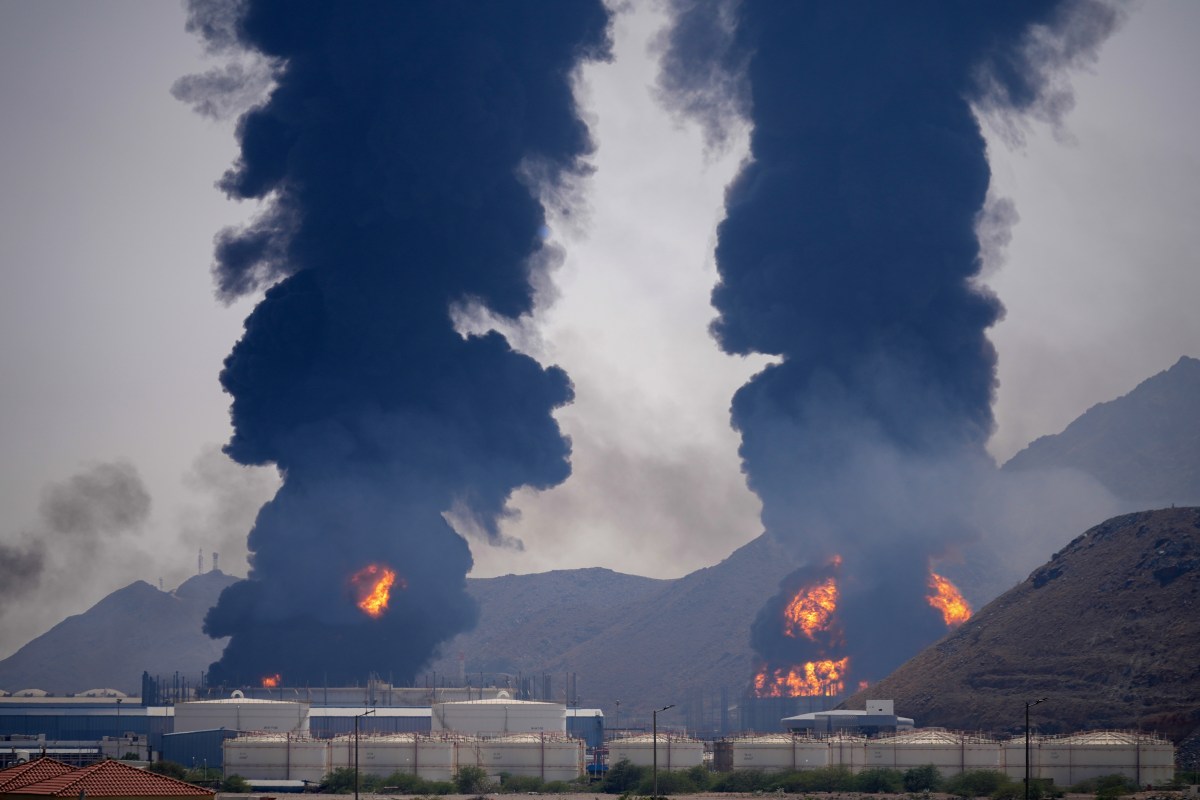
The United Arab Emirates (UAE) and Saudi Arabia reportedly carried out individual, covert, offensive military strikes against Iran, according to The Wall Street Journal and Reuters, marking the first known offensive actions by Gulf states against Tehran since the U.S. and Israel launched strikes triggering the Iran war in late February.
The UAE targeted an Iranian oil refinery on Lavan Island in the Persian Gulf in early April in a secret operation not publicly acknowledged by the country, the Journal reported on Monday citing anonymous sources familiar with the matter, while Reuters, also citing anonymous sources, said the Saudi Air Force hit Iran in late March.
If confirmed, the strikes would signal a hardening of the UAE and Saudi Arabia’s position toward Iran, analysts told Newsweek, potentially increasing the risk of larger-scale retaliation from Tehran and broader instability across the Gulf.
Newsweek has reached out to UAE and Saudi Arabia’s Ministry of Foreign Affairs for confirmation and comment via email on Tuesday.
Significance of the UAE’s Reported Involvement
Reports that the UAE offensively struck Iran are a “big deal” because they represent the “operationalization” of the UAE’s decision to align with the U.S. and Israel, Bilal Saab, senior managing director of TRENDS US, and a Pentagon senior adviser in the first Trump administration, told Newsweek on Tuesday.
There is “no friendly return on something like this,” Saab said, noting the risky move could “backfire” because if the war resumes, any Iranian retaliation against the UAE would likely be much larger. The ceasefire is currently in place but remains in a tenuous spot, with U.S. President Donald Trump describing it as “on life support.”
Saab also said the move aligns with the UAE’s “fiercely independent” foreign policy, though he added it is still surprising that Abu Dhabi would follow through on military action rather than speak or signal about it. He added that the reported action could further strengthen the White House’s view of the UAE as a reliable regional partner.
Alex Gray, nonresident senior fellow with the GeoStrategy Initiative at the Atlantic Council, echoed that sentiment, telling Newsweek “the current forward leaning posture of the Emirates” shows Washington the country is “capable and strategically aligned. “However, he differed in his assessment of the UAE’s foreign policy, saying, “It also marks a sea change from just a few years ago, when Abu Dhabi so doubted American commitment that it explored a closer relationship with China.”
The Iran war and persistent drone and missile attacks by Tehran have pushed the UAE even closer to Israel and the U.S., particularly for military infrastructure, according to an analysis published by the London-based Royal United Services Institute (RUSI) think tank last week.
Iran’s aerial bombardment of American allies across the Middle East has disproportionately targeted the UAE, with officials in the Gulf state reporting its air defenses have intercepted more than 2,260 drones and 580 missiles launched by Iran. Iranian forces launched more than 2,800 missiles and drones at UAE territory, according to the Journal—more than at any other country.
Tehran continued targeting the country despite the brittle ceasefire announced by the U.S. in April, which came into effect as flames ripped through the Lavan Island refinery.
Center for Strategic and International Studies Middle East Program Director Mona Yacoubian told Newsweek it is notable that the Emirati government has not confirmed the reports, suggesting the silence or leaked report may be intended to signal to Tehran the country’s “more aggressive posture” and highlights the “sensitivity” of the matter. She added “it’s about setting a red line and trying to enforce that line.”
In addition to what the reported offensive attacks signal to Tehran, it also “underscores the fragmentation and the differing response among Gulf countries,” whom she noted have also been attacked by Iran but none, other than recent reports of Saudi Arabia, have publicly acted offensively.
Iran has hit all six of the Gulf Cooperation Council (GCC) states, including attacks on U.S. military bases, as well as civilian infrastructure such as airports and oil sites.
The UAE previously broke with several Arab states over ties with Israel when it normalized diplomatic relations with the country in 2020 under the U.S.-brokered Abraham Accords. Bahrain also established relations with Israel through the accords during Trump’s first term.
UAE presidential adviser Anwar Gargash told the Council on Foreign Relations in March that “Iran’s full-throttle attack on the Gulf states will actually strengthen the Israeli role in the Gulf, will not diminish it.” He went on to explain the country’s perception of Israel and Iran, saying, “So it’ll be counterproductive here because a lot of us in the Gulf today don’t see the missiles coming from Israel; we see the missiles coming from Iran.”
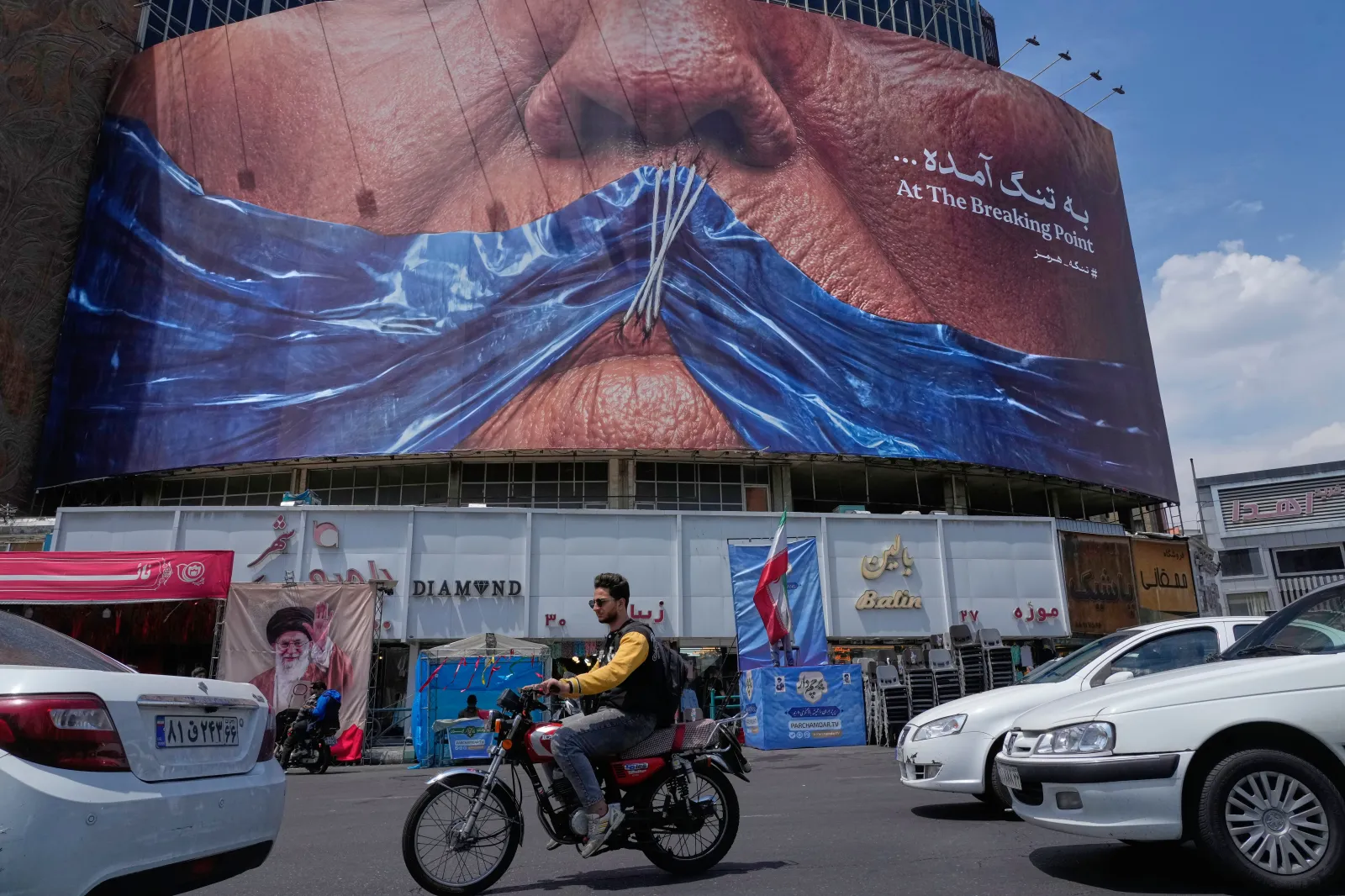
In recent years, the UAE has increasingly aligned itself strategically with the U.S. and Israel, particularly on regional security and concerns about Iran. The country has also diverged from neighboring Saudi Arabia on oil policy and regional priorities, withdrawing from OPEC, a group of the world’s leading oil exporters.
The UAE’s departure from OPEC earlier this month highlights its long-running tensions with Saudi Arabia over the group’s oil production and geopolitical strategy. Riyadh has backed curbs on oil production from the group to prop up the oil market, while the UAE is said to have become frustrated with the limits and is looking to pump more oil to fund its plans for a low-carbon future.
Significance of Saudi Arabia’s Reported Involvement
“A Saudi decision to strike Iran, if verified, underscores the acuteness of threat perceived from Iran by Saudi Arabia and a need to respond offensively to deter future Iranian strikes,” Yacoubian told Newsweek. Saudi Arabia has not confirmed the strikes. Saudi’s involvement further emphasizes the widening of the conflict, which already spilled in Lebanon where Israel has launched an offensive against Hezbollah.
Iran and Saudi Arabia have long been regional rivals, competing for influence across the Middle East. Saudi Arabia has for years backed forces fighting Yemen’s Iran-aligned Houthi rebels, while the two countries have also clashed over broader geopolitical and religious tensions.
Iran was reportedly informed of the strikes and then engaged in diplomatic negotiations, ultimately leading to de-escalation, the sources told Reuters.
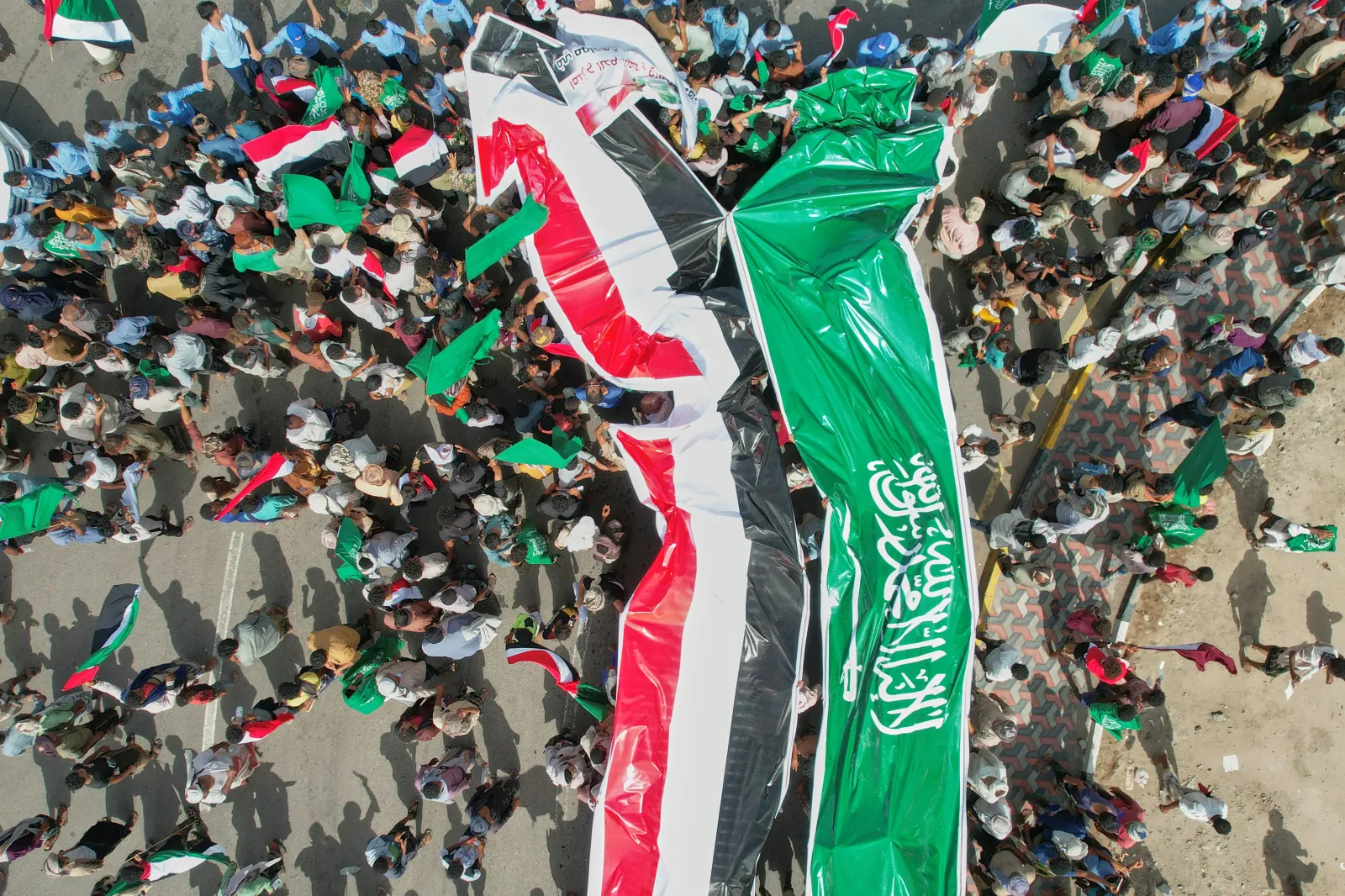
Saudi Arabia’s Crown Prince Mohammed bin Salman (MBS) has maintained close ties with the U.S. and developed a strong relationship with Trump, his administration, and his son-in-law Jared Kushner during Trump’s first term in office. Reports indicated that MBS was supportive of the U.S. continuing and intensifying its military operations in Iran, calling it a “historic opportunity” to reshape the region, per The New York Times.
A senior Saudi foreign ministry official told Reuters, “We reaffirm Saudi Arabia’s consistent position advocating de-escalation, self-restraint and the reduction of tensions in pursuit of the stability, security and prosperity of the region and its people.”
Gregory Brew, Eurasia Group senior Iran analyst, said it’s significant that neither the Saudis nor the Iranians publicized the attacks, writing on X, “Not sure which is more interesting, that Saudi repeatedly struck Iran in response to Iran’s attacks, or that they did so without attribution (reciprocated by Iran).”
UAE’s Military Capabilities
The Emirati military is widely considered the best-equipped armed forces of all the Gulf states, brimming with U.S.-made equipment like sophisticated air defenses designed to take out fast-traveling missiles. The U.S. has named the UAE a U.S. Major Defense Partner, a term America uses for non-NATO countries still considered allies and important for defense.
It has just under 80 operational F-16 fighter jets, made by U.S. defense giant Lockheed Martin, and fires U.S.-manufactured Sidewinder missiles intended to take out other aircraft midflight. Since 2021, Israel has exported several billion dollars in arms to the UAE.
Most recently, Israel sent the UAE its Iron Dome air-defense weapons amid the Iran war, U.S. ambassador to Israel Mike Huckabee publicly stated. In addition, Israel sent anti-missile batteries and personnel to the UAE.
Saab told Newsweek that the UAE “actually has the capability” to carry out offensive operations, describing the country as having the region’s strongest military capacity after Israel.
According to the International Institute for Strategic Studies 2026 Military Balance assessment, the UAE has about 63,000 active-duty military personnel, including roughly 44,000 serving in the army.
Read the full article here
