

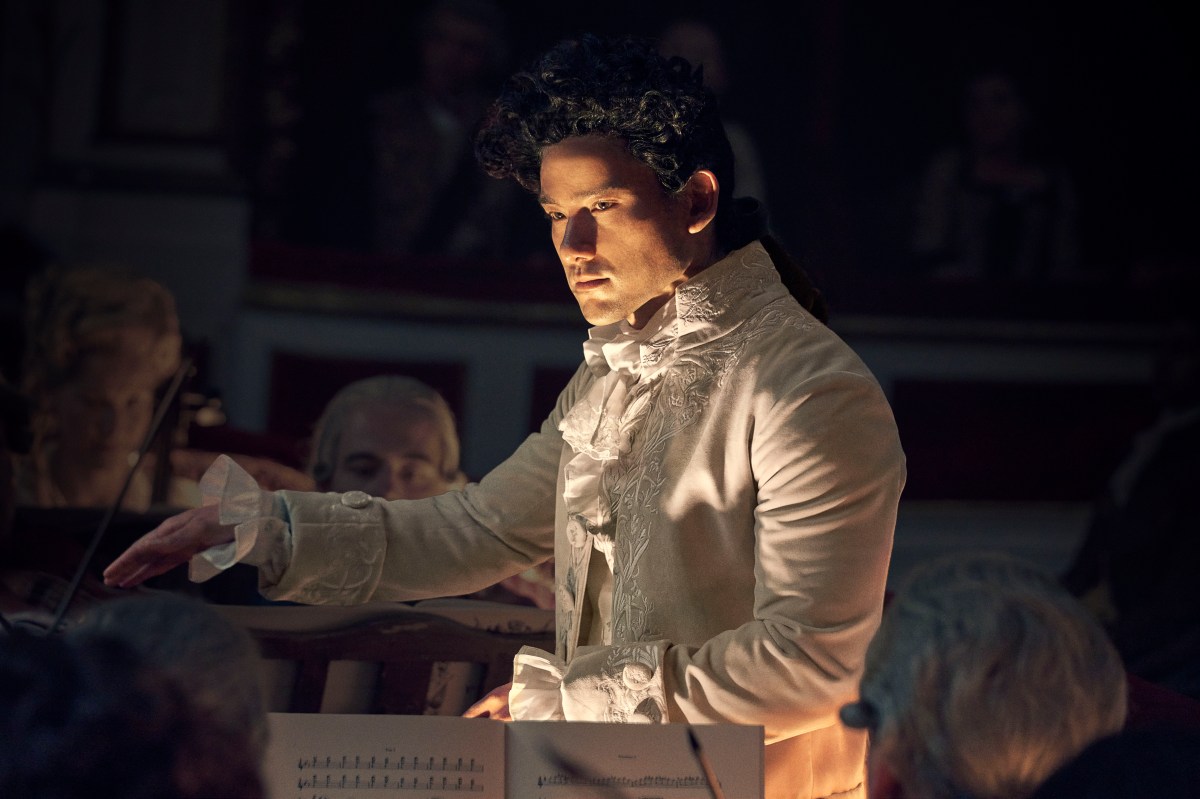
“I found myself listening to [Mozart] quite a bit, in a sort of background, almost meditative way.”
Will Sharpe has been on a roll since White Lotus, and his latest role as Wolfgang Amadeus Mozart in the Starz limited series Amadeus may be his “most exciting challenge” yet.
SUBSCRIBE TO PARTING SHOT PODCAST WITH H. ALAN SCOTT ON APPLE PODCASTS, SPOTIFY, OR WHEREVER YOU GET PODCASTS.
Editor’s Note: This conversation has been edited and condensed for publication.
When I was watching the show, the film and the stage show were front and center; that’s my only real experience with it. How do you approach making it your own?
Creatively, that starts with [creators] Joe [Barton] and Julian [Farino], and their imagining of the world and the way Joe constructed the story. One key difference between this and the play—and the film to a degree—is that it being five hours, there’s a little bit of space to explore different points of view. Where the play is sort of unilaterally from Salieri’s perspective [Paul Bettany], there’s more space to sit with Amadeus and sit with Constanze [Gabrielle Creevy] in this iteration. To be honest, I approached it like I would any other acting role: Who is he on the page? What can I bring to this person? How can I find a way into him? The one key difference was that there was lots of music to draw on, which is quite an unusual resource. All of this music came from the real person and is an expression of something he really felt or thought. So I found myself listening to his music quite a bit, in a sort of background, almost meditative way, having it on without getting too in my head.
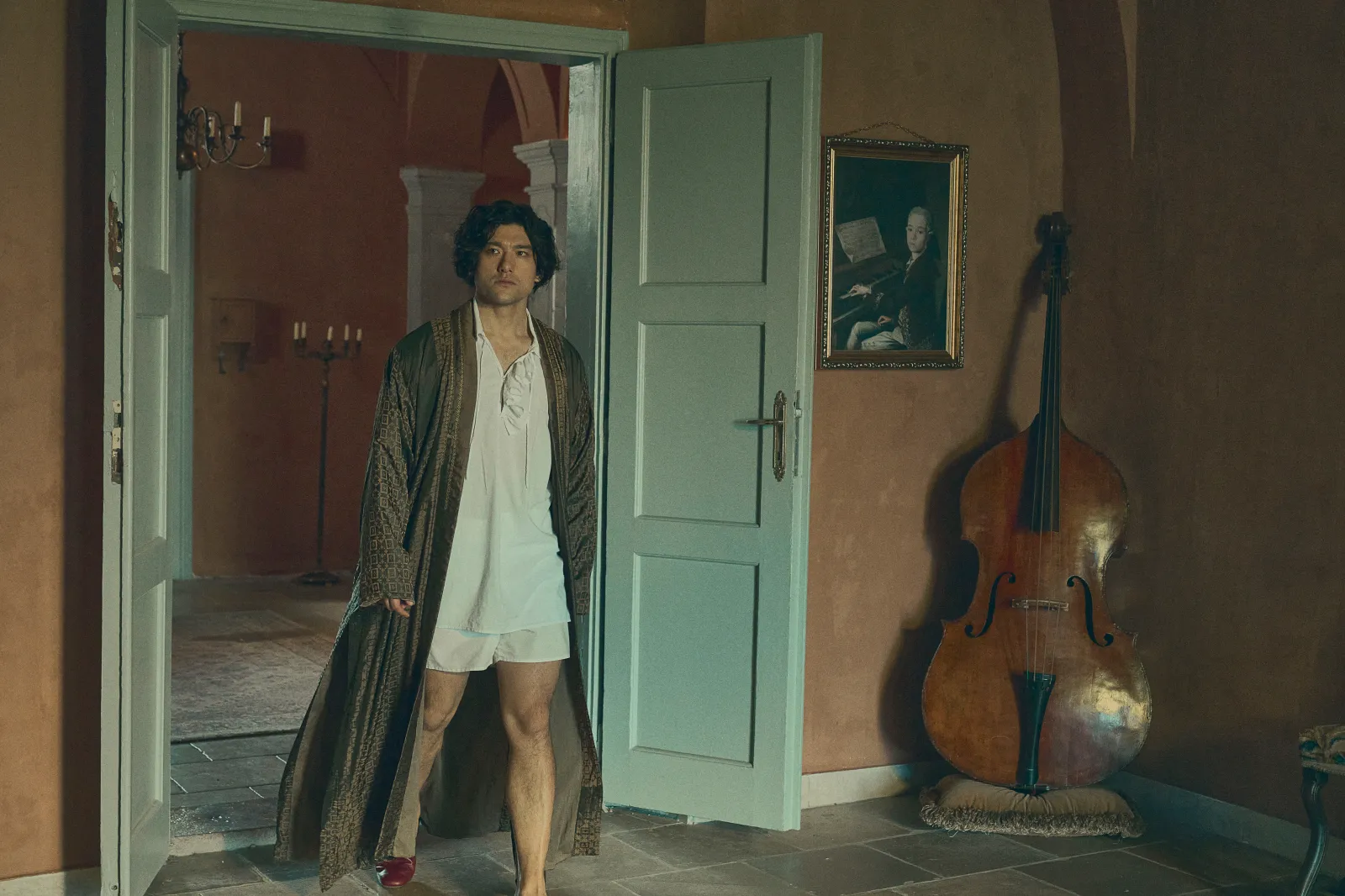
How much can you figure out about the man just from the music?
That’s what I was fascinated by. There’s such a tonal range in his music—at one end, there are very playful, fun, lighthearted melodies, and at the other you’ve got these huge, grand, dark operas. Trying to make sense of all those different colors and make them cohere within one human being was quite an interesting challenge. On the page too, he arrives in Vienna full of innocent optimism, and then over the course of the series, he’s ground down by Salieri’s machinations, by God’s plans for him, by circumstance, into a more desperate, darker, frailer human being. Trying to track that journey and find oblique clues in the music, I was quite grateful for that.
When you approach a part in general, how much does music play into it?
I will make a playlist, and sometimes that’s a big part of it and really helpful, and other times not so much, just as an exercise, because, why not? With this character, though, it was a huge part of the preparation process. I read about his life as well, but this being a famously fictionalized version of the story, I tried to take all that with a pinch of salt. There were some interesting details—I read that one view on the origin of the Amadeus-Salieri mythology is that it came from Mozart himself toward the end of his life, when he was slightly frailer of mind and started having paranoid delusions. He would say to Constanze that he thought Salieri was plotting his death. So it actually came from a paranoid psychological place, and it was interesting to imagine: What if he is suspicious of Salieri toward the end, rightly or wrongly? There were other details I figured probably wouldn’t make it into the show, like apparently when he died he swelled up and then threw up. Quite a way to die.
That would be tragic. What would be on Mozart’s Spotify playlist?
Someone else asked something similar, and the thing I noticed was that because his music is so varied and he seemed so artistically curious and voracious, famously prolific, I feel like he’d probably be able to vibe with any genre. He’d probably be as fascinated by prog rock as he would be by jazz, and would probably also have a respect for pop music. I found myself noticing pop chord progressions in his music and feeling his influence on modern music. I like to think he’d be up for anything musically and wouldn’t be snobby about it, not “it has to be orchestral, it has to be classical.” I think he’d be like, well, what’s that rhythm, where does that come from?
How familiar were you with the film or the stage version going in?
I’d seen the film as a kid with my family, knew and loved it, had certain fragments burnt into my memory. I remember him [Tom Hulce] crawling around a room on all fours pretending to be a dog, and the beginning of the film being set in a psychiatric hospital. I’d read the stage play but never seen a production of it. So I had an awareness of the story and some previous interpretations, but I tried to approach this like any other role, and found myself inevitably doing just that. In the end, I didn’t really have to make an active effort to forget everything, I just found that I was forgetting it.
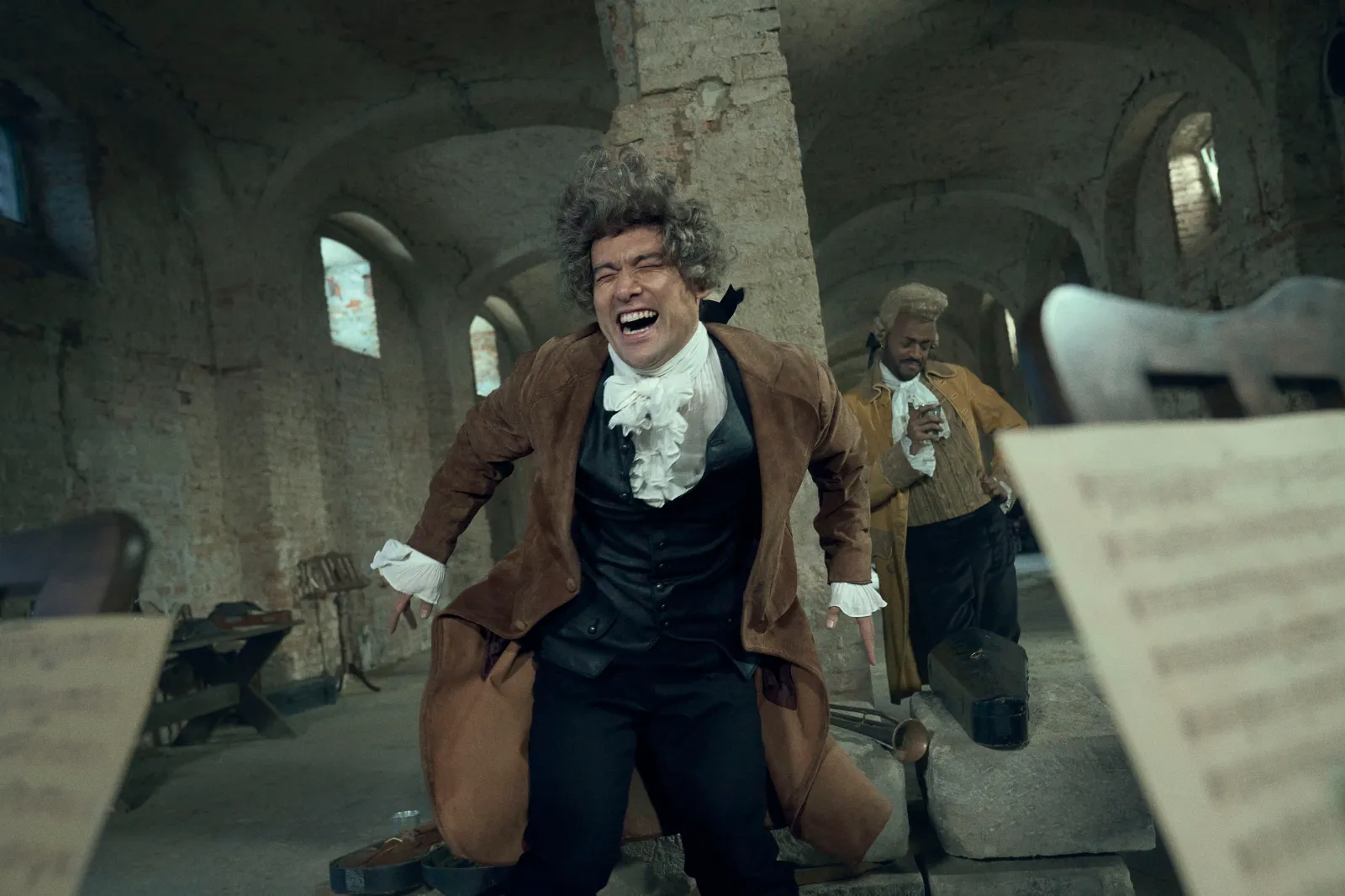
It feels like you could take this character in a very big direction, there’s almost a camp level to him. How do you keep him grounded?
One of the things about this version of the story is that you get to see the home lives of these characters. There’s something grounding about imagining what his day-to-day would be like and feeling how some things that other people would find very easy he finds very complicated and difficult; he doesn’t communicate like a normal person. There’s been a lot written speculatively about him possibly being neurodivergent, which I tried to be aware of but not take too literally. I didn’t want to retroactively diagnose him, but even on the page there’s a sense in which Amadeus is slightly other. The way he moved through the domestic world and managed his relationships felt like it helped ground him in reality rather than seeing him as this ethereal figure, whether that’s an angel or a demon, as he is from Salieri’s perspective. And musically, I felt like because he can’t communicate very easily, the music became almost the means by which he expresses himself. So I didn’t want any musical set piece to just be him playing or conducting. I wanted something to play story-wise, something to communicate, whether it was to atone for something or to say something he hadn’t been able to say. Having something to express in those set pieces felt really helpful.
Did you personally relate to him?
You necessarily have to find a way into a character, and sometimes that’s not even as literal as drawing a Venn diagram; you’re just feeling your way into them. So I sort of have to relate to them. I obviously don’t relate to the feeling of being an iconic genius, but I don’t think Mozart is thinking about himself that way either. He’s just thinking: I’ve written this music, this music is subjectively great, this music needs to be heard by as many people as possible. That’s the laser beam. So yes and no. I necessarily had to find ways to relate to him and humanize him, but of course, there are aspects that are just different.
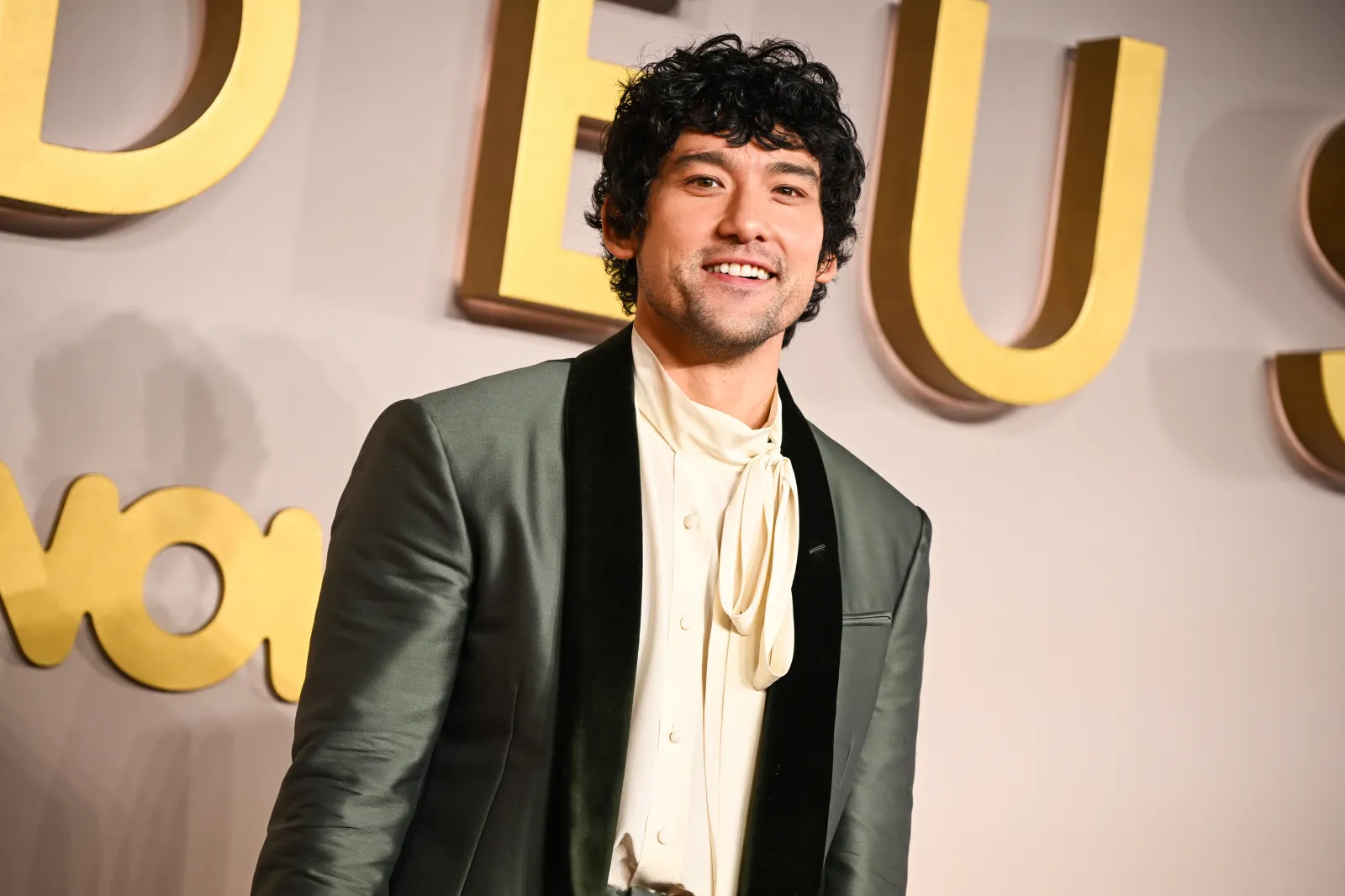
What was the biggest struggle in portraying him?
Probably trying to marry all the different moods and parts of him. He arrives as quite a bright, colorful character full of energy, counter to Salieri’s darker, cooler tones. But then over the course of the series, Mozart also darkens and is ground down by Salieri and by God and by the events of the series. Trying to make that consistent was probably the most exciting challenge. And as I said, the music was quite helpful for that, feeling how on the surface these may be very different pieces, but can you identify a through line? That was maybe part of the approach.
Whenever I see a period piece, the sets and clothes are so grand and get you into character immediately, but my mind also immediately goes to, I bet everyone smelled. [laughs] Where does the fantasy of the pomp and circumstance meet the reality of the world?
We were filming in the height of summer in Budapest wearing all the velvet, so it was very hot, and I for one probably did smell quite bad. [laughs] I was definitely drenched in sweat; at the end of every filming day I was peeling my shirt off. But Julian the director was keen for it to feel very lived-in and unvarnished. He didn’t want a prim, polished world, he wanted it to feel human and messy. Part of that was in the presentation. I love that Morgan [Kennedy], the designer, would have opulent locations and luxurious details but then put a scaffolding structure in the middle of the emperor’s palace to remind you that they still had to do repairs. There was one scene with Christmas trees just on the floor, because they’d probably just finished Christmas and hadn’t packed them away yet. I liked all of those details.
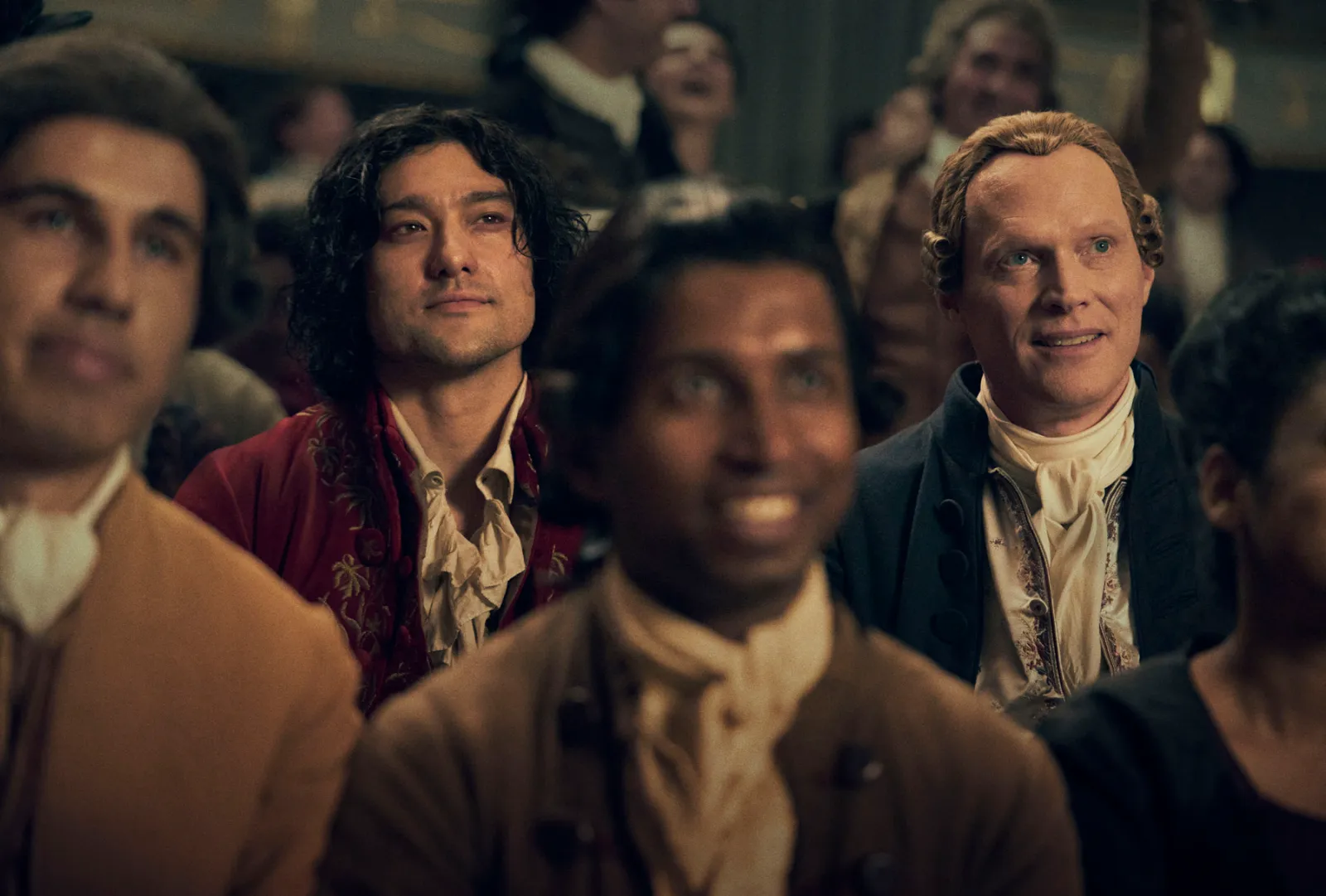
Your chemistry with Paul must be something special, given what an iconic pairing this is. How do you set up that chemistry before getting into the work?
There was a rehearsal process, but we didn’t rehearse all that much, and in some ways maybe that was good. In the earlier scenes, Paul and I were still getting a sense of each other, just as the characters were. As the series went on, I felt we developed something really trusting. He’s a very generous actor, always extremely well-prepared but always sharing the scene, very present in a collaborative way. By the time we got to the heavier scenes later in the series, we felt very safe in each other’s company, and that really helps. It wasn’t like we ever sat down and mapped out the relationship with keywords. It was more talking around it and discussing. We talked quite a bit about seeing them as two brothers to a common father in God, for Salieri, he feels neglected by God, like why are you showering these divine gifts on him when he pays you no respect, when I’m so pious? And from Mozart’s point of view, it’s like, yes, but it’s killing me, because it’s so physically and existentially exhausting to be the vessel for all of this music for everyone else’s benefit. That’s sort of where we end up, that duality. But I had a wonderful time working with Paul, and it comes from his generosity and trusting each other.
Paul has been in everything. When you go into something like this with someone like him, do you take anything from how he works? Did he make your role better?
I was excited and nervous to work with him because I know and love his work and had such admiration for him. But I quickly discovered he was very approachable and funny and easy to work with. You necessarily learn something from every job and every person, and I really respected how well-prepared he always was. There’s a real humility to him. He just wants to understand what the scene is about, he’s thought about it in advance, he’s made choices, and that always provided a rock-solid foundation for us to play any scene on. But he’s also not rigid at all. He’s very spontaneous and flexible and open, a real good listener. I had a lot of fun working with him, and I thought he did an incredible job with the role.
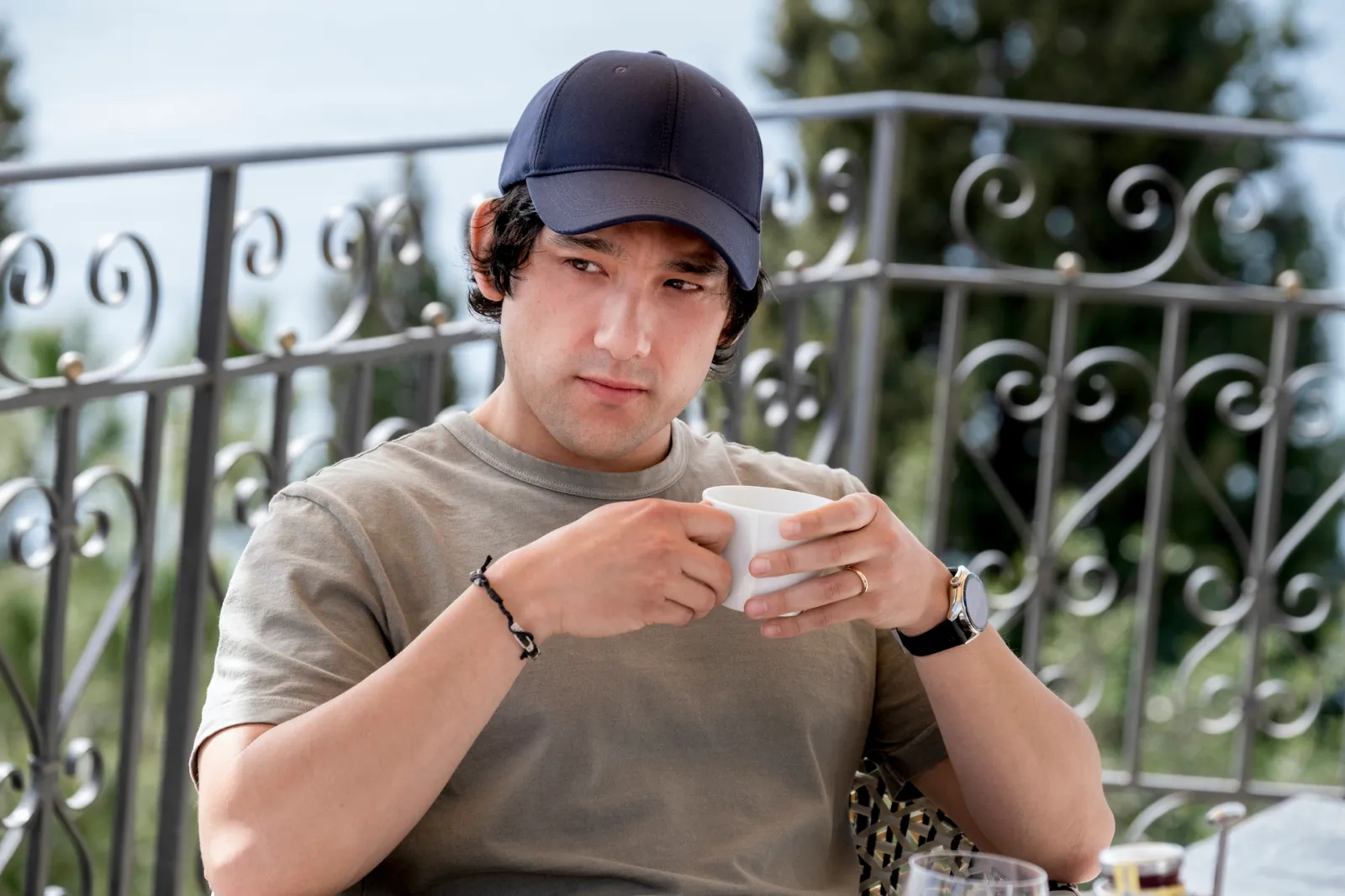
As an American fan, one of the things I find so humorous online is how ever since White Lotus, everyone is surprised that you’re British. How has it been navigating your career after that huge surge of popularity?
I felt really lucky to be a part of that show, and I learned a lot from Mike White and have had opportunities since that I might not have otherwise had. I’ve worked with lots of great people, Lena Dunham and Jesse Eisenberg and people I’ve loved and admired for a long time. One interesting thing I found was not only the American-British thing, but also because White Lotus is still, to date, probably the most-watched thing I’ve been a part of. In the U.K., for a time, a lot of people knew me mostly as a writer-director, somebody who created a comedy show [Flowers] and directed films [The Electrical Life of Louis Wain]. So there’s still a little bit of that, like, hang on, aren’t you the guy from White Lotus?
Read the full article here
