

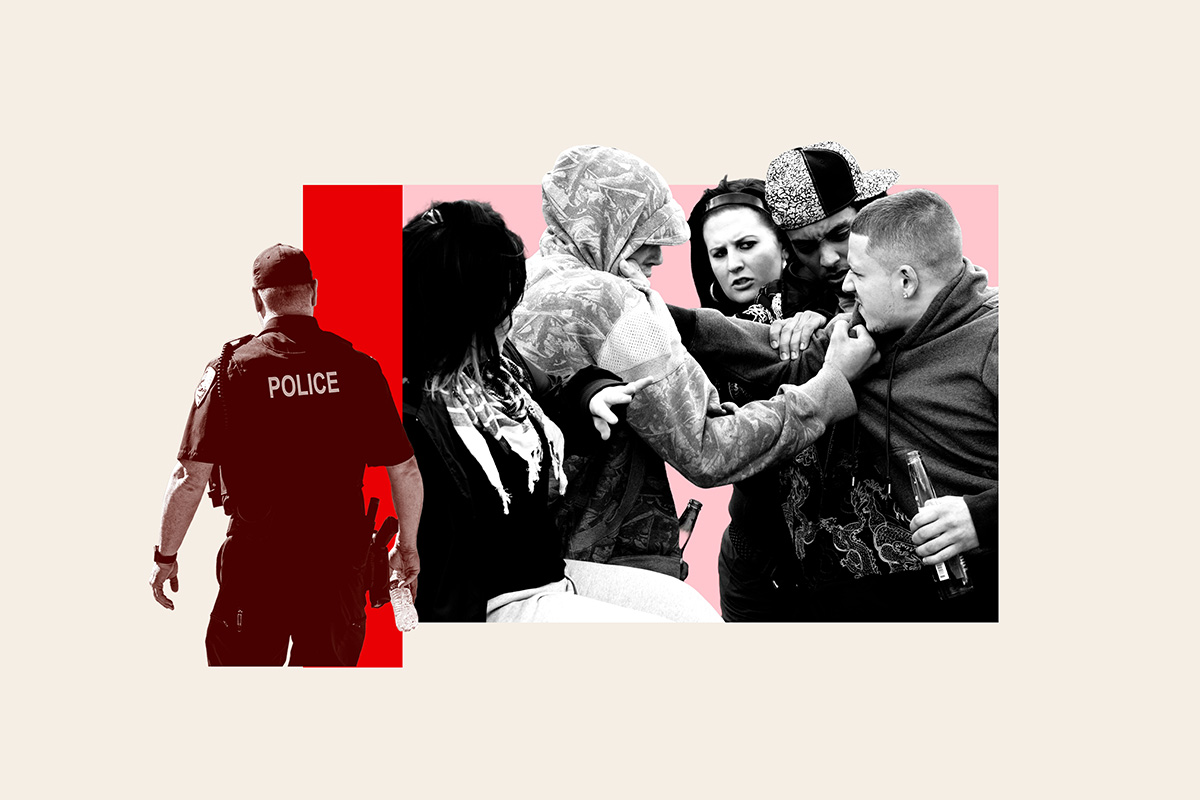
Today’s teenagers are characterized as being more comfortable on screen than on street, with more teens and young adults spending their free time indoors glued to smartphones and social media sites than ever before.
But things have changed in recent months, with swarms of high schoolers now descending on public spaces—from downtown hot spots to malls and beaches—with their meetups resulting in behavior so disorderly and violent that one life has already been claimed.
Evidence of recent “teen takeovers,” as the phenomenon has come to be called, is gaining traction on social media platforms like Reddit. But with schools about to break up for summer, are law enforcement officials bracing for copycat chaos as the viral brawls continue to spread online?
The Kids Are Not Alright
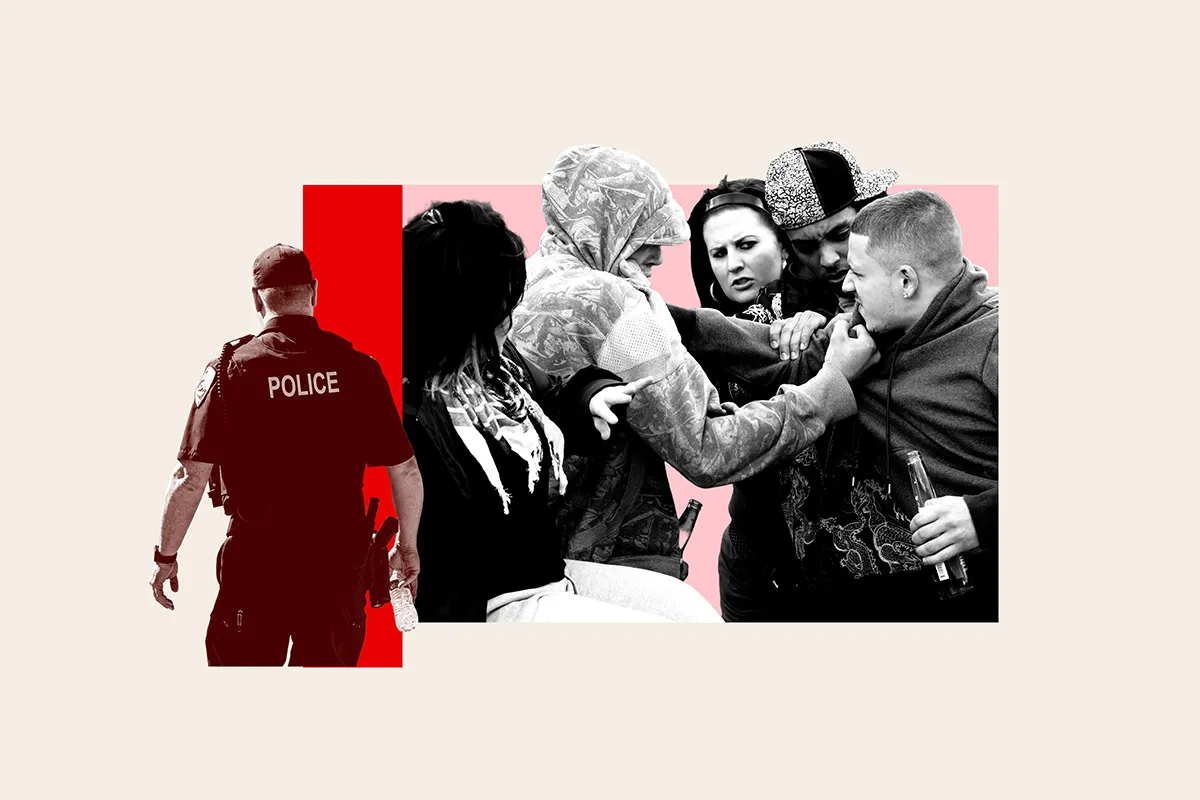
“Teen takeovers” are organized gatherings in which large groups of teens typically use social media to converge on a designated public location at a set time.
One recent “takeover” took place on May 16, with its resulting footage showing teenagers throwing chairs inside a restaurant in Washington, D.C. Customers were captured fleeing while staff took cover as the chaos unfolded.
Police said they were investigating the incident, while U.S. Attorney Jeanine Pirro confirmed the FBI had opened an inquiry.
But the D.C. “takeover” is only one example in a string of recent incidents unfolding with alarming regularity.
Just last week chaos erupted at several Rhode Island beaches with adolescent brawls leaving three people stabbed. The separate incidents took place on May 19 and reportedly involved hundreds of teenagers.
President Donald Trump took to Truth Social on May 26 to comment on a recent “takeover” in Chicago, Illinois.
“Teen takeover in Chicago,” he wrote. “Five officers badly hurt. Mayor and Governor are terrible. Should call for help!”
Chicago Mayor Brandon Johnson had issued a stark warning on X in April: “Chicago, there are credible reports of a teen trend forming in Hyde Park later today. Parents, be aware of where your children are going this evening. DO NOT allow your children to attend one of these gatherings; they are dangerous and can often turn violent.”
A Rapid Escalation
The incidents have mounted quickly.
- On May 9, Tampa police in Florida arrested 22 people aged between 12 and 21 following a “takeover,” with charges including affray, narcotics possession and unlawful possession of a weapon.
- On May 3, an 18-year-old was killed and 22 others were wounded at an unsanctioned gathering in Edmond, Oklahoma. An 18-year-old was arrested.
- On April 25, more than a thousand teenagers descended on an Orlando, Florida, park, resulting in nine arrests and injuries to two sheriff’s deputies.
Earlier incidents in Georgia, Illinois, and Virginia followed a similar pattern.
Newsweek contacted the Providence Police Department in light of the May 19 incident at Narragansett Town Beach, Rhode Island.
“The Providence Police Department is aware of concerns surrounding large gatherings of juveniles and young adults occurring in cities across the country,” a spokesperson told Newsweek. “While social media can contribute to the organization and spread of these gatherings, we are focused on proactive enforcement, community engagement, and maintaining a visible police presence in areas where large crowds may assemble, particularly as the school year comes to an end.
“At this time, there is no indication of any credible threat to the general public related to ‘teen takeover’ events or ‘pop-up parties’ in Providence, however, the department takes any potential for violence seriously and will continue deploying resources strategically to help ensure public spaces remain safe.”
Why Is This Happening?
Dr. Kenya Brumfield-Young, an assistant professor of criminology at Saint Louis University, Missouri, urged caution against treating every teen gathering as evidence of a crime wave.
“Most young people who show up to these events are not there to stab someone or destroy property,” Brumfield-Young told Newsweek. “But large, loosely organized teen gatherings can become volatile quickly because adolescence is a developmental period where novelty, status, peer approval, and excitement carry unusual weight.
“Research on adolescent risk-taking has long shown that sensation seeking and reward sensitivity rise during adolescence.”

Brumfield-Young pointed to the post-pandemic erosion of structured youth activity as an underlying driver.
COVID disrupted schools, sports leagues and after-school programs, leaving many adolescents without adult-supervised environments that provide routine, belonging and conflict management.
“When communities ask why young people are in malls, beaches, downtown districts and parking lots,” Brumfield-Young said. “Part of the answer is that many teens have fewer structured, affordable, socially rewarding places to go.”
The viral dimension, she argued, compounds the problem. These events are planned, promoted and escalated through social media, and the footage generated afterward becomes part of the reward cycle—not a cause of violence in itself, but a mechanism that can turn a gathering into a performance.
Brumfield-Young said that the “teen takeover” label sits in tension with what some call the “de-teenification” of public spaces, following the rise in young people socializing online. Still, the criminologist warned that officials should prepare to handle more brawls this summer.
Providence Police Department, for one, already are.
“We encourage parents and guardians to remain aware of their children’s activities and social media use, and we ask anyone who witnesses criminal activity or unsafe behavior to report it to police,” the spokesperson said. “We remain committed to protecting the community while balancing enforcement with prevention efforts.”
Read the full article here
