

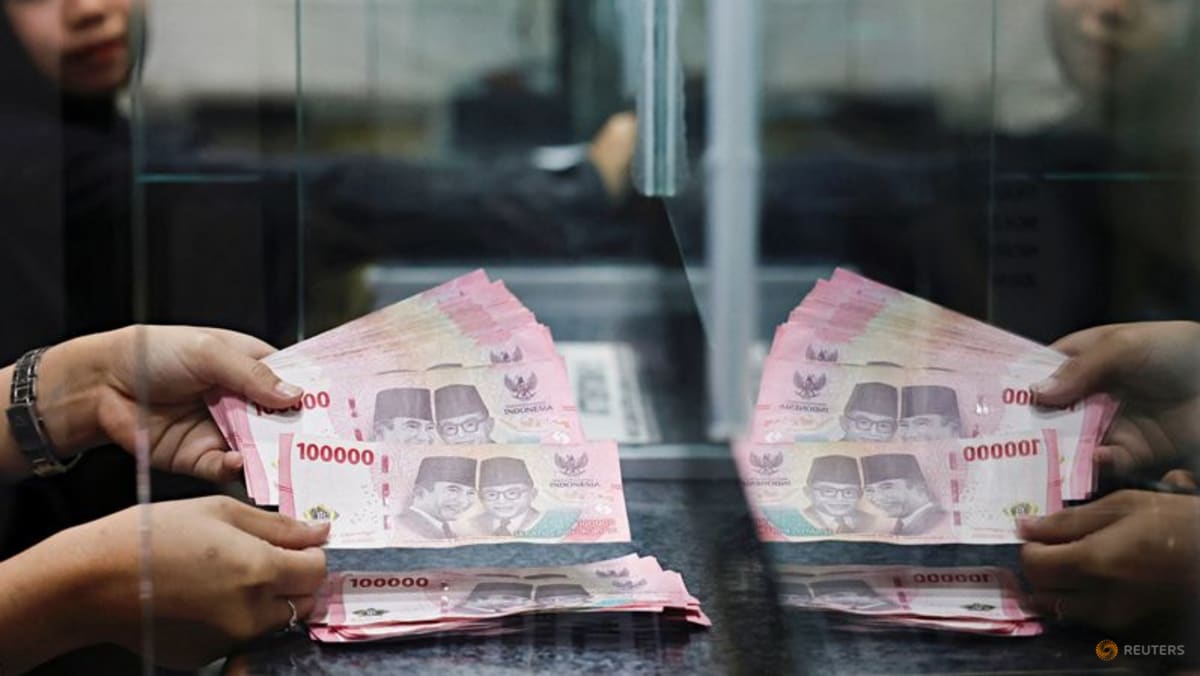
JAKARTA: Indonesia’s central bank raised interest rates by 25 basis points on Tuesday (Jun 9) in an unexpected off-cycle rate hike, taking the benchmark rate to 5.50 per cent as it moves to stabilise the rupiah, which has hit a series of record lows.
Bank Indonesia (BI) said in a statement posted on its website that the off-cycle rate hike was necessary because “the rupiah exchange rate has weakened more than expected” since its last meeting.
The bank was scheduled to meet next week with the rupiah coming under mounting pressure after falling 8 per cent this year and 7 per cent since the Iran war erupted, making it one of the world’s worst-performing currencies.
The currency strengthened slightly to 18,075 after the decision, a day after touching another record low of 18,190 per US dollar. In the past three weeks it experienced its steepest drop since 2020.
BI hiked rates by a higher than expected 50 basis points in its last meeting in May. But even that hike and a US$12 billion drop this year in Indonesia’s foreign exchange reserves, which the central bank uses to defend the rupiah, have not been able to shore up the currency.
“This rate hike is a further step to strengthen the rupiah’s exchange rate stabilisation against the impact of high global volatility caused by the war in the Middle East and a preemptive measure to maintain inflation in 2026 and 2027 within the target range,” BI said.
The rupiah has been under pressure due to a wide range of investor worries, including President Prabowo Subianto’s big spending plans and a ballooning fuel subsidy budget following the Iran war, along with doubts about the central bank’s autonomy and controversial new commodity export policies.
Meanwhile, the central bank’s escalating interventions in the currency markets have drained Indonesia’s forex reserves to their lowest level in nearly two years. They dropped by US$1.3 billion in May to US$144.9 billion, despite the government’s US$3.5 billion sale of US dollar- and euro-denominated bonds last month.
OTHER MEASURES IN PLACE TO STRENGTHEN RUPIAH
BI also said its policy intended to increase returns by attracting foreign portfolio investment inflows into Indonesia.
Bond yields in peer economies like Mexico, India, and the Philippines are already high, David Sumual, Chief Economist at Bank Central Asia (BCA) said.
“For this, maybe we indeed need to be more aggressive because if we look at the SRBI (BI rupiah denominated securities) rate, it is already at 7.25 per cent, which is even higher,” Sumual added, referring to the 12-month rate.
Barclay’s said in an analyst note that the central bank was also using other measures to attract capital inflows, including a 10 per cent reduction in the hedging swap rate for foreign investors as well as higher 6-, 9- and 12-month SRBI yields.
It added that it expected another hike of 25 basis points in next week’s meeting, taking rates to 5.75 per cent, with the possibility of a larger, 50bp move.
It noted that such back-to-back moves have a precedent. BI hiked its policy rate by 50 basis points in an off-cycle meeting in 2013 and then cut it by 25 basis points just days later in a scheduled meeting.
Barclay’s said that BI could start making cuts if the rupiah is stabilised.
BI TO CONTINUE INTERVENTION
Speaking at parliament in a session about next year’s economic projections, BI chief Perry Warjiyo said that the bank did not want to increase rates, but did so to make its assets more attractive.
He said he projected the rupiah to stand between 16,800 to 17,500 to the dollar in 2027, adding that the bank would continue to focus on stabilising the currency through foreign exchange interventions in offshore and onshore markets.
Read the full article here
