

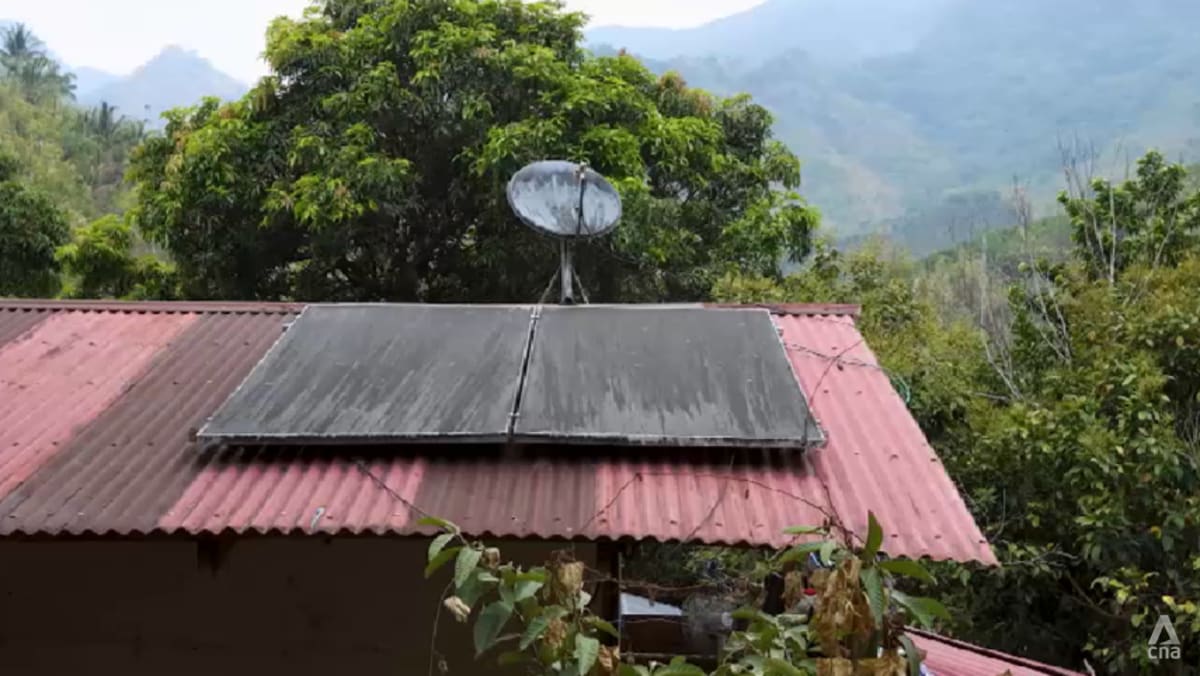
MANILA: The Philippines is accelerating its shift to solar energy as it grapples with some of the highest electricity prices in Southeast Asia and seeks to reduce its dependence on imported fuel.
However, many of the archipelago’s remote communities still remain beyond the reach of the national power grid and rely on small-scale systems for basic electricity needs.
The country aims to increase the share of renewable energy in its power generation mix to 35 per cent by 2030 under its long-term energy plan.
Large-scale projects, including the MTerra Solar development in Nueva Ecija and Bulacan, reflect growing investment in the country’s clean energy sector.
But industry players say achieving that goal will require not only new projects, but also upgrades to the country’s ageing power grid to handle decentralised and intermittent energy sources.
LIVING OFF THE GRID
Just a few hours from Metro Manila, some communities remain off the grid, such as the upland settlements of Barangay Laiban in Rizal province.
Families there, including around 200 households of the Dumagat-Remontado indigenous people, rely on small solar kits and batteries for basic electricity – just enough to power a lightbulb or charge a mobile phone.
For resident Concepcion Mira, solar power has become a cheap but reliable source of energy for her household, replacing the kerosene lamps she once used.
“What we usually use it for is lighting. If we turn on the TV, then there’s no more power for the lights,” she told CNA.
“It’s okay – it’s durable, and we’re still able to use it up to now. It still hasn’t broken down.”
Read the full article here
