

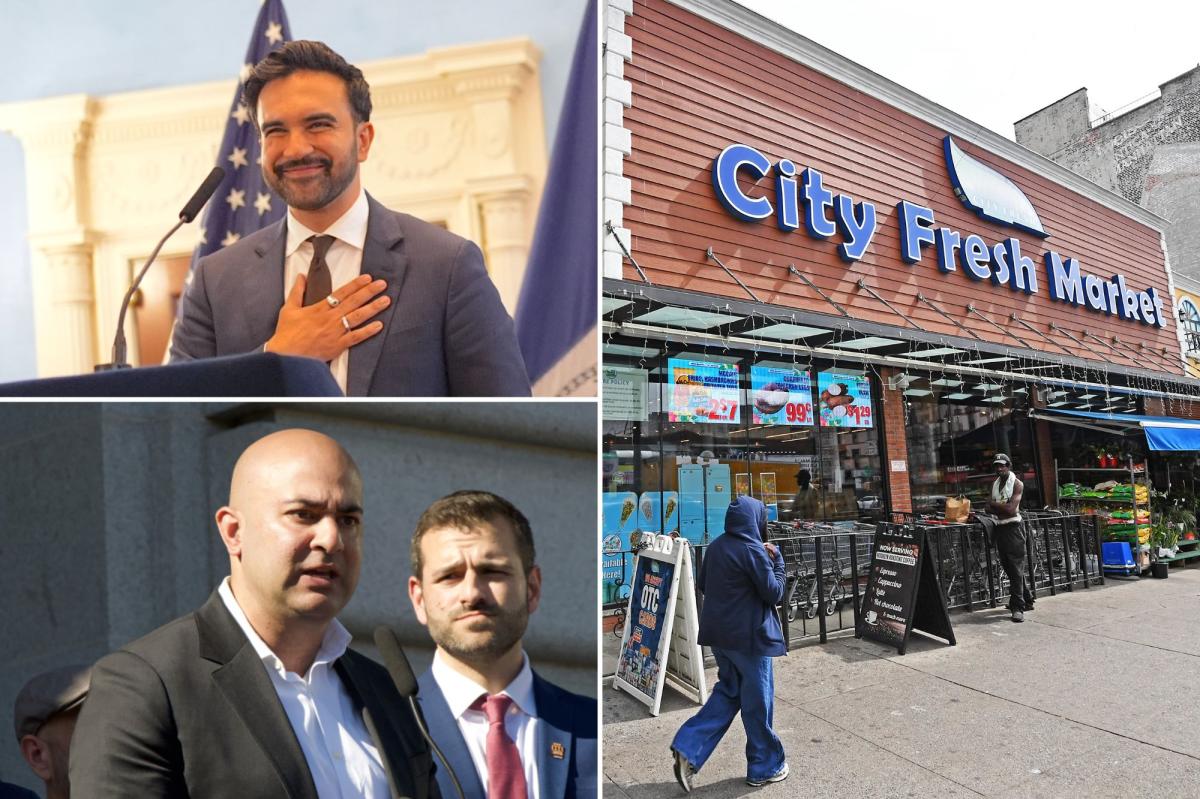
San Francisco voters could soon be asked to bankroll government-backed grocery stores and crack down on so-called “zombie” retailers under a pair of proposals that echo New York Mayor Zohran Mamdani’s controversial food affordability plan.
Supervisor Bilal Mahmood is expected to unveil two ballot measures for November that would create a fund to support grocery stores and impose taxes on chain corporations that leave grocery stores and pharmacies vacant, The San Francisco Standard reported.
The measures come as San Francisco continues to struggle with grocery store and pharmacy closures, leaving some neighborhoods without easy access to fresh food and essential goods.
Grocery prices have also risen amid the city’s broader affordability challenges.
One proposal would establish a fund that could receive both city dollars and private philanthropic contributions to help keep grocery prices affordable. Mahmood’s plan goes beyond simply subsidizing stores.
The fund could also help corner stores convert into full-service grocery markets with fresh food and allow the city to purchase vacant buildings and lease them at below-market rates to grocers willing to keep prices low.
The second ballot measure would target “zombie stores” by taxing chain corporations that intentionally leave grocery stores and pharmacies vacant.
“Everyone deserves access to fresh food, prescription medications, and everyday essentials close to home,” Mahmood said, according to the outlet.
The proposal mirrors elements of a grocery-store plan Mamdani has been promoting in New York. The effort has drawn criticism from skeptics who question whether a relatively small number of publicly supported stores can make a meaningful dent in food costs across a major city.
The proposal is already drawing questions from business groups.
“Everyone agrees San Francisco needs more grocery stores and pharmacies,” Chris Wright, senior vice president of Advance SF, told SF Standard.
“The question is about whether a new tax will bring them back, or whether we should focus more on addressing the underlying reasons those businesses left in the first place.”
Others have questioned whether the plan would reach the people it is intended to help.
Enrico Moretti, an economics professor at UC Berkeley, noted that many low-income residents already receive assistance through CalFresh, California’s version of the Supplemental Nutrition Assistance Program (SNAP).
“The population this proposal seeks to help is already largely covered by food assistance programs,” Moretti said.
He also argued that a city-backed grocery store program would likely be open to all residents, including those who do not face food insecurity.
Meanwhile, San Francisco’s first-ever government-funded free grocery store — District 10 Market — opened in 2024 to help low-income residents living in San Francisco’s District 10 neighborhoods.
The market also operates as a community connector of services for low-income families, according to their website.
Supporters believe that the measures could improve food access while creating jobs.
“San Francisco has an opportunity to bring affordable groceries back to neighborhoods and create good-paying, union jobs for communities,” said Ademola Oyefeso, an international vice president with the United Food and Commercial Workers, a labor group that advised on New York City’s policy.
The price tag for the proposal remains unclear. Mahmood said a report from the city controller is expected soon and estimated the tax could generate several million dollars in revenue each year.
Download The California Post App, follow us on social, and subscribe to our newsletters
California Post News: Facebook, Instagram, TikTok, X, YouTube, WhatsApp, LinkedIn
California Post Sports Facebook, Instagram, TikTok, YouTube, X
California Post Opinion
California Post Newsletters: Sign up here!
California Post App: Download here!
Home delivery: Sign up here!
Page Six Hollywood: Sign up here!
Read the full article here
