

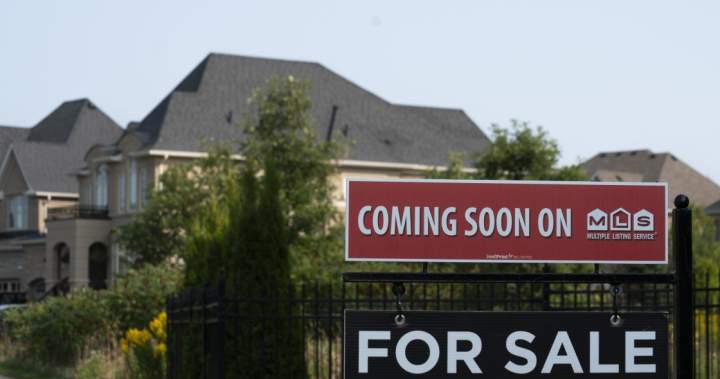
Canadian cities like Lethbridge, Alta., Saint John, N.B., and Thunder Bay, Ont., are some of the most affordable for those looking to own a home amid the cost-of-living crunch, according to a report from Royal LePage, which names the top 15 most affordable cities in Canada.
An average of half (51 per cent) of respondents to the report’s survey who were from Toronto, Montreal and Vancouver said they would consider moving to one of those more affordable cities if they were able to find a job or work remotely.
This also comes after a separate report from rates.ca in March showed that mortgage affordability was getting worse in most major Canadian cities.
“Home prices in Canada’s largest cities have moderated over the past couple of years, but for many buyers, the math still doesn’t work,” Phil Soper, president and CEO of Royal LePage, said in a press release.
“As barriers to entry remain high in the country’s most expensive urban centres, relocating to a more affordable city is becoming less of a last resort and more of a deliberate strategy. Aspiring homeowners who cannot secure a foothold in these markets are seriously weighing their options.”
The report from Royal LePage ranks 15 cities by its own “Affordability Factor,” which it says is based on the percentage of income needed to cover a monthly mortgage payment — the lower the percentage point, the better.

Get breaking National news
Get breaking Canada news delivered to your inbox as it happens so you won’t miss a trending story.
Royal LePage says it factors in 2024 income data from Statistics Canada, as well as its own aggregate home price data from the first three months of 2026. Aggregate, in this context, is essentially an average home price relative to the number of homes sold in a particular market.
Here are the most affordable cities:
- Lethbridge, Alta., (18.9 per cent), with an aggregate home price of $338,700.
- Saint John, N.B., (19.6 per cent), with an aggregate home price of $265,900.
- Thunder Bay, Ont., (20.3 per cent) with an aggregate home price of $339,900.
- Red Deer, Alta., (24.9 per cent) with an aggregate home price of $447,200.
- Regina, Sask., (25 per cent) with an aggregate home price of $397,900.
- St. John’s, N.L., (26.3 per cent) with an aggregate home price of $377,900.
- Edmonton, Alta., (26.3 per cent) with an aggregate home price of $472,300.
- Trois-Rivières, Que., (27.3 per cent) with an aggregate home price of $400,100.
- Fredericton, N.B., (27.8) with an aggregate home price of $377,200.
- Winnipeg, Man., (27.9 per cent) with an aggregate home price of $424,500.
- Windsor-Essex, Ont., (28.7 per cent) with an aggregate home price of $480,500.
- Saskatoon, Sask., (28.8 per cent) with an aggregate home price of $458,000.
- Sherbrooke, Que., (28.9 per cent) with an aggregate home price of $423,200.
- Moncton, N.B., (29.5 per cent) with an aggregate home price of $399,300.
- Charlottetown, P.E.I., (30.6 per cent) with an aggregate home price of $428,200.
Royal LePage says its estimates of mortgage affordability factored in a 20 per cent down payment and a three-year fixed term loan at an interest rate of 4.64 per cent, amortized over 25 years.
The survey data, which was conducted earlier in June by Burson for Royal LePage, featured 900 adult Canadian participants living in the Greater Toronto, Montreal and Vancouver regions.
Fifty-five per cent of respondents in the Greater Toronto Area, 48 per cent in the Greater Montreal Area and 46 per cent in Greater Vancouver said they would consider relocating to one of the 15 most affordable cities listed if they were able to find work or work remotely.
Gen Z respondents were more likely to make a move at 77 per cent, compared with 56 per cent of millennials, 51 per cent of Gen X and 34 per cent of baby boomers.
“Younger Canadians – often less anchored to one community in particular – are well-positioned to make the move to another city or province, with the flexibility to put down roots where housing is more attainable,” Soper said.
“What has shifted, however, is the ease of doing so. The remote work era gave buyers the freedom to live anywhere while earning a competitive wage. As more workers return to the office, that freedom is becoming harder to come by.”
An MNP study from last year found that young Canadians were struggling with debt the most among the given age categories, which one economist described as “a kind of youth-cession.”
Separate Ipsos polling conducted exclusively for Global News in 2024 found that four in five Canadians felt owning a home was something only the rich could achieve, which included 90 per cent cent of Gen Z respondents and 82 per cent of millennials.

Read the full article here
