

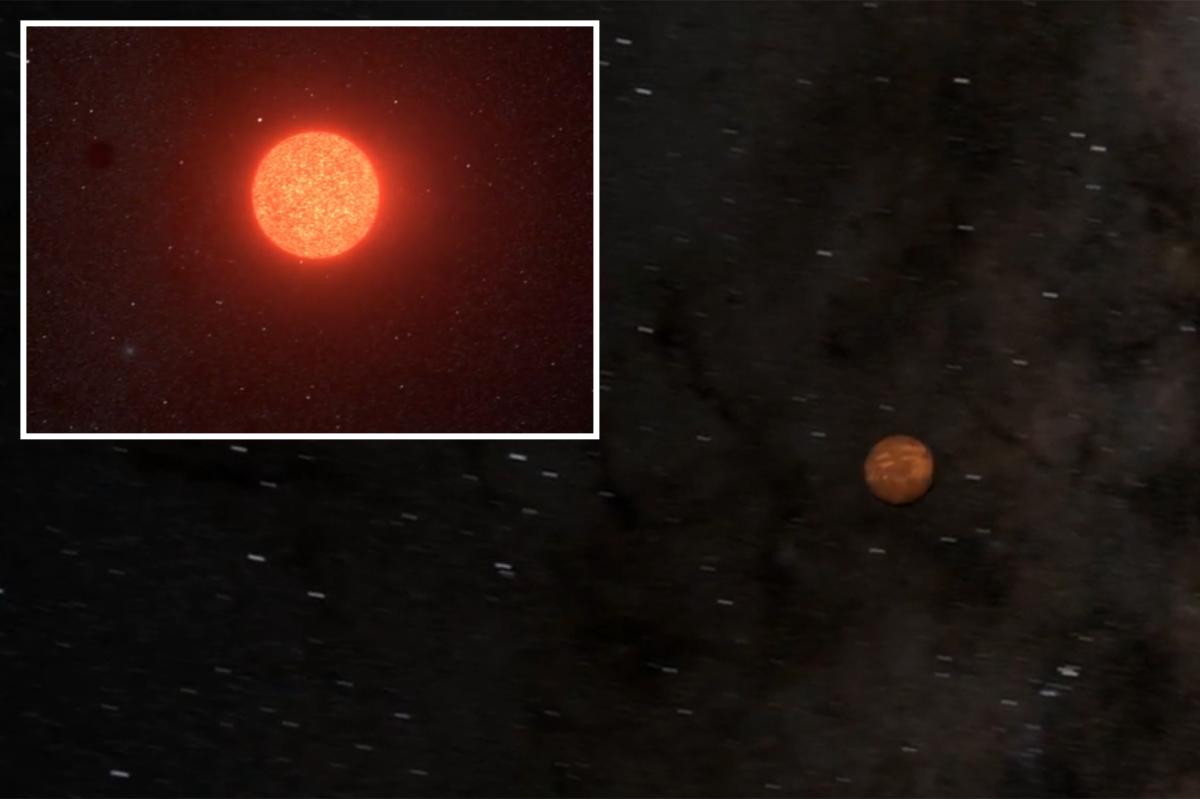
A newly discovered and potentially habitable exoplanet scientists are calling Earth’s “next-door neighbor” could be the next stepping stone in humanity’s search for extraterrestrial life.
“This one’s exciting,” Paul Robertson of the University of California, Irvine, said in a statement on Tuesday, adding that “it’s one of our closest cosmic neighbors.”
“Twenty-five light years sounds like a long way, but the Milky Way is about 100,000 light years across, so in that respect it’s our next-door neighbor,” said Robertson, the lead author of a new study published in The Astrophysical Journal.
The exoplanet, called “GJ 3378b,” is approximately twice the size of Earth and is located in the Goldilocks zone, the scientific region around a star where a planet’s surface temperature is just right to maintain liquid water.
Whether the planet has an atmosphere remains a crucial component of its ability to host life — GJ 3378b sits on the edge of the “cosmic shoreline,” a metric that determines whether a planet can retain an atmosphere based on gravity versus the radiation it receives.
“If you scale the Earth down to the size of an apple, its atmosphere would be about as thick as the skin of the apple,” said Robertson.
“That’s just enough to maintain the kinds of surface pressures where you can have liquid water,” he explained.
“It’s enough that there’ll be breathable air, and it provides maybe a little bit of protection from the harsh radiation environment of space.”
More observatories are required to determine if a given planet has any kind of atmosphere, which could “justify further research looking for biosignatures, liquid water or other signs of life that require both an atmosphere and the right amount of heating from the host star,” said Gogod James, a UC Irvine student in Robertson’s group who helped study the size of GJ 3378b.
NASA has plans to construct the Habitable Worlds Observatory, which is slated to launch in the next 20 years or so.
If completed, astronomers will begin to search for chemicals in atmospheres that could have been produced by life.
“I think that’s just too much fun,” said Robertson.
Read the full article here
