

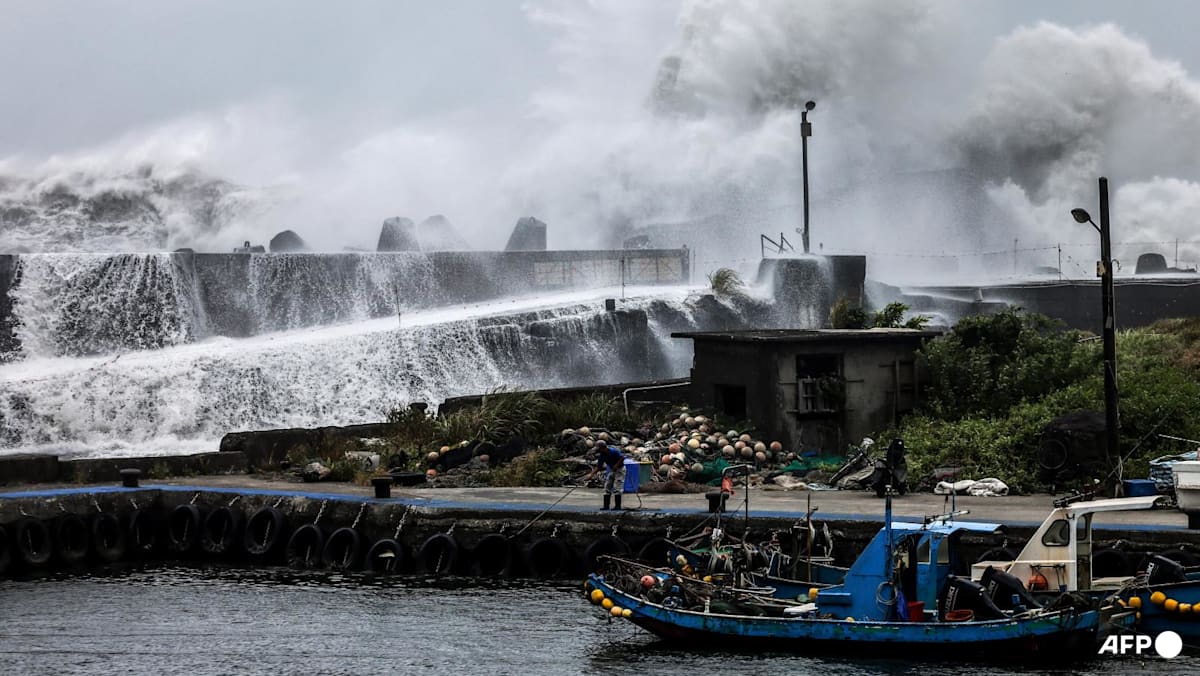
SEOUL: North Korea warned of heavy rain and strong winds on Tuesday (Jul 14) as Typhoon Bavi drew near, with leader Kim Jong Un urging “maximum vigilance” to prevent damage.
Natural disasters tend to have an outsized impact on isolated North Korea due to its weak infrastructure and economy.
The typhoon is expected to weaken into a low-pressure system before crossing the country’s central region via the Yellow Sea between Tuesday and Wednesday, according to Pyongyang’s state-run Rodong Sinmun newspaper.
The country’s weather agency issued warnings for heavy rainfall and strong winds, the paper said.
All officials and workers are “urged to remain on maximum vigilance and take steps to minimise damage”, Kim was quoted as saying.
Rodong said rainfall of 80mm to 120mm, with downpours of 30mm to 60mm per hour, is forecast on Tuesday across parts of the country’s northern and central regions.
The southern regions, among others, are set for 150mm to 200mm of rain, as well as winds of 10m to 15m per second along the west coast and in some inland areas.
North Korea has stepped up disaster prevention efforts, the Korean Central News Agency reported last week.
Heavy rain also battered South Korea recently, dumping up to 200mm in some areas.
Hundreds of residents in the central Chungcheong province evacuated the area or were stranded by flooding.
A man in his 70s was reported missing after being swept away by a swollen river in the southern region of Gyeongsang, according to broadcaster KBS.
Seoul’s weather agency forecast rain across the country from Tuesday through Wednesday, with heavy downpours expected in central regions and the southern province of Jeolla.
Scientists say human-driven climate change is making extreme weather more frequent, prolonged and intense.
Last summer was South Korea’s hottest on record, and both Koreas recorded their warmest June.
This year’s return of El Nino, a natural Pacific warming pattern linked to heat, drought and heavy rain across parts of Asia, has added to the risks.
North Korea also suffers chronic power shortages, and experts say most residents lack air conditioning.
The impoverished country was hit by severe flooding in its northern regions in 2024, with South Korean media reporting that as many as 1,500 people could be dead or missing – estimates Pyongyang dismissed at the time.
Read the full article here
