

In February, Loke said one-way fares were expected to be around S$5 to S$7. He added then that fares for the cross-border rail service were unlikely to be as cheap as public transport in Kuala Lumpur, though they would still be more cost-effective than travelling to Singapore by car.
He also said in February that Singapore would not provide subsidies, meaning the operating model would have to be commercially sustainable.
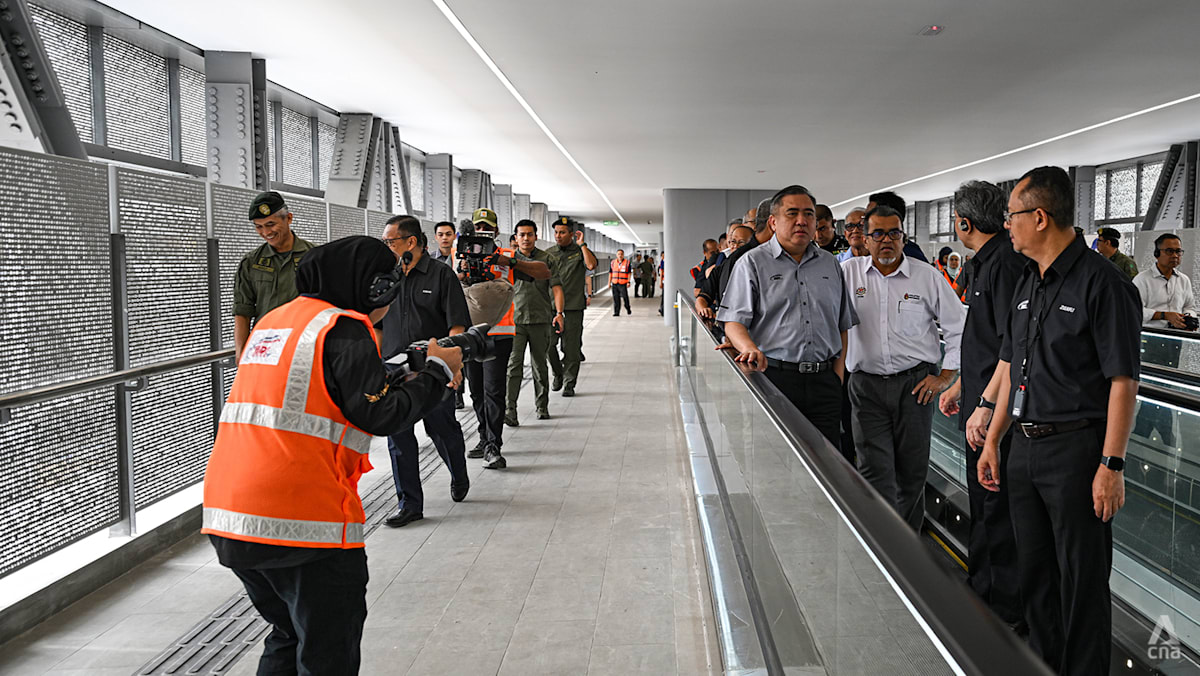
On Tuesday, Loke surveyed the Bukit Chagar station and took a return train journey from Bukit Chagar to Woodlands North with local officials and journalists.
“As we saw earlier, in terms of physical readiness, the (customs, immigration and quarantine) building and the RTS station are essentially complete. We are now in the final phase of testing,” said Loke.
“This is the most important phase before operations begin. The testing and commissioning phase is critical to ensure that all systems function properly and perform as expected before the RTS is opened to the public,” he said.
Malaysia authorities have set a target of 25 minutes for passengers to board the train after they enter Bukit Chagar station.
The station is billed as one of Malaysia’s most modern. It will feature spacious air-conditioned concourses, high-tech security screening and immigration systems, as well as amenities such as large toilets and a nursery for travellers with young children.
The RTS Link completed its first test run in December 2025. Experts say it is expected to reduce traffic congestion at the checkpoints by up to 25 per cent.
The 4km rail link will connect Bukit Chagar in Johor Bahru with Woodlands North in Singapore. It will carry up to 10,000 passengers an hour in each direction, with projected daily ridership of about 40,000 when operations begin.
Read the full article here
