

Sometimes it’s best not to know what you’re missing.
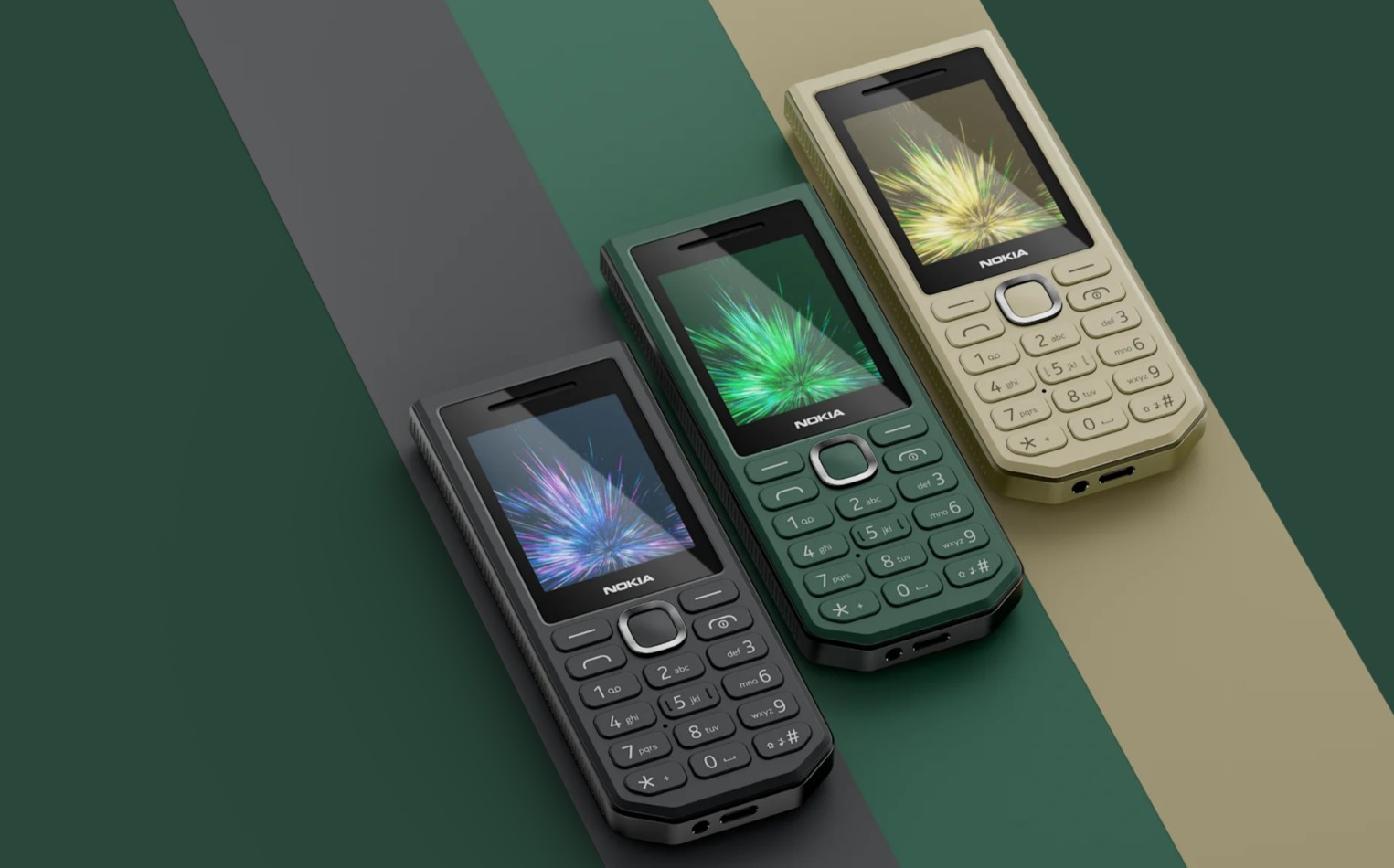
For those of us who keep up with tech product announcements, it was hard not to notice a new, eye-catching gadget: the 300 Charge, a retro-styled phone from Nokia with an appealing blocky look (think earth-toned Lego bricks).
In addition to its old-school looks, the 300 Charge has a few interesting features. It can serve as a 10-watt powerbank for other devices, has an SD card slot and a headphone jack, and features an ultrabright LED torch for use as a flashlight, all for about $32. Yes, you read that price right.
The phone is like catnip for anyone who wants a cheap, stripped-down feature phone with a magnificent battery life, and it was prominently featured on tech sites including Gizmodo, Engadget and TechRadar.
But if you live in the US, the 300 Charge isn’t available to you. So far, it’s only for sale in the Philippines, and launch dates for other markets haven’t been announced.
Another big bummer: The phone is only compatible with 2G networks, and the last of those just shut down in the US (thanks, T-Mobile). Nor is it compatible with 3G networks, which most wireless carriers discontinued in 2022. There’s no indication that a 4G version that would work in the US might be available in the future.
Representatives from Nokia and its partner company HMD Global did not return a request for comment.
Going retro
So-called “dumb phones,” which go back to an era before smartphones, are currently in vogue, part of a kind of digital-detox awakening. Flip phones, like the reimagined Motorola Razr, the Light Phone and others, let you carry around a phone that’s less distracting and doesn’t demand excessive screen time — allowing you to focus more on core features like actual phone calls or T9-style texting.
Some of them look like they came straight out of the early 2000s, when my generation proudly sported them. Others resemble slightly smarter devices like the BlackBerry or Palm Treo, before we switched to screen-dominated smartphones.
And there seems to be a strong appetite for these types of phones, not just in foreign markets where low-cost, stripped-down phones are offered out of necessity.
Commodore, the ’80s brand associated with some of the first personal computers, recently launched a flip phone, the Callback 8020. The head of the group that bought the Commodore brand said the device sold almost 10,000 units at its launch and had a callback waitlist of 100,000, showing that retro feature phones are a hot commodity.
“People are not simply buying the past,” said Christian “Peri Fractic” Simpson, Commodore International’s president and CEO. “Retro phones like the Commodore Callback 8020 offer tactile buttons, personality, and a more deliberate relationship with technology.”
Simpson said the people buying these phones include Gen Zers who are discovering these devices for the first time. The audience also includes parents who want to limit their kids’ social media activity for safety reasons, and adults who want connectivity with fewer distractions.
Dumb phones also typically have longer battery life than smartphones, and because they lack apps flagged as addictive and have less responsive keypads, they can serve as a light form of digital detox, encouraging more intentional use.
The 2G loophole has closed
Long before the Callback 8020 was released, Simpson himself posted a video two years ago showing how an ancient Ericsson phone could operate on modern networks.
It did then, but that’s no longer possible.
And the Nokia 300 Charge won’t operate in the US for the same reasons.
“The Nokia 300 Charge cannot realistically be hacked for US use,” Simpson told CNET. “It supports only 2G GSM on 900/1,800MHz. Software cannot add the missing LTE bands, VoLTE support or carrier certification, so it should be treated as unusable on public US networks, even by most enthusiasts.”
That goes for other feature phones available overseas, such as Xiaomi devices, which have effectively been outlawed for sale in the US, even if they work with domestic carrier networks. Nokia’s 8110 “banana phone” and many Japanese flip phones also don’t work in the US.
Nokia and HMD have not said if they’re working on something like the Nokia 300 for American or European markets, but it seems like there’d be plenty of interest from those who want a break from their smartphone at a very low price.
Read the full article here
