

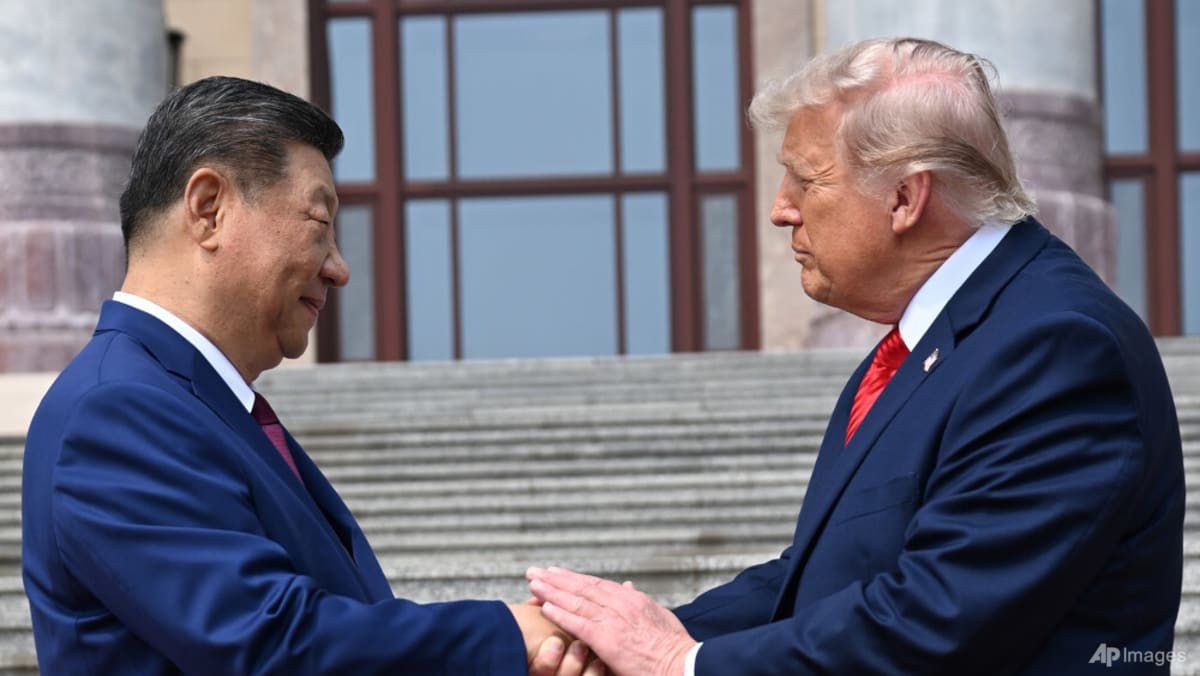
Sun from Tsinghua University likewise cautioned against judging the summit only by whether Trump and Xi strike a “grand bargain” – a sweeping deal across multiple areas of contention. Analysts have said neither side is expecting nor seeking one.
“The core measure of progress is not whether differences disappear,” Sun said.
“It is whether, when differences arise, the two sides have the ability to keep them contained.”
NAVIGATING COMMON GROUND AND RED LINES
The Iran war offers the clearest test of whether calmer US-China ties can translate into cooperation on a major international crisis, said analysts.
The conflict, now in its seventh month, has severely disrupted shipping through the Strait of Hormuz, putting pressure on global energy markets. It is widely expected to be discussed during the Washington summit.
When Trump and Xi met in Beijing in May, both sides agreed that Iran should not possess nuclear weapons and that the Strait of Hormuz should reopen.
Both sides have an interest in containing nuclear escalation, safeguarding shipping and limiting further energy shocks, Li said.
But Beijing opposes US secondary sanctions and has consistently stressed the need for negotiations and a political settlement. It has shown little willingness to adopt Washington’s approach of military and economic pressure towards Tehran.
“China will use leverage where its own interests converge with Washington’s; that is different from using it simply because Washington asks,” Li added.
Sun made a similar point, arguing that the most realistic areas for cooperation lie in preventing the conflict from widening, keeping energy routes open and encouraging a return to diplomacy.
Read the full article here
