

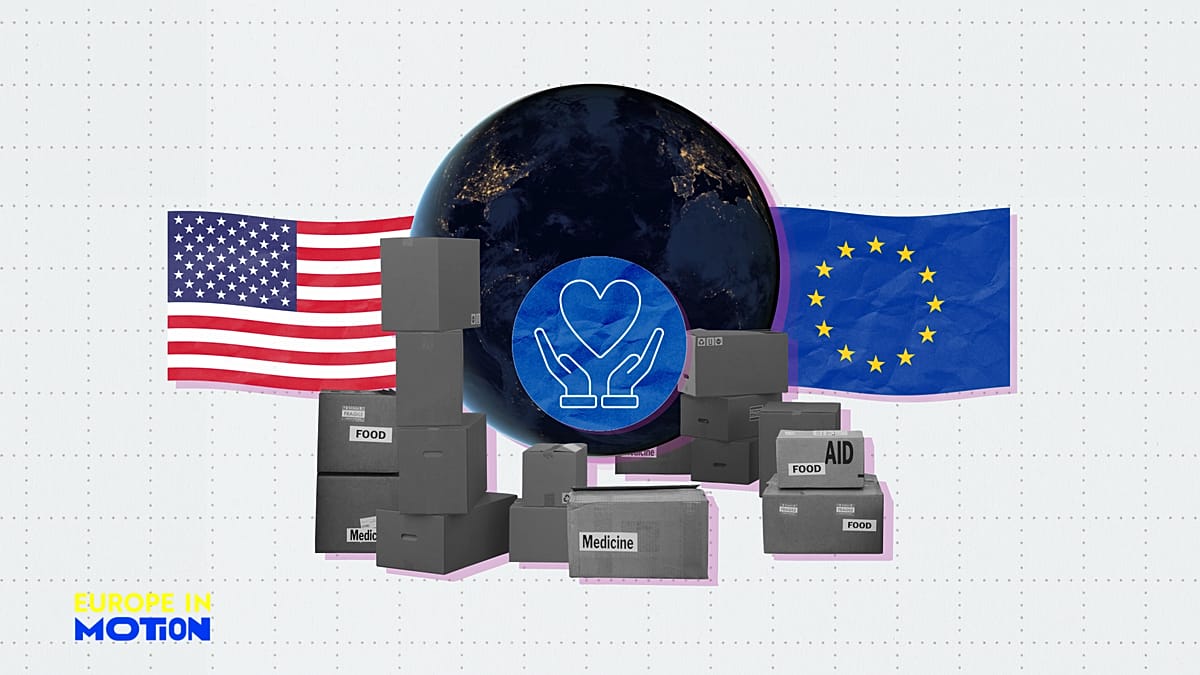
Humanitarian funding has been declining since 2023, showing how vulnerable it is to the political whims of the day.
The biggest blow to overseas spending happened in 2025, when US Secretary of State Marco Rubio announced that 83% of programmes by USAid — the country’s international development agency — would be cancelled.
It’s a similar story around the world: between 2025 and 2026, total global humanitarian funding plummeted from around €23.97 billion ($27.60 billion) to approximately €7.34 billion ($8 billion), according to the latest data from the Financial Tracking Service (FTS).
Currently, the EU and its member states account for more than 40% of development aid globally, while the US makes up 28.3%.
Sweden is the biggest donor among EU members, funding 9.9% of the global share, followed by Germany at 6.9%.
However, at the end of last year, Germany announced the humanitarian aid budget would be reduced to €10.06 billion — a fall of €251 million compared to 2025 and a decline of almost 20% since 2023.
“Reducing one’s own spending to the lowest level in 10 years in this dramatic situation is simply unacceptable,” said Åsa Månsson, managing director at VENRO, the umbrella organisation of development NGOs in Germany, in a statement.
In addition, Sweden announced a cut of around €930 million (10 billion kronor) in development funding to Mozambique, Zimbabwe, Liberia, Tanzania and Bolivia, instead choosing to reallocate the funds to Ukraine.
The move was part of “cost-effectiveness, new transformative approaches and innovation are guiding principles for the strategy,” according to the Government Offices of Sweden.
It’s a similar story among international organisations too, which are seeing their international development budgets decrease across the board.
So far, the United Nations High Commissioner for Refugees, the World Food Programme, and the Central Emergency Response Fund are the top three organisations receiving the most funds in 2026, but they’ve still shrunk compared to last year.
Across the world, health and food security make up the bulk of the funding.
The majority of Europe’s humanitarian aid is sent to Ukraine ($607.7 million).
But the exact numbers could be set to change as the EU begins negotiations on its budget for 2028 to 2034: the development part of the EU’s budget, called the “Global Europe”, is set to increase 75%.
Half of this budget’s initiative will be dedicated to Ukraine, while €43.2 billion will go to other countries in line to join the bloc.
Read the full article here
