Mr Chan said shifts in power could also look very different from the perspective of smaller states.
“A country growing in strength may assert itself to address longstanding grievances and interests. Yet that same growth in strength may look very different to those around it,” he said.
“The more responsible major powers are, the less concerned small countries will be,” Mr Chan added in Mandarin.
He added that “competition and rivalry do not mean that we are enemies”, saying that if well managed, they could spur countries to do better.
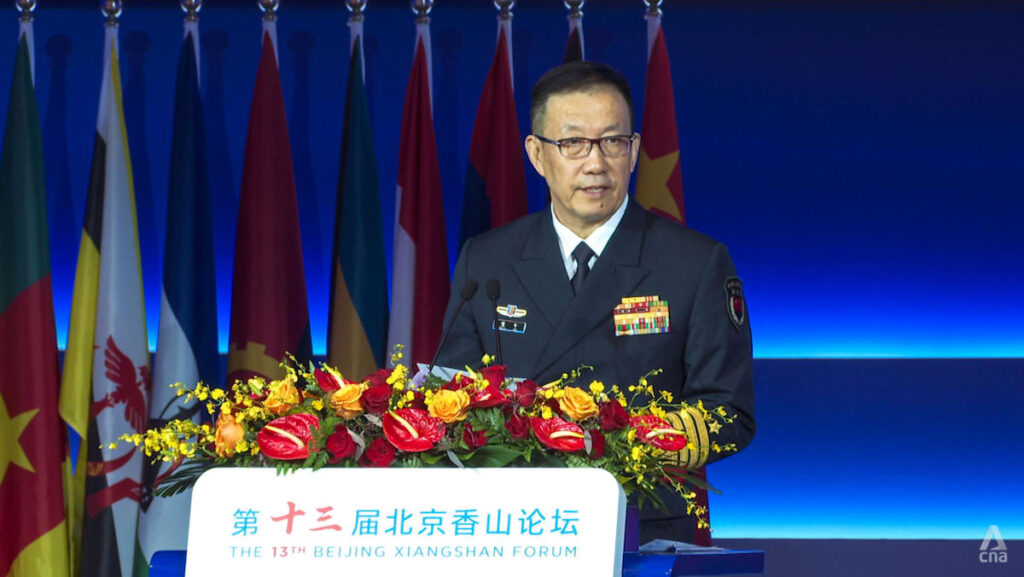
In his roughly 13-minute speech, Mr Chan also called for “strategic patience”, saying countries should prioritise their long-term interests over short-term gains.
“Not every capability needs to be advertised. Not every advantage needs to be immediately pressed, and not every provocation demands an immediate response,” he said.
Mr Chan also touched specifically on Singapore’s relationship with China, citing it as an example of how countries could find common ground despite differences in perspectives and ideology.
He pointed to Singapore’s support for China’s reform and opening up, including advocating for its entry into the General Agreement on Tariffs and Trade in the 1980s and launching the Suzhou Industrial Park with China in 1994.
Mr Chan said Singapore welcomed China’s aspiration to be a “responsible major country”, pointing also to its military modernisation. The People’s Liberation Army (PLA) marks its 100th anniversary in 2027.
“As the PLA approaches its centenary, there is much potential for it to make a positive contribution to regional stability,” he said.
Read the full article here