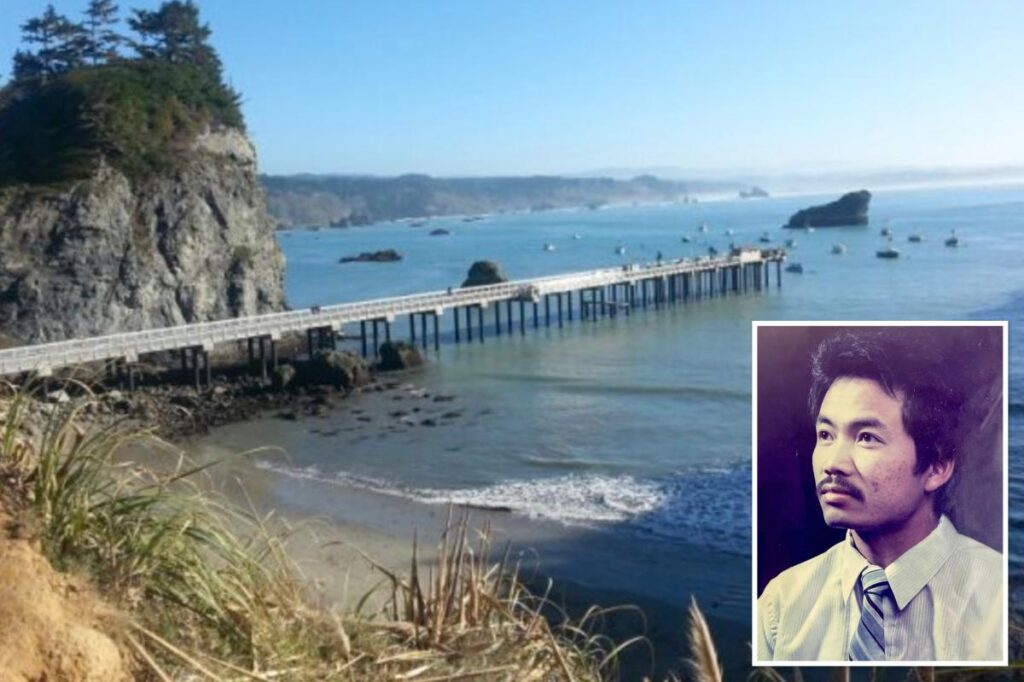
A bone found on a Northern California beach has officially been identified as belonging to a fisherman who was lost at sea in 1999 after a rogue wave smashed into his boat in Humboldt Bay.
Jonathan Raxa, 37, was last seen when the commercial fishing boat carrying him and three others was struck by an 18-foot wave that ripped the ship’s pilot house from the boat and tossed it into the water.
The 35-foot boat then sank under the large waves.
A skipper managed to grab onto a five-gallon oil can and float until two other crew members pulled him safely aboard their raft, the Los Angeles Times reported at the time.
Three of the four people on the boat were later recovered from the water, but the boat’s owner, Raxa, was never found, the Humboldt County Sheriff’s office said in a press release.
The sheriff’s office later contacted Raxa’s son and got a family DNA sample.
More than two decades later, in March of this year, a human bone was discovered on Centerville Beach.
“Deputies recovered the bone, which was identified as a human sacrum. The bone was turned over to the Humboldt County Coroner’s Office, which submitted it to the California Department of Justice for DNA analysis,” the sheriff’s office said.
Through DNA testing, the bone was identified as the lost fisherman.
“Raxa’s family was contacted and notified of the identification,” the sheriff’s office said.
“This case highlights the importance of collecting and preserving DNA samples from family members of missing persons.
“These samples can provide critical investigative leads and assist law enforcement in identifying missing persons and resolving cases, even decades after a person’s disappearance.”
From 1992 to 2008, fishing claimed the lives of an average of 58 people per year in the US, making it one of the most dangerous professions at the time.
Read the full article here