

Sedek shared this view, but asked if Putrajaya should deplete its hard-earned fiscal buffers to maintain the current subsidy regime or prioritise the growth.
“This will have an effect on our economy: impacting the currency in the short term, the debt-to-GDP ratio in the medium term, and our credit rating over the long term,” he said.
Malaysia continues to boast some of the lowest fuel prices in the world, second only to Brunei within the Southeast Asian region.
Vehicles that run on petrol make up the majority of vehicles in Malaysia, while diesel vehicles are mainly used for commercial purposes.
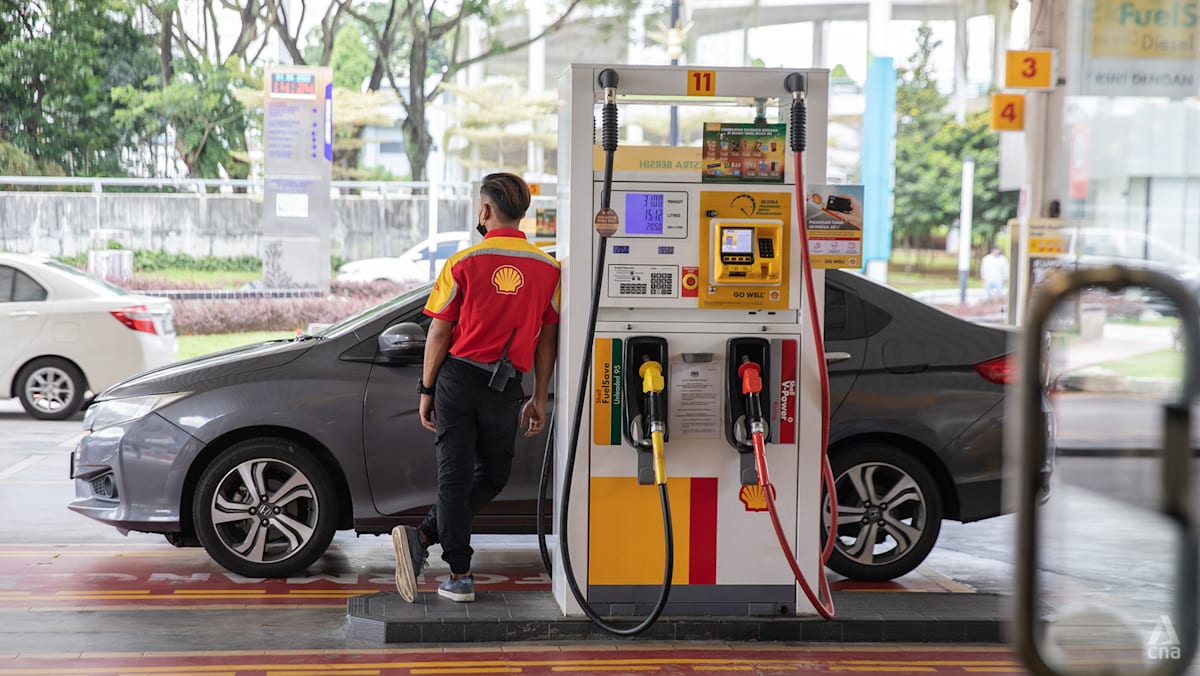
In the latest weekly update by the Finance Ministry, fuel prices in Peninsular Malaysia continued their upward trajectory for the fourth consecutive week. RON97 rose to RM5.15 per litre, while unsubsidised RON95 reached RM3.87.
Diesel prices in the peninsula also saw a sharp increase to RM5.52 per litre, a contrast to East Malaysia, where diesel remains capped at the subsidised rate of RM2.15.
Since June 2024, the price of diesel has been floated in Peninsular Malaysia while East Malaysia still enjoys subsidies as diesel-powered 4×4 vehicles are considered a necessity because of the rugged terrain there.
Speaking on Thursday, Anwar said that under the new enforcement measures for East Malaysia, diesel purchases will be subject to per-transaction caps: 50 litres for private cars and light transport, 100 litres for public and goods vehicles under three tonnes, and a maximum of 150 litres for heavy vehicles exceeding three tonnes.
“This is to guarantee and ensure that supplies remain available and can be distributed fairly and sufficiently to everyone. Without these adjustments, we are concerned that there will be a tendency for hoarding and smuggling, as has been detected previously,” said Anwar.
COULD ANWAR CALL FOR ELECTION TO MANAGE POLITICAL COST?
Observers suggest that it is inevitable that the government would have to scale back on RON95 subsidies in the short term if the war rages on and global oil prices stay at the level they were at or continue to increase.
And this is likely to have political repercussions for the government.
Oh Ei Sun – the principal adviser at the Pacific Research Center of Malaysia – told CNA that the main obstacles for removing the subsidies are two-fold.
“One is a socioeconomic one, namely Malaysia being still very much a developing country where traditional fuels play a huge role in the livelihood of much of its population. If subsidies are removed, they will be hard put to lead a decent life.
“The other is of course a political one, namely if you reduce or remove a longstanding subsidy scheme, you will be punished to an extent in the ballots,” he said.
Read the full article here
