

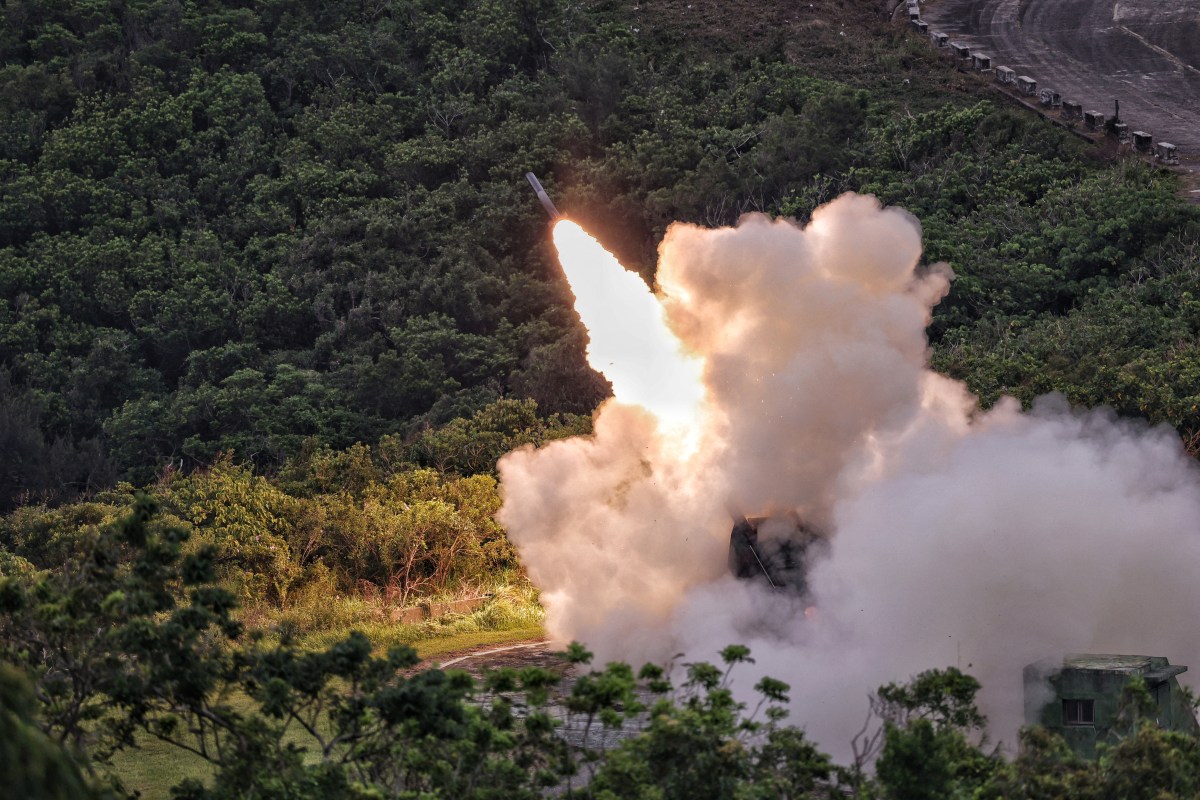
Asia and Oceania was the second-largest destination for arms imports over the past five years, on the back of China’s military buildup and growing assertiveness in the region, according to the Stockholm International Peace Research Institute (SIPRI).
Why It Matters
The analysis, released Monday, shows how the contours of global arms sales are shaped by ongoing conflicts and by governments preparing for potential ones.
The report comes after China announced its largest-yet defense budget. Beijing’s rapid military buildup has raised concerns in Washington and allied Pacific governments that China seeks dominance over the region.
Newsweek reached out to the Chinese Foreign Ministry by email with a request for comment.
What To Know
Worldwide arms transfers between 2021 and 2025 rose by nearly 9 percent compared with the 2016–2020 period, according to the report.
European purchases largely drove the increase, with Ukraine the top recipient as it continues to defend against Russia’s invasion. Other European countries also stepped up defense outlays with an eye toward Russia.
Arms deliveries to Asia fell by about 20 percent, but that drop was largely a result of China sharply reducing its imports, which declined by 72 percent as the country expands domestic weapons production.
Four countries in Asia and Oceania ranked among the world’s top 10 arms importers: India (No. 2), Pakistan (No. 5), Japan (No. 6) and Australia (No. 10). With the exception of Chinese ally Pakistan, tensions with Beijing were said to be the main factor.
India led weapons orders in the region and overall was second only to Ukraine, though imports were down 4 percent as New Delhi built out its own military-industrial sector. Russia accounted for the largest share of India’s weapons imports at about 40 percent, down from the 70 percent in 2011- 2015.
A long-running dispute continues along the “poorly demarcated Sino-Indian border,” though tensions have eased since the deadly 2020 clash in the Galwan Valley in Kashmir.
Japan’s imports rose by 76 percent in the 2021–2025 period. The U.S. treaty ally is at odds with China over a range of issues, from a collection of East China Sea islets to Japanese Prime Minister Sanae Takaichi’s controversial remarks on potential intervention in the event of a Chinese blockade of Taiwan.
Taiwan imported 54 percent more weapons during the same period as China ramped up military activity around the island, including large-scale exercises.
Beijing claims Taiwan as its territory and has vowed to bring it under its control, by force if necessary. The government of President Lai Ching-te has stepped up defense spending and is grappling with the opposition-led legislature over a special budget that would cover major purchases from the United States, Taiwan’s main arms supplier.
What People Are Saying
Siemon Wezeman, senior researcher with the SIPRI Arms Transfers Programme, wrote in the report: “Fears over China’s intentions and its growing military capabilities continue to influence armament efforts in other parts of Asia and Oceania, which often still depend on imported arms.
“For example, in South Asia, the high volume of arms that India imports is largely due to the perceived threat from China and to India’s long-running conflict with the main recipient of Chinese arms exports, Pakistan. Imported weapons were used in the 2025 clash between India and Pakistan, both nuclear-armed states.”
What Happens Next
SIPRI predicted that the United States will remain the world’s top exporter of major arms for the foreseeable future.
China-wary governments in Asia are planning further investments in military hardware security tensions intensify. Taiwanese President Lai Ching-te has set a target of raising defense spending to 3 percent of GDP this year, up from 2.5 percent last year, while Japan plans to raise defense spending to 2 percent of GDP by fiscal year 2027.
Read the full article here
