

Published on •Updated
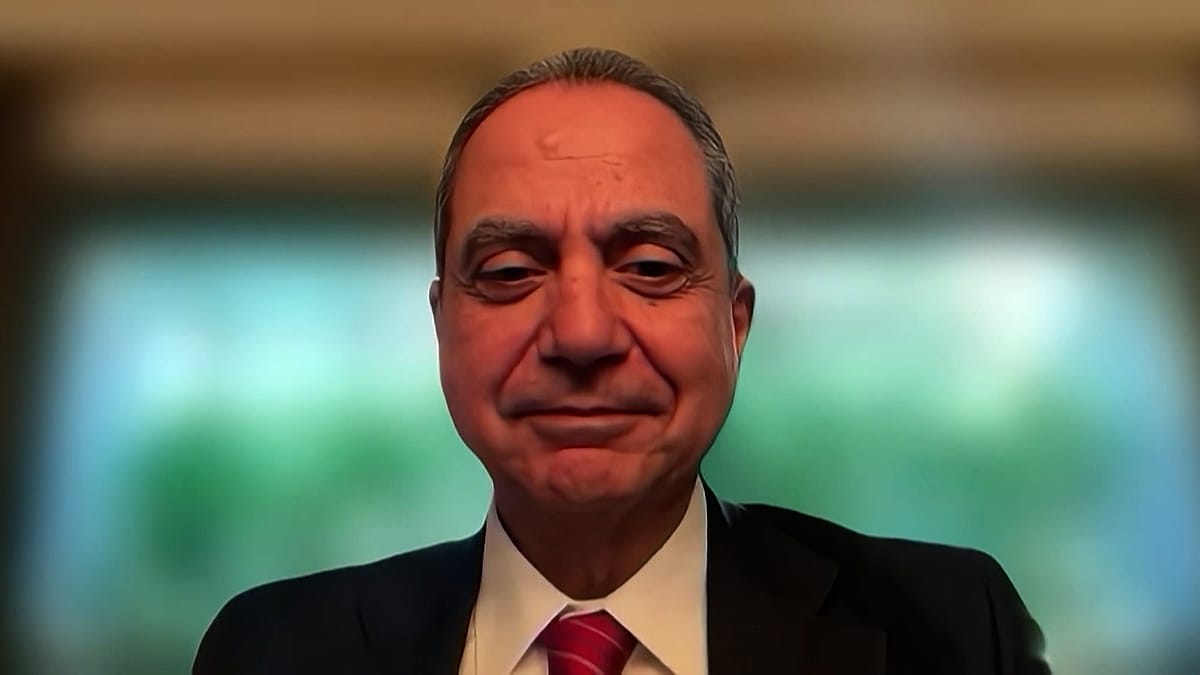
Lebanese Energy Minister Joe Saddi confirmed his country has asked for direct talks with Israel, through a US intermediary, to try to put an end to an Israeli offensive that has cost close to 500 lives and displaced some 700,000 people along the border.
Lebanese President Joseph Aoun called earlier this week for a ceasefire to stop hostilities by land and air, and said his country was being forced into a fatal choice of direct military confrontation with Israeli or risk turning Lebanon into another Gaza.
Looking for European support, Lebanese authorities held bilateral talks on March with European Commission Ursula von der Leyen and Council President António Costa.
“This was indeed a very courageous initiative by our president. But as of this time, I am not aware of any response yet,” Minister Saddi told Europe Today.
US and Israeli sources have said their respective government had rebuffed the proposal though neither side has spoken officially. Israeli Prime Minister Benjamin Netanyahu’s declared goal remains the complete disarmament of the Iran-backed militia, Hezbollah.
The Israeli premier said this week Lebanon that it was not fulfilling its obligations to confiscate Hezbollah’s weapons in line with a November 2024 ceasefire agreement between the two countries.
Speaking to Euronews, Saddi acknowledged that Lebanon was not proceeding as fast as expected but noted the general convulsion in the Middle East.
“Everybody would wish that the implementation of this would happen much quicker. But this has to do on one side with (…) the capabilities of the Lebanese army. It has to do also with the behaviour of Israel during that whole period.”
Lebanon has repeatedly accused Israel in the past of violating the ceasefire agreement in South Lebanon. Observers have pointed that had Hezbollah been disarmed as planned, the militia would not have fired rockets at Israel in retaliation for its offensive on Iran, consequently dragging Lebanon into the war.
Asked whether the Lebanese army has the resources to demilitarize Hezbollah, Saddi said the Lebanese “do not have all the capabilities they need to do this by their own account which is why, if you remember, there was a plan to do it in multiple phases.”
The 2024 agreement provides for a timeline and five phases. Hezbollah had refused full disarmament even before the ceasefire broke down in March 2026.
Saddi underscored that his government had declared Hezbollah’s military actions illegal in the wake of its launching rockets at Israel in early March, adding that were the Shia militia willing to solely operate as a political party, his government would have “no problem with it.”
Netanyahu has shown increasing signs that he will not stop at demilitarizing Hezbollah but would want to see it completely disappear from Lebanon’s political scene as well. Besides its paramilitary activities, Hezbollah is a long-time political actor and operations it presents as charity work.
Asked whether the group’s social activities, which translate in strong support among Lebanon’s disfranchised Shia communities, could be wiped out entirely, Saddi said that the only way was for the state to step in and fill the gap.
“But for the state to be available, it needs financial means (…) And unfortunately, Hezbollah dragging us again back into the war, it makes the availability of international funding that much more difficult and distant in time,” he noted.
The only way for Hezbollah to lose its clout and power may lie in the success of the US-Israeli operation in Iran. “There is a financial lifeline for Hezbollah coming from Iran (…) any major reduction both on the military side and the financial side in terms of lifeline to Hezbollah certainly would weaken it,” the Lebanese minister said.
Read the full article here
