

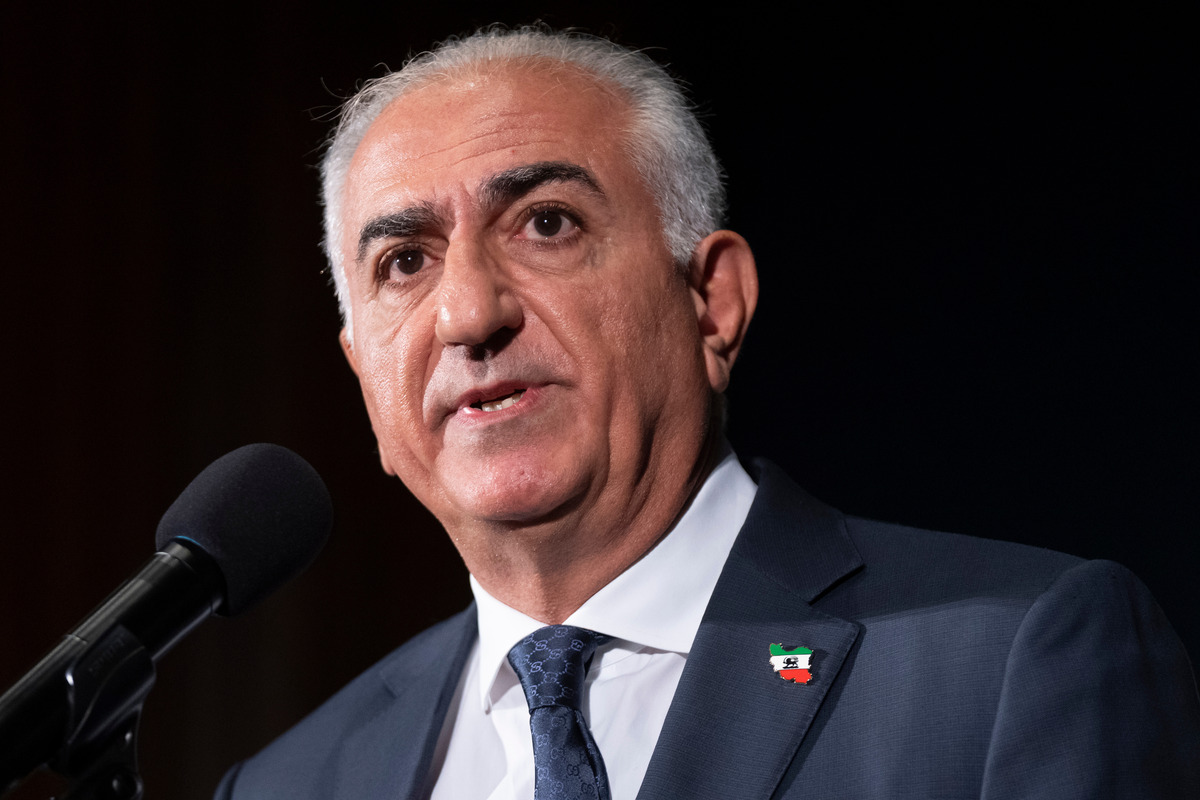
Exiled Iranian crown prince Reza Pahlavi has said Iranians are “scratching their heads” and wondering why U.S. President Donald Trump hasn’t pulled through on promised support for protesters across the country after thousands died.
Trump earlier this month called the protesters “patriots,” urging them to “take over your institutions.” The president said in a post on Truth Social that “help is on the way” and repeatedly alluded to a punishing U.S. response, should authorities continue to cut down demonstrators.
Newsweek has reached out to the White House for comment via email.
Why It Matters
Protests have swept through Iran for close to a month, with demonstrators frustrated with Iran’s limping economy quickly turning their ire toward the country’s ruling clerics and oppressive regime in Tehran as authorities clamped down.
The U.S.-based Human Rights Activists News Agency (HRANA) said on Sunday close to 4,500 people had been killed, the vast majority of whom were demonstrators. More than 17,000 suspected deaths are still under investigation, HRANA said.
Some reports have suggested the death toll could top 30,000. The true figures are incredibly difficult to verify because of a widespread internet blackout. Iran’s Supreme Leader, Ayatollah Ali Khamenei, has publicly acknowledged the deaths of “several thousand” people.
What To Know
“Iranians expected action and are scratching their heads why nothing is happening,” Pahlavi told The Sunday Times. “There cannot just be condemnation then back to business as usual. The West cannot throw protesters under a bus.”
Trump had said an “armada” was heading for the Middle East and insisted on Thursday Washington was keeping a scrutinizing eye on Tehran. The USS Abraham Lincoln nuclear-powered aircraft carrier plus several destroyers are headed to the region and the U.K. said on Thursday it was deploying fighter jets to Qatar “in a defensive capacity.”
“We have a lot of ships going that direction, just in case,” Trump told reporters aboard Air Force One. “I’d rather not see anything happen, but we’re watching them very closely.”
Pahlavi said he saw the U.S. armed forces coalescing in the Middle East as “preparation for something substantive.”
“It’s not just symbolic,” Pahlavi added.
A senior Iranian official told Reuters on Friday Tehran hoped the U.S. military forces headed for the region were “not intended for real confrontation.”
“But our military is ready for the worst-case scenario,” the anonymous official told the news agency. Iran has said a U.S. attack on the country in support of the protesters would spell war between Washington and Tehran and has pointed the finger at the U.S., blaming the U.S. and “terrorists” for the violence seen on Iran’s streets.
Pahlavi has for decades lived outside of Iran and currently resides in the U.S. He is the son of the last shah, Mohammad Reza Pahlavi, who was overthrown in 1979.
Trump said on January 14 he had been informed that “the killing in Iran has stopped,” although this was disputed by Pahlavi. The Republican president has also questioned whether Pahlavi would be able to lead Iran if the current theocratic leadership in Tehran crumbled.
“He seems very nice, but I don’t know how he’d play within his own country,” Trump said of the crown prince in an interview with Reuters, published on January 15. “I don’t know whether or not his country would accept his leadership, and certainly if they would, that would be fine with me.”
The regime in Tehran is still contending with the aftermath of its brief but destructive war with Israel in June 2025, which ended shortly after the U.S. attacked multiple Iranian nuclear sites.
What People Are Saying
“It’s a moral obligation,” exiled Iranian crown prince Reza Pahlavi told The Sunday Times in an interview published over the weekend.
“Everything is on high alert in Iran,” an unnamed Iranian military official told Reuters on Friday.
“Any aggression against the supreme leader of our country is tantamount to full-scale war against the Iranian nation,” Iranian President Masoud Pezeshkian said in a post to social media earlier this month.
Read the full article here
