

The only thing we have to panic about is panic itself.
That’s the verdict from the prime minister and the service stations on the possibility of a petrol crisis.
We have enough fuel – as long as people don’t drive to the pump all at once to fill up.
The problem is that evidence suggests Australian shoppers are some of the world’s biggest panic buyers.
In a situation like this, the cold, hard economic analysis suggests panic buying is quite rational – for the individual, not for society.
“It becomes individually optimal. Socially, not optimal,” says Dr Timothy Neal, a University of NSW economist who has studied panic buying. “It is the role of government to try to remedy that, but I don’t envy them because it’s a very hard psychology to fight against.”
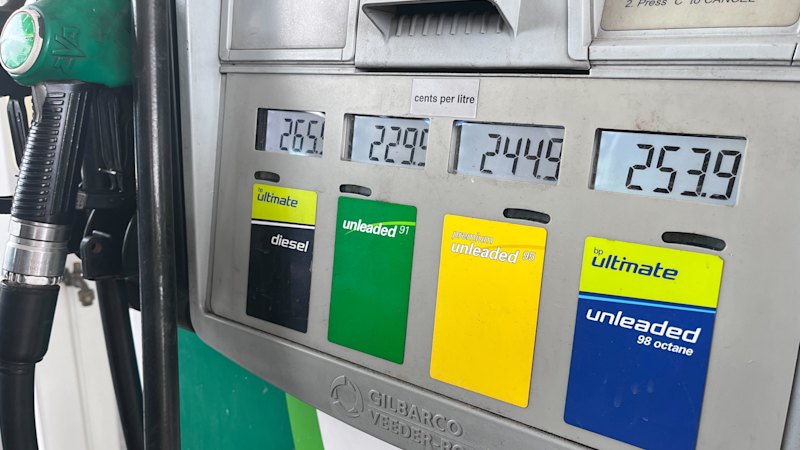
The closure of a major oil shipping route because of the war in the Middle East caused unleaded petrol to jump 20 per cent to $2.19 a litre on average, while barrels of crude have reached $US98, the highest prices since 2022. Australia imports about 90 per cent of its liquid fuel.
But that does not mean there is a shortage, says the fuel industry. Ampol, for example, has 45 days of fuel supply available.
Prime Minister Anthony Albanese said on Saturday there had been no reductions in Australia’s fuel supply. “What we know is that there hasn’t been less supply,” he said. “Over the last few weeks, there have been issues of distribution. So there have been shortages in some areas.”
Supply chains are typically built to cope with regular demand patterns. If demand suddenly changes, they struggle. The war in the Middle East seems to have encouraged drivers, worried either about shortages or rising prices, to head to pumps and fill their tanks.
That’s left some petrol stations with empty bowsers – at least for a few hours.
Why we panic buy
The bigger threat is if drivers respond to those temporary shortages by panic buying petrol.
“It seems to be a way we cope with uncertainty,” says Dr Karina Rune, a behavioural sciences researcher at the University of the Sunshine Coast who has published several papers on panic buying. “It seems to appease our perception of risk and uncertainty.”
Human brains are poorly built to handle high-stakes uncertainty. Studies suggest we are more stressed by a 50 per cent chance of a bad outcome than a 100 per cent chance.
“Evolutionarily, surprise and uncertainty are things we did not survive,” says Monash University’s Professor Michelle Lazarus, who has written a book on uncertainty. “When we perceive the stakes to be high, and have high uncertainty, our brain is trying to protect us, keeping us alive – and that contributes to wanting to remove the uncertainty.”
During COVID-19, we responded to news about shortages of toilet paper by stocking up; some people were pictured buying multi-year supplies.
“If I just buy, everything is going to be OK,” says Rune. “The buying makes us have a sense of control. Toilet paper is not going to save you from COVID.”
Rhett Wyman
Australians were the worst panic buyers during COVID, according to an analysis of Google search traffic by Neal. It’s not clear why, but our isolation from global supply chains may have something to do with it, giving people a sense we could be left stranded.
Panic buying seems inherently irrational – that’s why we call it panic buying. The panic buying creates the very problem the panic buyers are trying to avoid. “It is a self-fulfilling prophecy,” says Neal. But at an individual level, he says, it is perfectly rational.
If you expect the price of fuel to go up in the near future, or petrol pumps to run dry, it makes sense to buy now. If you expect other drivers to panic and try to fill their tanks, it makes sense to try to get ahead of that.
This problem is known as a “prisoner’s dilemma”: if everyone co-operated, we could avoid fuel shortages, but it’s not possible to perfectly co-ordinate with other drivers.
“All you need to believe is other people are panicked about this problem and will change their behaviour, and panic buying suddenly becomes rational,” says Neal.
What can we do about it?
During COVID, Karina Rune ran out of toilet paper. “I am one of those very busy people who don’t get to the shop on time, and went, ‘Oh, there’s no toilet paper’ – which led to a bit of panic with my three little kids.”
She contained her panic by thinking through the worst-case scenario: there are always alternatives to toilet paper, and many cultures don’t use it at all.
But it led her research in a new direction: if panic buying is a rational response to uncertainty at an individual level that produces large problems at a society-wide level, what can we do about it?
To find out, her team randomised 140 Australian grocery shoppers to either a mental placebo (they were asked to imagine eating a particularly tangy lemon) or a video message.
The video tested several key messages.
First, that there was enough supply, and there would be no shortages if people avoided panic buying.
Second, that panic buying harshly affected those who lacked the time or could not afford to stock up – such as doctors and nurses, police officers, the elderly and the disadvantaged. The video asked people to imagine they had a paramedic friend who had finished a shift at 8pm and arrived at the shops, only to find shelves stripped bare.
Third, that friends and family would “want you to do the right thing and only buy as much groceries as you need”.
The key change, says Rune, is to help people view it as “a collective responsibility, rather than saying, ‘I’m at risk, I am going to run out.’”
It seemed to work, reducing people’s intention to panic buy (compared with those who thought about lemons).
An unexpected silver lining
Oil is essential to much of our economy, from cars and transport to fertiliser and plastics. It is also a fossil fuel, responsible for about a third of our global CO2 emissions.
The oil shock of the 1970s, when the price of oil quadrupled, led the US to introduce fuel-economy standards for cars and to (briefly) embrace solar panels.
High oil prices create “a strong incentive for consumers, investors and governments to adopt cleaner alternatives”, says Dr Shahzad Alvi, a researcher at the Queensland University of Technology who has studied oil shocks. And today, the technology exists for an even faster move, with fully electric cars available for consumers looking to beat the petrol price shock.
Will a modern oil shock spur the green switch? Maybe.
High oil prices also increase the incentive for oil producers to find new sources of supply, which can lead to a long-term reduction in oil prices, “reducing the incentive to invest in renewables”, says Alvi.
“An oil shock may trigger or accelerate Australia’s move to renewable energy in the short term, but on its own it is unlikely to guarantee a sustained transition. Long-term progress depends more on policy support and technological innovation than on oil market volatility alone.”
 Liam Mannix is The Age and The Sydney Morning Herald’s national science reporter.Connect via X or email.
From our partners
Read the full article here
