

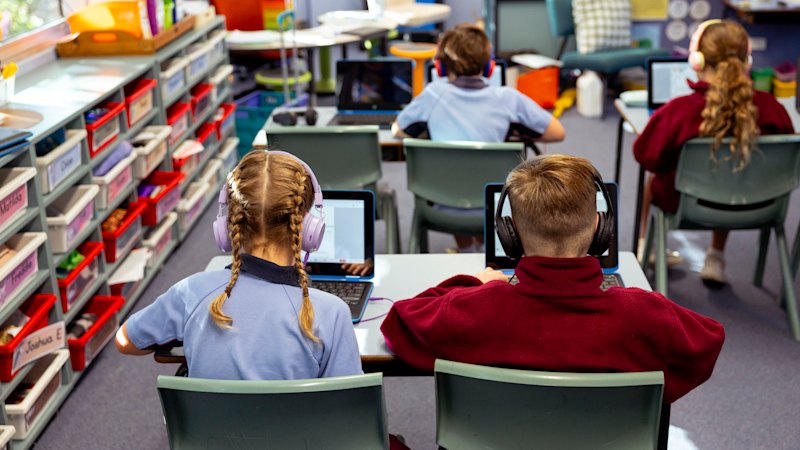
The chief of the NAPLAN schools testing system has called for an end to the “horrendous misuse” of children’s scores as entry assessment tools by in-demand schools and told parents to refuse requests to provide them.
As hundreds of thousands of children across the nation begin sitting NAPLAN exams this week, Stephen Gniel, the chief executive of the Australian Curriculum and Assessment Reporting Authority asked parents not to put pressure on youngsters to perform.
Gniel told this masthead he was aware some private and select-entry government schools – where competition for places is greatest – were asking for students’ individual test results as part of enrolment applications.
“I think it is horrendous, and it’s a complete misuse of the assessment. It’s not one of the purposes and therefore the test is not designed as an entrance exam and shouldn’t be used as such,” he said.
“I would encourage parents not to provide that to schools that might ask for it as an entry requirement. By all means provide it once the student is enrolled.”
The emphasis on the national testing has fuelled a competitive culture that is driving some parents to employ tutors in the hope of boosting their child’s results, but Gniel said this “constant drilling on NAPLAN-sort of tests is ill-advised and somewhat futile”.
“We want to see parents supporting students to do their best. That doesn’t mean over preparing or putting unnecessary pressure on them,” he said.
NAPLAN testing assesses nationally agreed areas of literacy and numeracy to provide a diagnostic tool for principals, teachers, parents and policymakers. The test is designed as a point-in-time snapshot, not a definitive assessment of a child’s skills.
The federal government introduced the testing in 2008 to replace a raft of tests provided by states and territories, such as the AIM testing in Victoria and the Basic Skills Test in NSW.
Nationwide NAPLAN results, released in July last year, showed little or no improvement on the previous year, with large numbers of children still struggling with the basics of learning and nearly one-third of students in years 3, 5, 7 and 9 playing catch-up in reading, writing, spelling and maths.
Gniel is aware some schools claim the test results are only one consideration in enrolment and scholarship processes. “But if it’s only one of the things, then don’t use it,” he said. “It’s not a pass or fail test. It’s a test that helps us understand those strengths and areas for development.”
Haileybury and Presbyterian Ladies’ College are among Victorian private schools that request NAPLAN and past school reports as part of their enrolment processes.
The schools, which are non-select entry – meaning they do not consider results in enrolling students – did not respond to questions. Some schools say they don’t use NAPLAN results to determine eligibility but to understand if a student needs extra support.
Rachel Holthouse, chief executive of Independent Schools Victoria, said NAPLAN was one of the many measures schools used to understand student learning. She said the assessments captured only a small part of the work happening in classrooms.
“Independent schools across Victoria take a holistic approach to enrolment and student support,” Holthouse said. “They consider a range of factors to understand each student’s strengths, needs and readiness, ensuring the right support is in place for them to thrive.”
However, schools that ask for NAPLAN scores as part of scholarship applications, and that promote state or national rankings of results in promotional material, indicate there is a competitive culture surrounding the national testing that risks distorting its role.
The curriculum authority deliberately does not rank schools when publishing results, and instead compares performances with schools with similar backgrounds. Gniel said schools could use the publicly available data how they wished, but encouraged families to use the My School website to put these comparisons in context alongside socioeconomic, enrolment and attendance information.
“It’s really important when we are looking at these results we are comparing apples with apples,” Gniel said.
University of Melbourne Emeritus Professor Barry McGaw, who was the authority chair from 2008 to 2015, said schools marketing their results was reasonable as long as the material took account of what the school did, not just who it enrolled.
“Schools with relatively advantaged students might look good if they are compared with the national averages,” he said. “The important questions are, how do they compare with other schools with similarly advantaged students? And what improvements are they achieving over time?”
Still, some schools say showing parents how results stack up statewide and nationally helps simplify the results for families.
Bacchus Marsh Grammar, on Melbourne’s western fringe, does not use NAPLAN as part of eligibility for enrolment and said it recognised the assessments are designed to provide comparisons between schools with similar backgrounds. When sharing the information with parents, “referencing the state average is one way of providing context that people easily understand”, a school spokeswoman said.
The spokeswoman encouraged schools to talk openly about results because it reinforced the testing as a national benchmark.
“It keeps the focus on literacy and numeracy and ensures the data remains part of the broader conversation about student learning,” she said.
“Additionally, if changes [in the future] help ensure the results continue to be interpreted in a way that supports learning rather than unnecessary competition, then that is a constructive conversation for the sector to have.”
Federal Education Minister Jason Clare said reforms to NAPLAN in 2023 meant teachers and parents received results sooner, which helped support students who might be struggling.
“The 2025 NAPLAN results showed encouraging signs, but there’s more work to do,” Clare said. He said the government’s new Better and Fairer Schools Agreement was aimed at “fixing the funding of our public schools”.
Start the day with a summary of the day’s most important and interesting stories, analysis and insights. Sign up for our Morning Edition newsletter.
 Jackson Graham is an education reporter at The Age. He was previously an explainer reporter.Connect via email.
From our partners
Read the full article here
