

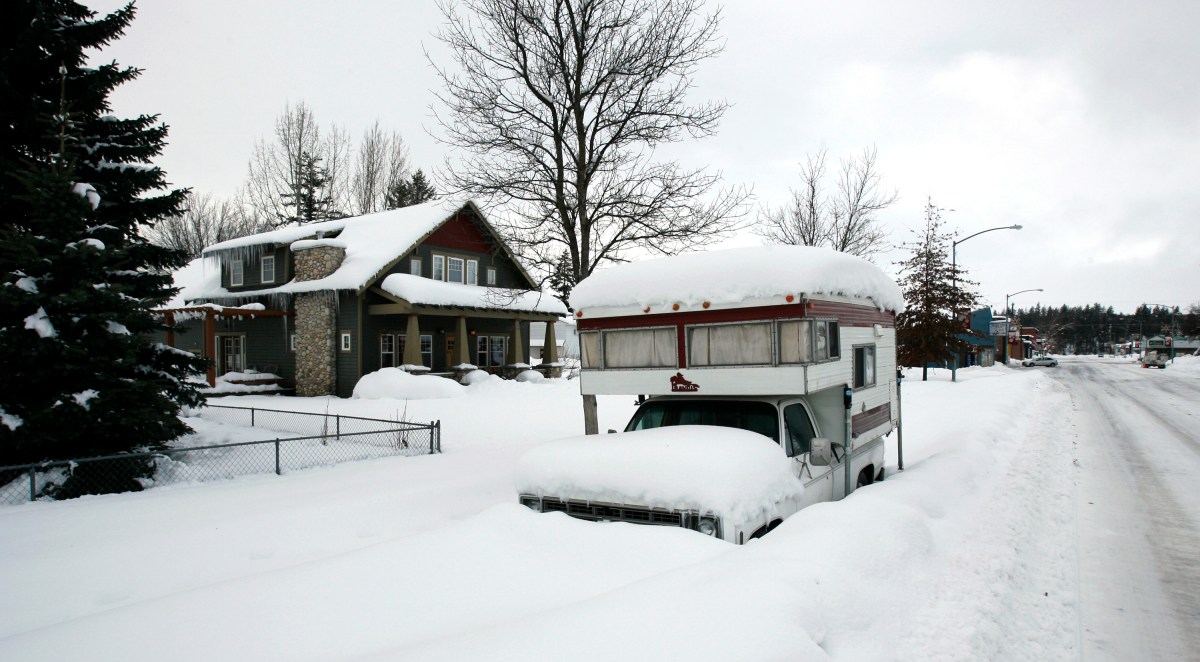
Heavy snow warnings have been issued, as up to 12 inches of snow and strong winds are expected to hit parts of Washington until Thursday morning, which could make travel difficult and trigger possible “power outages,” according to the National Weather Service (NWS).
Where in Washington Could Be Affected by Potential Power Outages?
The Cascades of Snohomish and Whatcom, and northern King and Skagit counties, are forecast to get between 8 and 12 inches of snow by Thursday morning.
The Loup Loup Pass, Mazama, Conconully, Stevens Pass, Methow, Stehekin, Twisp, Winthrop and Holden Village could see additional snowfall reaching up to 8 inches in areas above 4,000 feet—especially along Stevens Pass—and between 1 and 3 inches for places below 4,000 feet. Alongside this, these areas are also likely to experience winds reaching 35 mph.
A mixture of heavy snowfall and high winds could create blowing snow, which might reduce visibility and make travel “very difficult.” The NWS has urged drivers to slow down and take extra caution on the roads until conditions improve.
The heavy snow and winds can also potentially take down tree branches and power lines, which could cause power outages across affected parts of Washington.
How To Prepare for Power Outages
According to Ready—the U.S. government’s official emergency preparedness website—preparing for power outages starts with pulling together an emergency kit, before the power goes out.
Households should make sure they have multiple flashlights ready (with extra batteries), a battery‑powered radio and a fully charged mobile phone power bank. They should stock up on several days’ worth of non‑perishable food and also drinking water, along with any necessary medications.
During a power outage, generators should only be used outdoors and kept far away from windows to prevent carbon monoxide poisoning. Residents should also shut their curtains or blinds to retain heat and put towels under doors to prevent drafts.
How To Prepare for Heavy Snow on the Roads
The NWS advises drivers to avoid unnecessary travel during winter storms, but if travel is unavoidable, vehicles should be winter‑ready with good tires, full fuel tanks, and emergency supplies such as blankets, food, water, and a shovel.
While driving in heavy snow, motorists should reduce their speed, increase their distance between cars, and brake gently to prevent skidding. If they do find themselves skidding, they should turn the wheels in the direction they want the vehicle to go.
If they become stranded, the NWS advises drivers to stay with their vehicle, run the engine periodically for warmth, and keep the exhaust pipe clear of snow.
Read the full article here
