

Stay out of Sydney Harbour and the beach after a rainstorm. Wait 72 hours after a storm to swim in the harbour and be mindful of swimming or surfing at ocean beaches for 24 hours after a large downpour. These are the messages I wish had been sent out weeks ago, before the awful shark bite at Vaucluse that left a 12-year-old in critical condition, the near-miss on the 11-year-old at Dee Why, and the serious shark bite on a 27-year-old at Manly, all in the past few days.
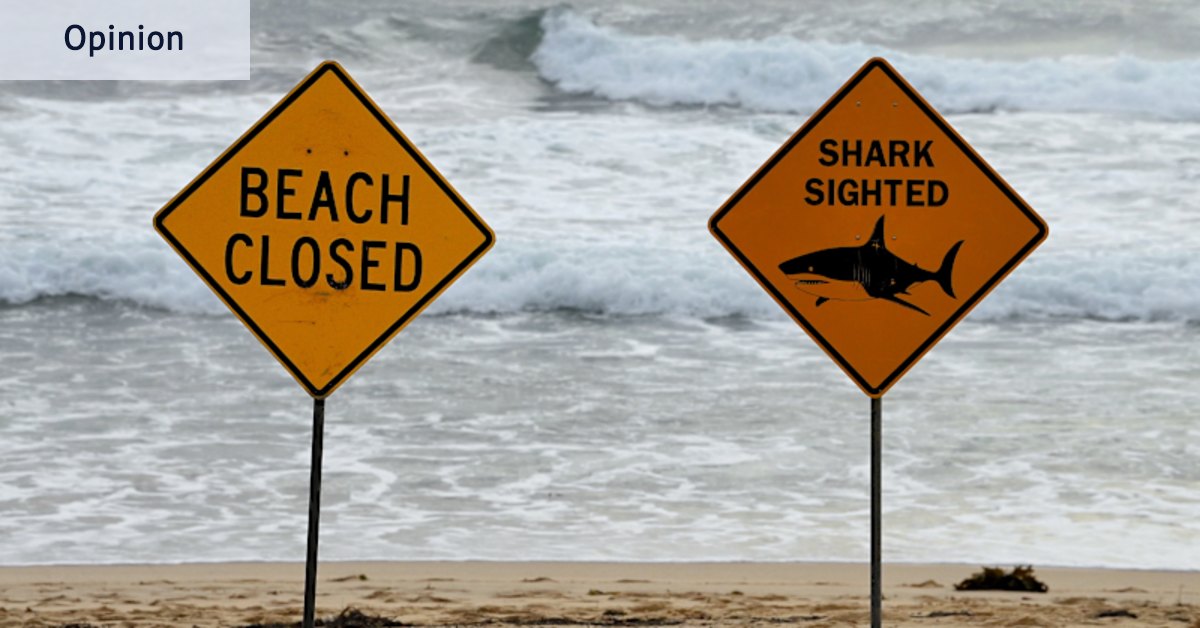
Too little, too late? Beach closed signs at Manly Beach.Credit: Kate Geraghty
This cluster of shark bites in Sydney is a clear consequence of environmental conditions following the heavy storm that have brought bull sharks near the shore, and we should let the conditions pass before swimming or surfing. I specifically study clusters of human-shark interactions and in terrible cases like this there is usually a large common factor. Ordinarily, that factor is elevated water temperature moving sharks closer to shore at a time when more people want to go to the beach. But in this case, it looks like the after-effects of the heavy rain.
It is worth restating that bull sharks prefer brackish water. People need to avoid the murky and foamy water that follows storms as this turbid water gives sharks low visibility. When the sharks bump into something, they defensively or curiously bite and then bite again.
It is also important to note that in a city as old as Sydney with 100-year-old sewage pipes, they flush faecal bacteria (raw sewage) into Sydney Harbour when there is rainfall above 20mm, which can also increase the risk of a shark bite.
BeachWatch notes that the presence of [faecal matter] or “Enterococci levels increased slightly with increasing rainfall, occasionally exceeding the safe swimming guideline after light rain, and often after 20 mm or more.” A 1996 study of the Bondi Deepwater outfall noted research which stated, “localised increases in the abundance of bait-fish have been correlated with sewage disposal.”
The baitfish feed on the sewage. And the bull sharks feed on the baitfish, which include yellowtail, mullet, herring, and pilchard. This means that when sewage pipes overflow after a heavy rain, and schools of baitfish collect, there are excited bull sharks. We need to educate the public to be aware of these risky environments and avoid swimming for a few days until the ocean clears.
Loading
This additional wait can be particularly difficult during an Australian summer that is hot and sunny or at times when the ocean “appears” to return to normal the next day. However, this balance between human activity and shark activity has a long history in Sydney. Historically, one solution to over-eager swimmers in the late 1920s was the introduction of a “shark bait” law in New South Wales that included a ten-pound fine for anyone caught swimming out too far and putting themselves at risk.
Sharks and humans have a tense and tragic history in Australia, but part of this story includes the attractants that put people at risk when they swam, including the old sewage outfall at Bondi and the old abattoir that flushed waste into the Parramatta River. The current pipes that continue to overflow into Sydney Harbour today attract sharks and therefore fixing old sewage pipes, treating sewage, and cleaning water near beaches are shark-bite prevention policies in NSW.
Read the full article here
