

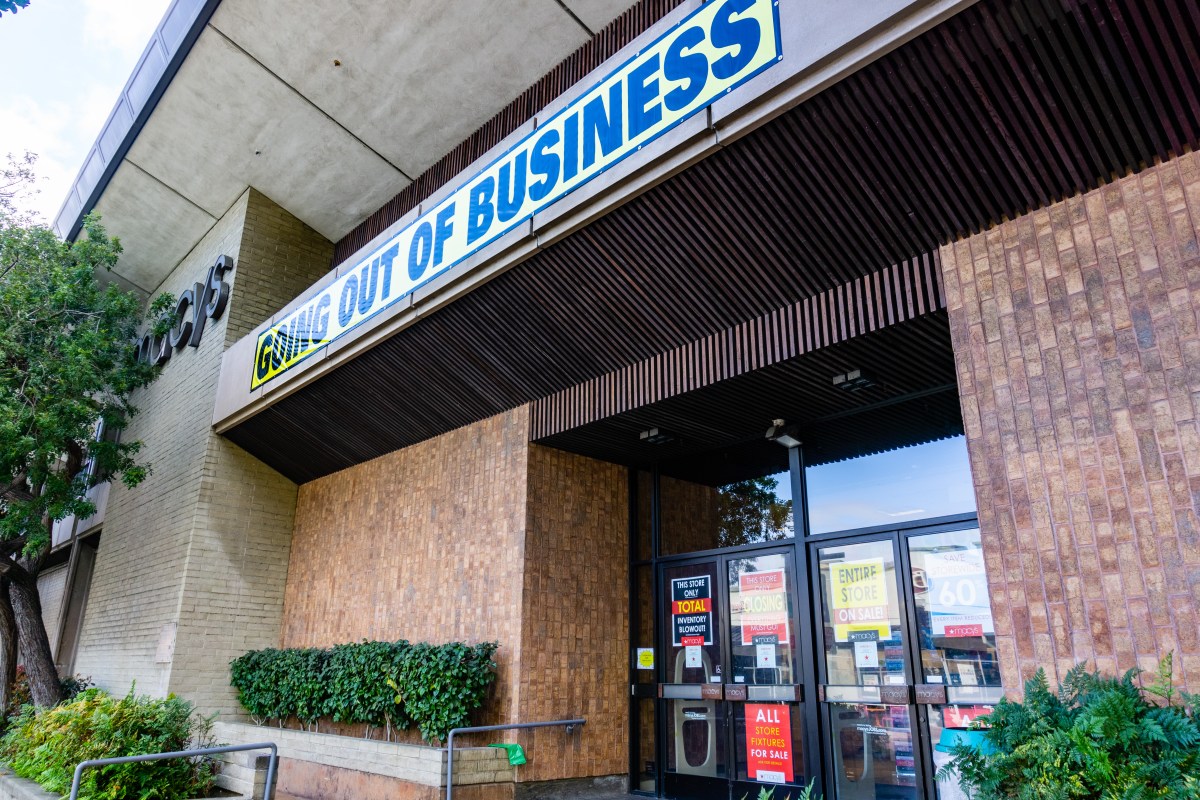
A growing number of major retailers are closing stores in the month of April.
For some companies, the shutdowns are due to bankruptcies, lease expirations, or long‑running shifts toward e‑commerce sales.
Roughly 7,900 U.S. stores will close in 2026, according to CNBC, and Business Insider reported that more than 1,200 closures have already been publicly announced.
Why It Matters
Store closures have impacted shopping centers and malls nationwide, especially in regions with high operating costs or overlapping locations.
Because of inflation and changing consumer habits, many big name retailers have been forced to reduce their store footprints, with e-commerce taking up a higher bulk of sales.
What To Know
The following stores have announced closures for the month of April:
- Francesca’s
- Macy’s
- Kroger
- Saks OFF 5th
- REI
Francesca’s
The women’s apparel retailer is completing the shutdown of its entire U.S. store fleet following bankruptcy proceedings. Liquidation sales are wrapping up in many regions during April, with stores closing permanently as inventory is exhausted.
Francesca’s previously operated roughly 400 to 450 locations nationwide.
Macy’s
Macy’s is in the middle of a multiyear plan to close up to 150 underperforming stores by the end of 2026.
While the company has not released a specific list of stores to be closed in April, closures are occurring in phases throughout the year, including spring.
Kroger
The grocery giant is carrying out an 18‑month restructuring plan that includes closing about 60 underperforming supermarkets nationwide. Kroger has not disclosed which stores are closing in April specifically, but confirmed that closures are spread across multiple states and continuing through 2026.
Saks OFF 5TH
Following bankruptcy‑related restructuring at Saks Global, several Saks OFF 5TH locations are closing now and throughout spring.
The chain previously said it anticipates closing about 57 outlets in early 2026 amid the larger trend of consumers reeling in spending.
REI
Outdoor retailer REI has confirmed the closure of a small number of stores in New York, New Jersey, and Boston as part of a broader reassessment of its brick‑and‑mortar strategy.
While some of the exact dates and locations are unclear, many stores close as soon as liquidation inventory is sold.
As a result, shoppers may see “store closing” or “everything must go” signs disappear quickly, even if a chain has not formally announced an April date for a specific location.
What People Are Saying
Alex Beene, a financial literacy instructor for the University of Tennessee at Martin, previously told Newsweek: “The retail reckoning we’re seeing is incredibly unfortunate. Not only will it cause thousands of workers to lose their jobs, but it also equates to fewer options for consumers, particularly in rural areas and smaller cities. As inflationary pressures have weighed on American households, many have cut back on spending for some items, while shifting to more affordable online options for others.”
Michael Ryan, a finance expert and the founder of MichaelRyanMoney.com, previously told Newsweek: “These store closures aren’t some big economic meltdown. They’re the retail sector finally admitting what we’ve all been watching happen in slow motion for years. They’re all brands that never figured out how to matter in a world where people shop online and eat at home.”
What Happens Next
Additional closures are expected to be announced later in 2026 as companies reassess leases and performance.
“The brick-and-mortar retail sector has been suffering for years,” Drew Powers, the founder of Illinois-based Powers Financial Group, told Newsweek. “These stores have simply not been able to keep up with the competition during the rise of the online retailer, and have not yet developed a robust online experience that creates enough sales nor drives in-store business.”
Read the full article here
