

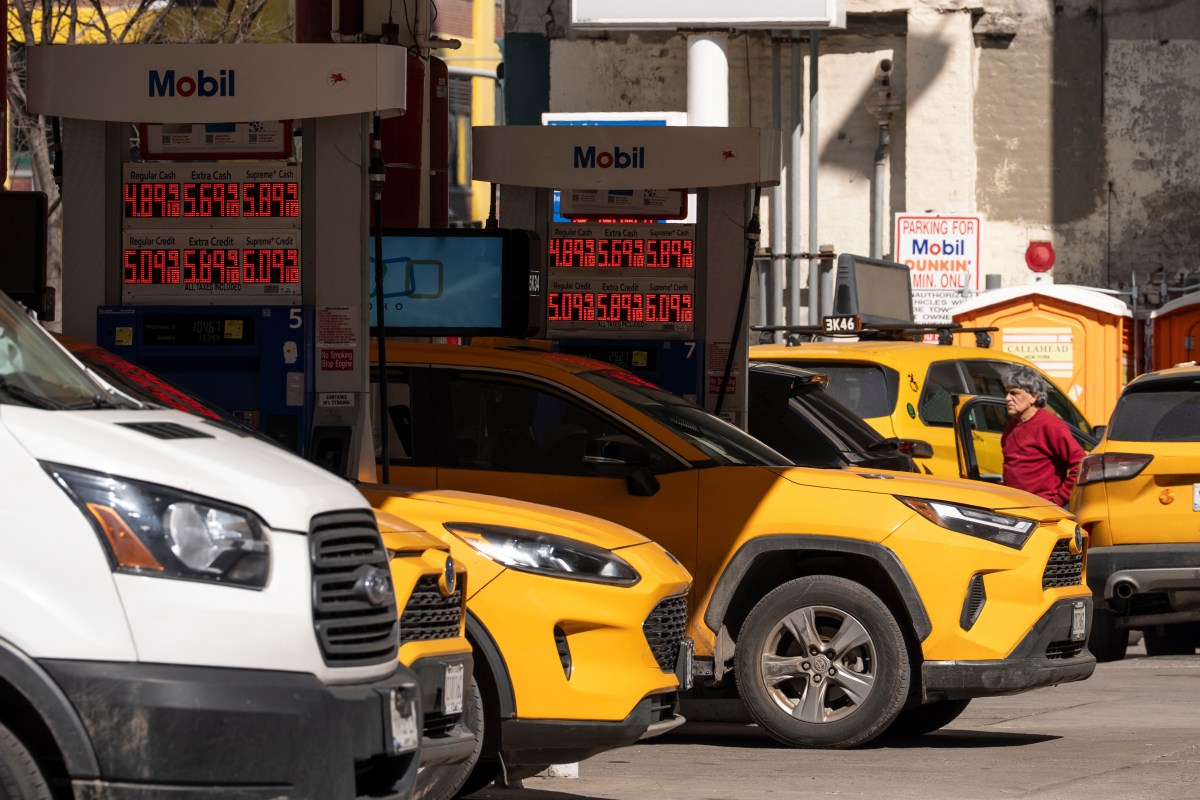
Gas prices have now climbed above $3 a gallon in every state, as an ongoing chokehold on the Strait of Hormuz caused by the Iran war continues to put pressure on global crude oil prices.
The national average price for a gallon of regular gas in the U.S. was $3.598 on Wednesday morning, according to data by the American Automobile Association (AAA), the highest level since May 2024. That was up from an average of $2.984 on February 28, the day the U.S. and Israel launched joint strikes on Iran.
Why It Matters
High gas prices during the Biden administration fueled unhappiness towards the former president among American voters, and were a constant line of attack against Democrats for Donald Trump during his 2024 campaign.
But Trump now runs the risk of facing the same scrutiny, as gas prices have surged since his decision to wage war on Iran. The president has returned to the White House with the promise of lowering the cost of living for everyday Americans; less than a month ago, the White House was boasting about gas prices reaching “multi-year lows” in a sign that Trump was “delivering real relief.”
Earlier this week, White House spokesperson Taylor Rogers described soaring oil and gas prices as “short-term disruptions” in a statement shared by Politico, downplaying concerns over higher energy costs.
What To Know
The national average price for a gallon of regular gas was $3.598 on Wednesday, up from $3.251 a week earlier and $2.944 a month earlier. It was also higher than a year earlier, when it was $3.080.
At the state level, drivers in California are still—as usual—paying the highest gas prices, at $5.368 per gallon, up from $4.810 a week ago and $4.545 a month ago. The lowest price was in North Carolina, where residents paid $3.383 at the pump, up from $3.044 a week ago and $2.732 a month ago.
The Golden State also reported the biggest weekly increase on Wednesday, up by 55 cents. Next were Nevada (+52 cents), Utah (+49 cents), Arizona (+48 cents), and Florida (+48 cents).
The smallest increases were reported in Minnesota (+18 cents), North Dakota (+18 cents), South Dakota (+18 cents), Missouri (+19 cents), and Kansas (+20 cents).
The Trump administration has announced on Wednesday that it will be releasing 172 million barrels of oil from the country’s Strategic Petroleum Reserve, a move that the president hopes will ease surging crude oil and fuel prices.
What People Are Saying
Trump said last week in an interview with Reuters that he was not concerned about rising gas prices: “If they rise, they rise. I don’t have any concerns about it. They’ll drop very rapidly when this is over, and if they rise, they rise, but this is far more important than having gasoline prices go up a little bit.”
Karoline Leavitt, White House press secretary, said on Tuesday: “Once the national security objectives of Operation Epic Fury are fully achieved, Americans will see oil and gas prices drop rapidly, potentially even lower than they were prior to the start of the operation, and we will live in a world where Iran can no longer threaten the United States or our allies with a nuclear bomb.”
What Happens Next
As mentioned by Trump, it is likely that oil and gas prices will start falling once the war in Iran is over. There is no clear indication, however, of when this might happen.
“From an oil perspective—the lack of clarity is driving uncertainty, which is a major component on gasoline and diesel prices soaring,” Patrick DeHaan, head of petroleum analysis at GasBuddy, wrote on X this week.
If the war in Iran continues and completely blocks the Strait of Hormuz, which normally sees the transit of ships carrying one fifth of the world’s oil supply, oil and gas prices could reach even higher levels.
Read the full article here
