






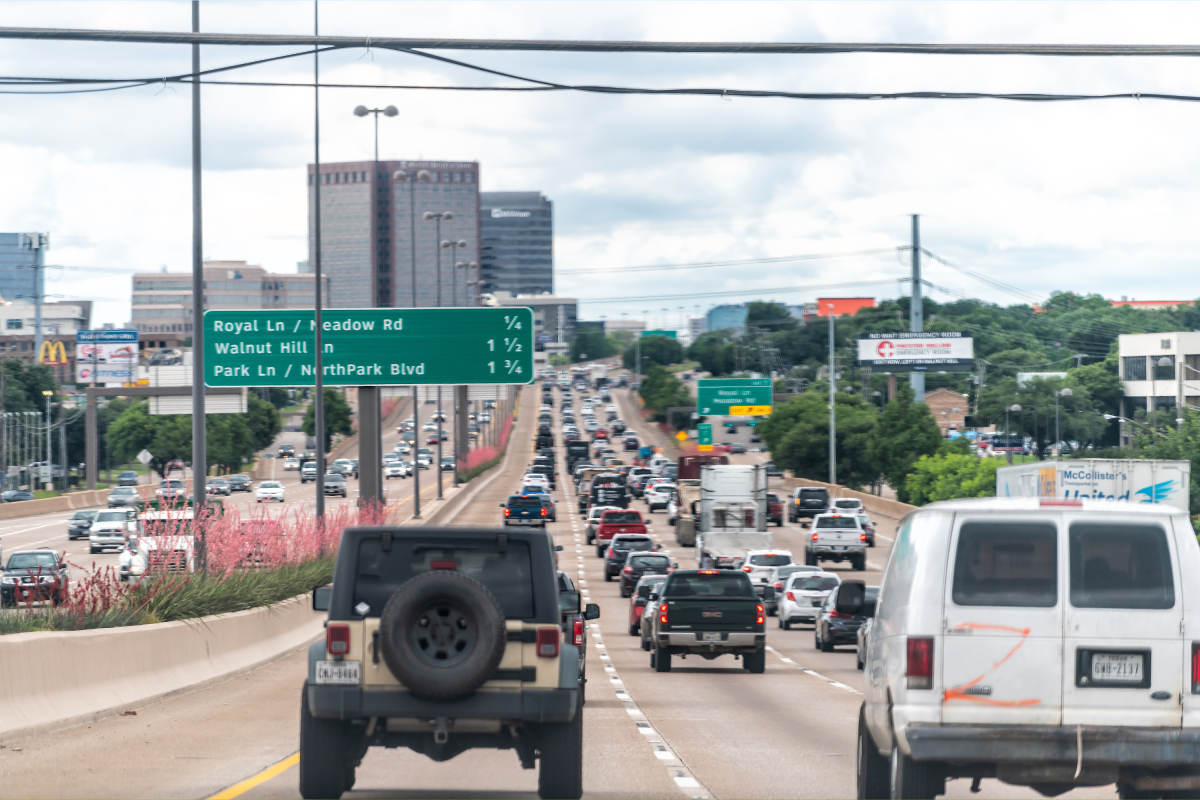
Millions of Texans are being urged to cut back on driving, avoid idling in drive-thru lanes and reduce pollution as air quality concerns intensify during ozone season.
The TCEQ, in an alert relayed by the National Weather Service (NWS) in Fort Worth, issued an Ozone Action Day for the Dallas-Fort Worth area for Sunday, May 24, warning that atmospheric conditions are expected to favor the formation of elevated ground-level ozone, the main ingredient in smog.
Areas Across Texas Affected by Poor Air Quality
The NWS warns that atmospheric conditions across the northern parts of Texas are expected to produce elevated amounts of ground-level ozone pollution, particularly during the afternoon and early evening hours.
The alert is centered on Dallas-Fort Worth, one of the state’s largest population hubs, including cities such as Dallas, Fort Worth, and Arlington.
This region is especially vulnerable due to high traffic volumes and concentrated emissions, which contribute to ozone formation.
What’s Causing the Poor Air Quality
Ground-level ozone pollution isn’t emitted directly. Instead, it forms when nitrogen oxides (NOx) and volatile organic compounds (VOCs)—released by vehicles, power plants, refineries, industrial facilities, gasoline vapors, and solvents—react in sunlight.
Hot, bright, and still weather makes that chemistry more likely, building up ozone pollution and trapping it near the ground rather than letting it disperse into the air. Ozone levels are typically highest on hot, sunny days in urban areas, where emissions are more concentrated.
Texas frequently sees these conditions during late spring and summer, with the heat speeding up the chemical reactions that create ozone and allowing pollution to accumulate.
Officials are also urging residents to avoid drive-thrus because idling vehicles release the same ozone-forming pollutants authorities are trying to reduce.
Why Ozone Pollution Is Dangerous


Ozone pollution can have immediate and serious effects on health. The Environmental Protection Agency (EPA) warns that breathing ozone can harm the lungs, trigger asthma attacks, and cause respiratory symptoms, particularly in children, older adults, and people with lung disease.
Exposure can lead to:
- Coughing and throat irritation.
- Chest tightness and difficulty breathing.
- Reduced lung function.
- Worsening of asthma and chronic lung diseases.
The risks also extend beyond human health. Ozone pollution can damage forests, crops and ecosystems by reducing plant growth and weakening vegetation.
Why Texas Is Prone to Ozone Pollution
Texas faces a unique combination of factors that make ozone pollution more common.
- Climate: Hot, sunny conditions accelerate ozone formation.
- Heat waves: Higher temperatures intensify chemical reactions that produce ozone.
- Emissions: Traffic, industry, and energy production release large amounts of NOx and VOCs.
- Urban growth: Large metro areas mean more driving and congestion.
How Texans Can Protect Themselves
Officials are urging residents to take steps both to reduce exposure and limit emissions.
To protect their health, residents should:
- Limit outdoor activity, especially during peak afternoon hours.
- Avoid strenuous exercise outside when ozone is high.
To reduce pollution, they should:
- Reduce emissions released through driving by carpooling, walking, or biking.
- Avoid drive-thru lanes and idling.
- Conserve electricity.
- Keep vehicles well-maintained.
How Texas Compares Nationally
Texas ranks poorly compared with other states when it comes to air quality. According to World Population Review’s 2026 rankings, Texas is listed as the 46th worst state for air quality, based on metrics including unhealthy air days and industrial pollution concentrations.
States with similarly poor air quality include Arizona, Nevada, New Mexico, Illinois, Utah, Colorado, California, and Oklahoma, where pollution is driven by a mix of heavy traffic, industrial emissions, geographic conditions, and climate factors that promote ozone formation.
For Texas, the combination of extreme heat, large metro populations, and industrial activity helps explain why it continues to struggle with poor air quality despite mitigation efforts.
Read the full article here


